Choosing the best rotary tools for PCB drilling means balancing speed control, bit compatibility, runout, and handling. A tool that works well for crafts may still be too fast, bulky, or imprecise for delicate circuit boards.
This roundup includes complete rotary tool kits, compact cordless models, hand-powered pin vises, and dedicated tungsten carbide PCB bits so you can match your setup to the board material, hole size, and amount of drilling you expect to do.
Best 10 Rotary Tools for Pcb Drilling Picks for 2026
Most Versatile Kit
200W Rotary Tool with Flex Shaft
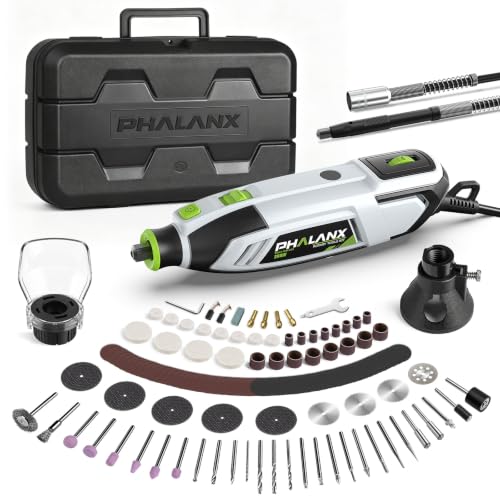
- 200W motor with 10,000–38,000 RPM range
- Six speeds and four collets for flexible setup
- 132-piece accessory kit included
Best For: DIY users needing one tool for PCB drilling and general projects
Best Refill Range
Lothee 0.3–1.2 mm PCB Drill Bits

- 30 tungsten carbide micro bits
- Ten sizes from 0.3 to 1.2 mm
- Three bits per listed size
Best For: PCB drilling with common small hole diameters
Best Cordless Option

- Cordless, lightweight pencil-style design
- 12,000–17,000 RPM with three speeds
- 71-piece kit with USB-C charging
Best For: Beginners doing light-duty portable drilling and crafts
Best Size Coverage
Lothee 0.1–3.0 mm PCB Drill Bits

- 30-piece tungsten steel bit set
- Broad 0.1–3.0 mm stated range
- Spiral flutes and pointed cutting edges
Best For: Varied PCB projects needing fine-to-larger hole sizes
Best for Easy Setup

- 5 speeds from 5,000–18,000 RPM
- Cordless pen design with LED light
- 64 accessories and rechargeable battery
Best For: Light-duty PCB work, crafts, and beginner DIY projects
Best Manual Precision Pick

- Manual control for precise small holes
- 25 HSS bits from 0.5–3.0 mm
- Adjustable chuck holds bits up to 3.4 mm
Best For: Careful PCB, model, jewelry, and miniature drilling
Best Manual Starter Kit
59-Piece Hand Drill and PCB Bit Set

- 59-piece assortment with pin vise, twist bits, and carbide PCB bits
- Adjustable chuck accepts bits from about 0.01 to 0.13 inches
- Works across PCBs, crafts, wood, plastic, and more
Best For: Beginners and manual DIY drilling
Best Refill Pack
0.8mm Tungsten Carbide PCB Bits

- Includes 20 matching 0.8mm drill bits
- 1/8-inch shanks fit compatible PCB, engraving, and CNC equipment
- Spiral flutes support chip removal and clean drilling
Best For: Repeat 0.8mm PCB drilling
Best Size Variety

- Covers ten diameters from 0.3mm to 1.2mm
- Tungsten carbide bits suit PCB and other light materials
- Positioning rings can simplify installation and setup
Best For: Mixed-size PCB drilling
Most Versatile Kit – 200W Rotary Tool with Flex Shaft
For shoppers comparing rotary tools for pcb drilling, this 200W corded kit stands out for its broad speed range, multiple collets, and large accessory selection. Its 10,000–38,000 RPM range offers flexibility for drilling, engraving, sanding, and polishing, although PCB work will depend on using a suitable small bit and careful speed control.
Best For: DIY users who want one powerful, multi-purpose rotary tool for PCB drilling alongside general craft and workshop tasks.
Pros:
- 200W motor with six speed settings from 10,000 to 38,000 RPM.
- Keyless chuck and four collets support several accessory shank sizes.
- Includes 132 accessories for drilling, cutting, engraving, sanding, and polishing.
- Comfort-grip handle, ventilation slots, and gear protection features support extended use.
Cons:
- The corded design is less portable than a cordless rotary tool.
- The included kit is general-purpose and does not specifically list PCB micro-drill bits.
This is the strongest all-around option here for users who need a rotary tool rather than a bit-only set. Its adjustable speed and collet compatibility are useful for delicate board work, while the high power and accessory count broaden its usefulness.
Best Refill Range – Lothee 0.3–1.2 mm PCB Drill Bits
These tungsten carbide micro bits are a practical choice for rotary tools for pcb drilling when you need common small hole sizes. The set covers 0.3 to 1.2 mm, with three pieces of each listed size, making it useful for circuit boards, jewelry, plastics, and other precision work.
Best For: PCB hobbyists who want multiple replacements in frequently used 0.3–1.2 mm sizes.
Pros:
- Includes 30 tungsten steel bits across ten listed diameters.
- Three pieces of each size provide useful backup bits.
- Pointed, spiral cutting edges are designed for precision and reduced cutting force.
- Separate boxes make the three sets easier to store.
Cons:
- The range does not include the very smallest 0.1 and 0.2 mm sizes.
- This is a drill-bit set, so a compatible rotary tool or chuck is required.
Choose this set when your PCB projects mostly use standard small hole sizes and you value duplicates over maximum diameter variety. Its carbide construction and straight shanks make it a focused accessory purchase for precision drilling.
Best Cordless Option – WORKPRO Mini Rotary Tool
For portable rotary tools for pcb drilling, the WORKPRO Mini offers a lightweight cordless format with three speed levels from 12,000 to 17,000 RPM. It is intended for light-duty work on soft materials, so it suits occasional small drilling and craft tasks better than demanding or extended PCB production.
Best For: Beginners and casual DIY users who prioritize cordless convenience and easy handling for light precision projects.
Pros:
- Cordless 3.6V design weighs about 0.23 pounds in the product description.
- Three speed settings from 12,000 to 17,000 RPM are simple to adjust.
- Includes drill bits, engraving bits, sanding accessories, polishing wheels, and a case.
- USB-C charging and a soft rubber handle improve convenience and grip.
Cons:
- It is a high-speed, low-torque tool recommended for light-duty applications.
- The supplied notes do not specify a detailed PCB bit size range.
- The product requires a long press to turn on or off.
This mini tool is a convenient entry point for occasional board drilling, especially where portability matters. For frequent PCB work or harder materials, its low-torque design makes a more powerful corded tool a safer match.
Best Size Coverage – Lothee 0.1–3.0 mm PCB Drill Bits
This Lothee set is aimed directly at precision applications where a broad diameter range matters. Among these rotary tools for pcb drilling accessories, it covers sizes from 0.1 to 3.0 mm and uses tungsten steel bits with spiral flutes for circuit boards, plastics, jewelry, and similar small-hole work.
Best For: Users who need unusually broad micro-drill size coverage for varied PCB and precision hobby projects.
Pros:
- 30-piece set spans listed diameters from 0.1 to 3.0 mm.
- Tungsten steel construction is intended to resist wear and bending.
- Pointed cutting edges and spiral flutes support precision drilling.
- Three storage boxes help keep the small bits organized.
Cons:
- The set provides one piece of each listed size rather than duplicates.
- A compatible rotary tool, chuck, or holder is not included.
- Exact distribution of every size within the 0.1–3.0 mm range is not fully specified.
This is the most flexible bit set for projects that vary from very fine holes to larger openings. It is a strong accessory choice for users who already own a suitable rotary tool and prefer size variety over multiple replacement bits.
Best for Easy Setup – Compact 5-Speed Rotary Tool
For light-duty rotary tools for PCB drilling and general bench projects, this cordless mini tool offers five speed settings from 5,000 to 18,000 RPM. Its pen-shaped design, LED work light, rechargeable battery, and broad accessory selection make it practical for small, detailed tasks, though it is not intended for heavy industrial work.
Best For: Beginners and hobbyists handling light drilling, engraving, sanding, polishing, and craft projects.
Pros:
- Five adjustable speeds provide more control for delicate work.
- Cordless, lightweight design is convenient for indoor or portable use.
- Includes 64 accessories and multiple collet sizes.
- Built-in LED light helps illuminate the workpiece.
Cons:
- Designed for light-duty projects rather than large or heavy tasks.
- Requires a 12-hour charge before first use.
This is a versatile starter option when you want one compact tool for occasional PCB-related drilling, crafts, and finishing work. Its adjustable speeds and lighting are useful for precision, but users needing sustained heavy material removal should consider a more specialized tool.
Best Manual Precision Pick – Pin Vise PCB Hand Drill
For precise rotary tools for PCB drilling without batteries or motor noise, this manual pin vise provides direct control over small holes. It includes 25 HSS twist bits, supports drill sizes from 0.3 to 3.4 mm, and is suited to careful work in PCBs, plastic, resin, wood, and other small craft materials.
Best For: Makers who need slow, controlled drilling for miniature parts, PCB work, jewelry, models, and crafts.
Pros:
- Manual operation offers fine control for small holes.
- Adjustable three-jaw chuck accommodates slim bits up to 3.4 mm.
- Includes 25 HSS bits, tweezers, and a storage case.
- Lightweight aluminum body has an ergonomic, non-slip handle.
Cons:
- Manual drilling is slower than using a powered rotary tool.
- Limited to small holes and light materials.
This pin vise is a strong choice when accuracy and simplicity matter more than speed. It is especially useful for delicate PCB or model work where gradual hand pressure can help reduce the risk of overshooting a small hole.
Best Quiet Upgrade – Fanttik F2 Precision Rotary Tool
For detailed rotary tools for PCB drilling and electronics bench work, the Fanttik F2 combines a lightweight aluminum engraving-pen body with pressure-sensitive speed control, reduced vibration, and quiet 32 dB operation. Its 3/32-inch collet, LED indicators, work light, and organized charging case support a tidy precision workflow.
Best For: Users who prioritize quiet operation, comfortable handling, and controlled detail work with compatible 3/32-inch accessories.
Pros:
- Quiet 32 dB operation and reduced vibration support longer detail sessions.
- Pressure-sensitive speed control helps with smooth handling.
- Up to 120 minutes of continuous use with USB-C fast charging.
- Flip-lid case organizes 28 accessories and supports in-case charging.
Cons:
- Collet accepts 3/32-inch (2.3 mm) accessories, limiting compatibility.
- USB-C charging cable is not included.
The F2 is a refined option for precision-focused users who want a quieter cordless tool and better accessory organization. Confirm that your PCB drill bits or other accessories match its 3/32-inch collet before buying.
Best Manual Starter Kit – 59-Piece Hand Drill and PCB Bit Set
For rotary tools for PCB drilling without relying on powered equipment, this 59-piece manual set combines a pin vise with assorted twist bits and tungsten carbide PCB bits. Its broad size selection also makes it useful for small craft and repair projects.
Best For: Beginners and makers who want a versatile manual drilling and craft kit for PCBs, jewelry, wood, plastic, and similar materials.
Pros:
- Includes 59 pieces, including a large pin vise, 48 small twist bits, and 10 tungsten carbide micro bits.
- The adjustable three-jaw chuck accommodates bits from approximately 0.01 to 0.13 inches.
- Supports work on PCBs, FR-4, CEM-3 boards, wood, plastic, glass, and other craft materials.
Cons:
- Manual winding is slower than using a powered rotary tool.
- The set is limited to a maximum listed chuck size of approximately 0.13 inches.
This is a flexible choice when you want one compact kit for occasional PCB drilling and general DIY work. Choose it for variety and manual control rather than speed.
Best Refill Pack – 0.8mm Tungsten Carbide PCB Bits
When your rotary tools for PCB drilling need a consistent replacement size, this 20-piece uxcell pack supplies 0.8mm tungsten carbide bits with 1/8-inch shanks. Spiral flutes are designed to support clean, accurate drilling in circuit boards and related materials.
Best For: Users who routinely drill 0.8mm holes and want a larger matching supply for PCB machines, engraving tools, or CNC equipment.
Pros:
- Provides 20 bits with a consistent 0.8mm cutting-edge diameter.
- Tungsten carbide construction offers high hardness, wear resistance, and resistance to bending.
- Spiral flutes are designed to reduce cutting force, improve accuracy, and help discharge chips.
Cons:
- Only one cutting diameter is included, limiting size flexibility.
- The bits are uncoated and intended for compatible 1/8-inch-shank equipment.
This pack makes the most sense for repeat work where 0.8mm is the required hole size. It is less suitable if your projects call for several diameters in one kit.
Best Size Variety – 10-Piece PCB Bit Assortment
For rotary tools for PCB drilling across different hole sizes, this assortment covers 0.3mm through 1.2mm in 10 tungsten carbide bits. The 1/8-inch-style shanks and positioning-ring design are intended for compatible PCB, engraving, and CNC equipment.
Best For: Makers and technicians who need multiple small drill diameters for circuit boards, plastics, fiberglass, wood, and soft metals.
Pros:
- Includes ten diameters from 0.3mm to 1.2mm in 0.1mm increments.
- Tungsten carbide provides high hardness, wear resistance, and strength.
- Spiral flutes support chip discharge, while the positioning ring can reduce setup time.
Cons:
- Contains only one bit in each size.
- At approximately 1/8 inch, the shank must match the rotary tool or machine chuck.
This is the most adaptable option of the three for projects with changing hole-size requirements. Its single-bit-per-diameter format is convenient for variety but offers less backup capacity than a matching-size pack.
How We Picked the Best Rotary Tools for Pcb Drilling
We focused on the factors that most affect small-hole drilling and board safety: variable-speed control, compact handling, accessory range, bit sizing, shank compatibility, power source, and suitability for light precision work. The selection includes powered rotary tools for repeated drilling, cordless options for portability, manual tools for maximum control, and standalone micro-drill sets for upgrading an existing tool.
Because product specifications and included accessories can vary by listing, verify the current package contents, chuck or collet size, and supported bit diameter before ordering.
Quick Comparison
| Option type | Best for | Main advantage | Trade-off |
|---|---|---|---|
| Full-size rotary kit | Frequent DIY drilling | More power and accessories | Less compact; can be harder to control |
| Mini cordless tool | Portable repairs and light work | Easy handling and no power cord | Limited runtime and torque |
| Precision engraving pen | Fine, controlled drilling | Comfortable for small details | Usually suited to lighter workloads |
| Pin vise | Very thin boards or occasional holes | Excellent speed control | Slow and physically demanding |
| Standalone carbide bits | Existing rotary-tool owners | Precise bit-size selection | Requires a compatible tool and holder |
Key Buying Factors for Rotary Tools for Pcb Drilling
Speed Control and Runout
Variable speed is more useful than maximum RPM. Lower settings help reduce heat, wandering, and accidental damage when starting a hole. A tool with minimal chuck wobble, often called runout, is especially important with 0.3mm to 1.2mm bits.
Bit Size and Material
Tungsten carbide bits are common for fiberglass circuit boards because they cut cleanly and hold an edge, but they are brittle. Use steady pressure, keep the bit perpendicular, and avoid side loading. Confirm the bit diameter and shank size match the tool’s collet or chuck.
Control, Visibility, and Workspace
A slim body, low vibration, and an unobstructed view of the drilling point make precision work easier. An LED light can help, while a flex shaft may improve control by moving the motor away from the board.
Power and Duty Cycle
Corded tools are better for longer sessions, while rechargeable models are convenient for occasional repairs. Check charging time, runtime, heat buildup, and whether the tool is intended for continuous operation.
Who Should Buy Which Rotary Tools for Pcb Drilling?
Choose a full rotary kit if you need one flexible setup for PCB work, deburring, engraving, and general DIY tasks. A mini cordless model or engraving pen is a better fit for portable, low-volume drilling where comfort matters most. Select a pin vise when maximum control is more important than speed, particularly for one-off holes or fragile material.
If you already own a compatible rotary tool, dedicated carbide PCB bits are often the most economical upgrade. Buy a broader micro-bit assortment when you need several hole sizes, and choose a narrower size range when you want fewer duplicates and a more focused electronics setup.