Choosing reliable backup storage starts with matching battery chemistry, usable capacity, voltage, and safety features to your power system. The right battery can keep essential appliances, communications equipment, and critical devices running during outages without unnecessary cost or complexity.
We compare 10 deep-cycle options, from compact 12V batteries to large 48V LiFePO4 systems, so you can find a practical fit for home backup, solar integration, or expandable energy storage.
Best 10 Deep Cycle Batteries for Home Backup Picks for 2026
Best Flexible 12V Option

- 4,019.2Wh capacity with 200A BMS
- Bluetooth, SOC LEDs, and fault alerts
- Expandable for larger solar systems
Best For: 12V home backup and off-grid systems
Best High-Capacity Single Battery
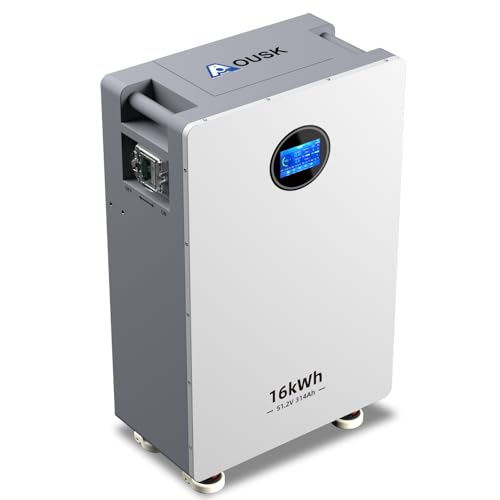
- 16.07kWh storage in one unit
- Wi-Fi, Bluetooth, display, RS232, RS485, and CAN
- Parallel expansion up to 241kWh
Best For: Whole-home backup and large solar systems
Best Budget-Friendly AGM Choice

- Maintenance-free sealed AGM construction
- Low 1–3% monthly self-discharge
- Works with RV, solar, UPS, and off-grid systems
Best For: Smaller 12V backup and UPS systems
Best Safety-Focused Whole-Home System
ECO-WORTHY Powermega 48V 314Ah

- UL 1973 certification and 10-year warranty
- Aerosol fire suppression and active-balancing BMS
- 16.07kWh with smart monitoring and inverter ports
Best For: Large indoor and whole-home backup systems
Best Budget AGM
VEVOR 12V 100Ah Deep Cycle Battery

- Maintenance-free AGM construction
- 100Ah capacity for 12V backup systems
- 800A maximum five-second discharge
Best For: Budget-conscious 12V UPS, RV, marine, and solar storage setups
Best for Whole-Home Systems
ECO-WORTHY Cubix100 48V 100Ah LiFePO4 Battery
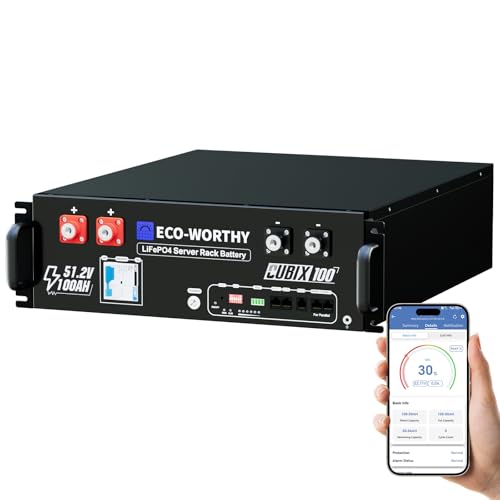
- 5,120Wh 51.2V energy-storage platform
- UL9540, UL1973, and CEC listed
- Supports monitoring and expansion to 32 units
Best For: Scalable rack-based home backup and off-grid solar systems
Best Lightweight 12V Lithium

- 1,920Wh stated energy capacity
- 4,000-plus cycles to 80% capacity
- 100A BMS and up to 4S4P expansion
Best For: Compact 12V solar, RV, and emergency backup systems
Lightweight Group 24 Upgrade

- 22.6-pound Group 24 design
- 4000+ cycles at 100% DOD
- Built-in 100A smart BMS
Best For: Compact home backup and solar storage systems
Expandable Home Backup Value
12V 100Ah Group 31 LiFePO4 Battery

- Up to 1,280Wh of stored energy
- Supports series and parallel expansion
- 100A BMS with broad protection
Best For: Modular home backup and off-grid solar builds
Cold-Weather System Builder
12V 100Ah Group 31 LiFePO4 Battery

- Low-temperature charging cutoff
- Up to 15,000-cycle rating
- Expandable to 4S4P systems
Best For: Scalable backup systems in variable climates
Best Flexible 12V Option – ECO-WORTHY 12V 314Ah LiFePO4
If you need deep cycle batteries for home backup but want a manageable 12V format, this ECO-WORTHY LiFePO4 battery offers 4,019.2Wh of storage, Bluetooth monitoring, status LEDs, and low-temperature charging protection. Its expansion options also make it useful for growing solar or backup systems.
Best For: 12V home backup, RV, off-grid, and solar systems that need monitoring and expandable capacity.
Pros:
- 314Ah capacity provides 4,019.2Wh of stored energy.
- Bluetooth app access, SOC LEDs, and a fault-alert buzzer simplify monitoring.
- 200A BMS includes low-temperature charging protection below 19.4°F.
- Can be expanded in configurations up to 32.15kWh total capacity.
Cons:
- A 12V battery may require multiple units for larger whole-home systems.
- At 60.4 pounds, it is lighter than comparable lead-acid batteries but still substantial to move.
This is a strong choice when you want lithium efficiency and smart monitoring without immediately committing to a high-voltage battery bank. Confirm inverter compatibility and expansion requirements before installation.
Best High-Capacity Single Battery – AOUSK 48V 314Ah LiFePO4
For buyers comparing deep cycle batteries for home backup at a higher system voltage, this 51.2V 314Ah LiFePO4 battery stores 16.07kWh in one unit. A display, app connectivity, communication ports, wheels, and parallel expansion support make it suited to substantial solar and backup installations.
Best For: Whole-home backup, solar storage, and off-grid systems needing high capacity and inverter communications.
Pros:
- Provides 16.07kWh of storage from a single battery.
- Supports up to 15 units in parallel for systems up to 241kWh.
- Includes Bluetooth/Wi-Fi monitoring, a color display, and RS232 connectivity.
- RS485 and CAN ports support compatibility with major inverter brands.
Cons:
- At 291 pounds, it requires careful delivery planning and positioning.
- Its 48V-class design is not a direct replacement for a typical 12V battery setup.
This battery is aimed at serious energy storage rather than small backup loads. Its built-in wheels help with placement, but installation should still account for the unit’s size, weight, and inverter requirements.
Best Budget-Friendly AGM Choice – Weize 12V 100Ah AGM
This Weize AGM battery is a straightforward option for buyers seeking deep cycle batteries for home backup without moving to lithium. Its sealed, maintenance-free 12V design offers 100Ah of capacity, low monthly self-discharge, and broad compatibility with RV, solar, UPS, and off-grid applications.
Best For: Smaller backup systems, UPS setups, RVs, and users who prefer a familiar sealed lead-acid battery.
Pros:
- Sealed AGM construction helps avoid acid leakage and routine maintenance.
- Low 1–3% monthly self-discharge supports storage between uses.
- Suitable for RV, solar, UPS, marine, and off-grid applications.
- Can deliver up to 1,100A for five seconds.
Cons:
- Its 100Ah capacity is considerably lower than the lithium batteries in this roundup.
- At 57 pounds, it is relatively heavy for its capacity.
- The warranty is limited to one year.
This is a practical fit for modest loads and established 12V systems. For longer whole-home runtimes, you may need multiple batteries, and the lead-acid chemistry generally offers less stored energy per pound than the lithium alternatives here.
Best Safety-Focused Whole-Home System – ECO-WORTHY Powermega 48V 314Ah
If safety features are a priority when choosing deep cycle batteries for home backup, the ECO-WORTHY Powermega combines 16.07kWh of storage with UL 1973 certification, active cell balancing, an external breaker, and built-in aerosol fire suppression. The listing describes this package as a two-battery configuration for large-scale energy storage.
Best For: Indoor or whole-home backup systems where high capacity, safety features, monitoring, and long warranty coverage matter.
Pros:
- UL 1973 certified and backed by a 10-year warranty.
- Active-balancing 200A BMS helps equalize cell performance.
- Aerosol fire suppression adds an extra thermal-runaway safety measure.
- 7-inch touchscreen, Wi-Fi, Bluetooth, RS485, CAN, and RS232 support system monitoring and integration.
Cons:
- Large, heavy batteries ship by pallet and require truck-accessible delivery.
- Its 48V-class architecture requires compatible equipment and installation planning.
- The listing specifies a two-battery package, so confirm the exact included configuration before ordering.
This is the most feature-rich choice here for buyers building a substantial home energy system. Its safety and communications hardware are compelling, but verify delivery logistics, inverter compatibility, and installation requirements first.
Best Budget AGM – VEVOR 12V 100Ah Deep Cycle Battery
For buyers seeking deep cycle batteries for home backup on a budget, this VEVOR AGM model offers 12V, 100Ah energy storage in a maintenance-free lead-acid design. It is intended for energy storage rather than vehicle starting and requires professional charging equipment for safe use.
Best For: Light-duty UPS backup systems, RVs, solar setups, marine applications, and other 12V energy-storage projects.
Pros:
- Maintenance-free AGM construction minimizes electrolyte upkeep.
- 100Ah capacity can extend runtime for many light-duty devices.
- Supports a maximum 800A discharge for up to five seconds.
Cons:
- It is designed for energy storage, not car ignition or starting applications.
- Professional charging equipment is required.
- At 27.7 kg, it is relatively heavy compared with lithium alternatives.
The VEVOR is a straightforward choice when you need a sealed 12V AGM battery and already have compatible charging and backup equipment. Its weight and charging requirements make system compatibility especially important.
Best for Whole-Home Systems – ECO-WORTHY Cubix100 48V 100Ah LiFePO4 Battery
For larger deep cycle batteries for home backup systems, the ECO-WORTHY Cubix100 provides a 51.2V, 100Ah LiFePO4 platform with 5,120Wh of stated energy storage. Its rack-mount format, inverter communication, and expansion support make it suited to integrated home and off-grid installations.
Best For: Home energy storage, emergency outage backup, solar installations, and off-grid cabins using compatible rack and inverter equipment.
Pros:
- UL9540, UL1973, and CEC-listed safety credentials are stated in the supplied details.
- Built-in CAN/RS485, Bluetooth, and Wi-Fi support monitoring and inverter communication.
- Up to 32 units can be paralleled for expanded capacity.
Cons:
- Its 48V-class architecture requires compatible system components.
- At 103 pounds, installation may require careful handling.
- The rack-oriented design is less convenient for small portable setups.
This is the most system-focused option in the roundup. Choose it when you want a scalable rack battery with communication features, rather than a simple standalone 12V battery.
Best Lightweight 12V Lithium – DUMFUME 150Ah LiFePO4 Battery
The DUMFUME 12V 150Ah Max is a compact lithium option for deep cycle batteries for home backup, offering stated 1,920Wh energy and more than 4,000 cycles to 80% capacity. Its built-in 100A BMS and support for series-parallel expansion make it flexible for solar, RV, and backup installations.
Best For: Compact 12V solar storage, emergency backup equipment, RVs, camper vans, and expandable off-grid systems.
Pros:
- Provides 1,920Wh of stated energy and 4,000-plus cycles to 80% capacity.
- Built-in 100A BMS protects against overcharge, over-discharge, short circuit, and overheating.
- Supports up to 4S4P series and parallel configurations.
Cons:
- Charging requires temperatures of at least 5°C.
- It is intended for energy storage, not engine starting.
- Extended storage requires a full maintenance cycle every six months.
With its lighter 41.03-pound listed weight and compact dimensions, this DUMFUME battery is easier to place than many lead-acid models. Confirm temperature, charging, and system compatibility before using it for home backup.
Lightweight Group 24 Upgrade – 12V 100Ah TM LiFePO4 Battery
For shoppers comparing deep cycle batteries for home backup, this 12V 100Ah LiFePO4 model offers a compact, lightweight alternative to lead-acid batteries. Its Group 24 form factor, built-in 100A BMS, and rated 4000+ cycles at 100% depth of discharge make it practical for smaller energy-storage systems, RVs, and solar setups.
Best For: Home energy storage users who need a lightweight Group 24 battery for backup, solar, or off-grid applications.
Pros:
- Lightweight 22.6-pound design is smaller and lighter than comparable lead-acid batteries.
- LiFePO4 cells provide 4000+ cycles at 100% DOD and up to 15,000 cycles at 60% DOD.
- Built-in smart BMS protects against overcharging, over-discharging, over-current, and short circuits.
- Group 24 dimensions support drop-in replacement in compatible battery boxes.
Cons:
- Designed for energy storage rather than engine starting.
- Charging requires the recommended 14.6V profile and 20A current for optimal results.
- Its 100Ah capacity may be limited for larger whole-home backup loads without additional batteries.
This battery is a sensible fit when easy installation and reduced weight matter more than maximum system capacity. For larger backup demands, plan on expanding the system with compatible batteries and suitable charging equipment.
Expandable Home Backup Value – 12V 100Ah Group 31 LiFePO4 Battery
This 12V 100Ah Group 31 battery is a strong candidate among deep cycle batteries for home backup, delivering up to 1,280Wh with a 100A continuous discharge rating. Its LiFePO4 chemistry, smart BMS, and series-or-parallel expandability make it useful for backup power, solar systems, RVs, and off-grid projects.
Best For: Buyers building a flexible 12V backup or solar system that may expand over time.
Pros:
- Provides up to 1,280Wh and supports up to 100A continuous discharge.
- Offers 4000 cycles at 100% DOD, 6000 at 80%, and up to 15,000 at 60% DOD.
- Supports series and parallel connections for larger DIY energy-storage systems.
- 100A smart BMS protects against overcharge, over-discharge, over-current, over-voltage, and short circuits.
Cons:
- The listed manufacturer warranty is two years, shorter than some competing options.
- At 24 pounds, it is heavier than the lightest battery in this roundup.
- Its Group 31 dimensions require a compatible battery compartment or box.
Choose this model if expandability is a priority. Its capacity and connection options give it a useful foundation for a modular backup system, although larger household loads will require multiple batteries and appropriate system components.
Cold-Weather System Builder – 12V 100Ah Group 31 LiFePO4 Battery
For deep cycle batteries for home backup that may operate through changing seasons, this 12V 100Ah Group 31 battery adds low-temperature charging protection to a scalable LiFePO4 design. It provides 1,280Wh, includes a 100A smart BMS, and can be configured in up to a 4S4P arrangement for larger off-grid or backup systems.
Best For: Home backup and solar users who want low-temperature protection and room to expand.
Pros:
- Automatic low-temperature cutoff prevents charging below 32°F (0°C).
- Grade-A LiFePO4 cells are rated for 4000 to 15,000 cycles depending on depth of discharge.
- Supports configurations up to 4S4P, allowing systems as large as 51.2V and 400Ah.
- Lightweight 24-pound Group 31 form factor is designed for compatible drop-in installations.
Cons:
- Low-temperature protection stops charging below freezing rather than allowing charging in those conditions.
- One 100Ah battery may not provide enough capacity for whole-home loads by itself.
- Requires compatible LiFePO4 charging equipment and careful system configuration when expanded.
The standout feature is its cold-weather charging cutoff, which can help protect the cells in seasonal or unheated installations. Its expansion capability also makes it a practical starting point for a larger home backup bank.
How We Picked the Best Deep Cycle Batteries for Home Backup
We focused on the specifications that matter most in residential backup systems: usable energy, battery chemistry, nominal voltage, continuous discharge capability, protection circuitry, cycle-life claims, installation flexibility, and maintenance requirements. The selection includes lithium iron phosphate (LiFePO4) and AGM batteries because they serve different budgets and system designs.
Capacity claims are listed in watt-hours where available. Actual runtime depends on inverter efficiency, discharge limits, appliance startup loads, temperature, and whether the system is configured in series or parallel. Treat manufacturer cycle-life figures as test-condition estimates rather than guaranteed service life.
Quick Comparison
| Battery type | Typical strengths | Best fit |
|---|---|---|
| LiFePO4 | High usable capacity, long cycle life, low maintenance | Frequent backup, solar storage, and long-term ownership |
| AGM | Lower upfront cost, simple compatibility, sealed construction | Occasional backup and existing lead-acid systems |
| 12V systems | Broad inverter and accessory compatibility | Small loads, portable setups, and incremental expansion |
| 48V systems | Lower current at higher power and efficient inverter operation | Whole-home or high-demand backup installations |
Key Buying Factors for Deep Cycle Batteries for Home Backup
Usable Capacity and Runtime
Calculate the combined wattage of the devices you need to run and multiply it by the expected hours of backup. Keep reserve capacity for inverter losses and avoid planning to use every rated watt-hour. A 12V 100Ah battery stores about 1,280 watt-hours when based on a 12.8V LiFePO4 nominal voltage, but the usable figure will be lower after system limits.
Voltage and Inverter Compatibility
Match the battery bank to the inverter’s required voltage. A 48V battery is generally better suited to larger systems because it carries less current for the same power output, reducing cable and connection demands. Do not connect batteries in series or parallel unless the manufacturer permits that configuration.
Chemistry, Temperature, and Protection
LiFePO4 typically offers more cycles and greater usable depth of discharge than AGM, while AGM can be easier to integrate into legacy equipment. For unheated garages or outdoor installations, look for low-temperature charge protection and follow the stated operating range. A battery management system should protect against overcharge, over-discharge, excess current, and temperature faults.
Installation and Safety
Use correctly rated cables, fuses, disconnects, and an inverter charger designed for the battery chemistry. Large 48V banks may require professional installation, ventilation planning, permitting, and equipment certified for residential energy storage. Never mix old and new batteries or different chemistries in one bank without explicit manufacturer guidance.
Who Should Buy Which Deep Cycle Batteries for Home Backup?
Choose a 12V LiFePO4 battery for modest loads, portable backup, RV use, or a system you plan to expand gradually. Select AGM when low initial cost and compatibility with an existing lead-acid charger matter more than maximum cycle life. A 150Ah-class battery is a better choice when you need longer runtime without immediately wiring multiple units.
For high-demand home backup, solar integration, or centralized storage, choose a 48V LiFePO4 system with appropriate inverter and protection equipment. Prioritize documented certifications, clear warranty terms, monitoring features, and service support when the battery will power essential household circuits.