Finding a refrigerant leak quickly can reduce callbacks, protect equipment, and help technicians complete HVAC service more efficiently. The right detector should match the refrigerants you encounter, the sensitivity you need, and the conditions of your work.
We compared 10 refrigerant leak detectors across sensor technology, portability, controls, displays, power options, and professional-use features to help you choose a practical fit for maintenance, installation, or troubleshooting.
Best 10 Refrigerant Leak Detectors Picks for 2026
Most Versatile
Rechargeable Refrigerant & Combustible Gas Detector

- Detects halogen refrigerants and combustible gases
- Up to 24 hours of rechargeable operation
- Live ppm display with adjustable sensitivity
Best For: HVAC and automotive users needing dual-gas detection
Proven Technician Pick
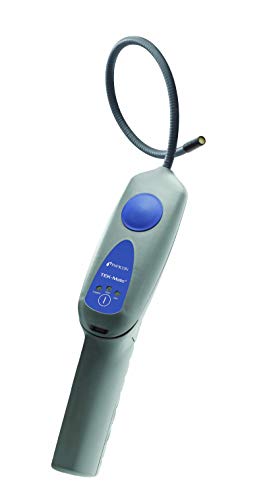
INFICON TEK-MATE 705 Heated-Diode Detector
- 0.25 oz./year sensitivity rating
- A2L certified for modern refrigerants
- Automatic background adjustment
Best For: Professional HVAC leak checking
Highest Sensitivity
Fieldpiece DR58 Heated-Diode Detector

- Detects leaks below 0.03 oz./year
- 17-inch probe reaches tight spaces
- 18-hour USB-rechargeable battery
Best For: HVACR technicians tracking micro leaks
Best Value Features
Rechargeable Digital Refrigerant Detector

- Rechargeable Type-C design with LCD display
- 11-inch flexible gooseneck probe
- Audio, light, and bar-graph alerts
Best For: Routine home, automotive, and HVAC inspections
Best Overall Precision
Fieldpiece DR82 Infrared Leak Detector

- Detects leaks smaller than 0.03 oz./yr.
- Broad refrigerant compatibility, including A2L.
- 10+ hour battery and 10-year sensor life.
Best For: HVACR technicians needing maximum sensitivity and durability
Best for Modern Refrigerants
ALD-200PRO Professional Leak Detector

- Supports A1, A2L, and A3 refrigerants.
- Color display shows concentration and leak direction.
- Adjustable sensitivity and mute function aid field work.
Best For: Technicians servicing newer and varied refrigerant systems
Best Value Infrared Option
- Adjustable sensitivity up to 0.14 oz./yr.
- Detects broad halogenated refrigerant categories.
- 10-year infrared sensor life and peak display.
Best For: Routine HVAC and automotive leak inspections
Best Overall
Aituzero Rechargeable Refrigerant Leak Detector

- 3 g/yr sensitivity with three selectable levels
- TFT readings, trend graph, and three alert modes
- USB-C rechargeable battery with up to 8 hours of use
Best For: Versatile HVAC, auto AC, and refrigeration service
Best Compact Option
Elitech WJL-6000S Freon Leak Detector

- Detects all halogenated refrigerants
- Seven adjustable sensitivity levels
- Lightweight body with quick warm-up
Best For: Portable routine HVAC and automotive AC checks
Best Heated-Diode Design
Elitech ILD-100H Refrigerant Leak Detector

- Heated diode sensor for halogen refrigerants
- 0.1 oz/yr maximum sensitivity
- TFT screen with fast response and mute control
Best For: Professional HVAC service requiring quick visual feedback
Most Versatile – Rechargeable Refrigerant & Combustible Gas Detector
Among refrigerant leak detectors, the SENSYX SFD201 stands out for combining halogen refrigerant and combustible-gas detection in one rechargeable tool. Its selectable sensitivity, live ppm display, and bar graph help you move from a broad sweep to precise leak location.
Best For: HVAC technicians and automotive service users who want one detector for refrigerants and combustible gases.
Pros:
- Detects a broad range of CFC, HCFC, HFC, HFO, and combustible gases.
- 2500mAh rechargeable battery provides up to 24 hours of continuous operation.
- Color LCD provides live ppm readings and a bar graph for easier pinpointing.
- Selectable High and Low sensitivity supports initial scanning and close inspection.
Cons:
- Metal-oxide sensor requires several hours of initial operation to reach full sensitivity.
- Correct technique is important: the probe should move slowly near the joint with drafts and fans off.
- It is a handheld inspection tool, not a substitute for a listed gas alarm.
The SFD201 is a flexible choice when combustible-gas detection matters alongside refrigerant work. Its long battery life and quantitative display are useful, provided you follow the warm-up and scanning guidance.
Proven Technician Pick – INFICON TEK-MATE 705 Heated-Diode Detector
The INFICON TEK-MATE 705 is a straightforward choice among refrigerant leak detectors for technicians who prefer a proven heated-diode design. It detects all listed CFC, HCFC, HFC, and HFO refrigerants and automatically adjusts the background to help limit false alarms.
Best For: HVAC professionals who value a rugged, A2L-certified detector with a carrying case and technician support.
Pros:
- Rated sensitivity of 0.25 oz./year (7 g/year).
- Detects all CFCs, HCFCs, HFCs, and HFOs listed in the notes.
- A2L certified and equipped with a proven heated-diode sensor.
- Includes a rugged carrying case, filters, and US technician support.
Cons:
- Runs on two D-cell alkaline batteries rather than a rechargeable battery.
- Battery life is listed at approximately 8 hours.
- Sensor life is rated at 100 hours.
With automatic background adjustment and no false alarms from soap solutions, the TEK-MATE 705 focuses on dependable refrigerant checking. Its disposable-battery setup and limited sensor life are trade-offs for a traditional, serviceable design.
Highest Sensitivity – Fieldpiece DR58 Heated-Diode Detector
For buyers prioritizing sensitivity, the Fieldpiece DR58 is one of the more capable refrigerant leak detectors in this lineup. Its heated-diode sensor detects leaks below 0.03 oz./year, while the backlit LCD, LED tip, and audible alerts make leak intensity easier to interpret.
Best For: HVACR technicians who need very high sensitivity and a long, flexible probe for difficult-to-reach areas.
Pros:
- Detects leaks below 0.03 oz./year according to the supplied specifications.
- Works with HFC, CFC, HCFC, HFO, H2N2 tracer gas, and blends.
- 17-inch probe helps reach confined spaces.
- USB-rechargeable battery provides up to 18 hours of operation.
Cons:
- Replacement filter tips are required as they wear or become contaminated.
- Its listed battery life is shorter than the longest-running rechargeable option here.
- The tool weighs about 3 pounds, which may matter during extended handheld use.
The DR58 is a strong fit for demanding HVACR diagnostics where detecting very small leaks is the priority. Its durable, moisture- and oil-resistant IP54 construction adds confidence in field conditions, while the visual indicators support faster pinpointing.
Best Value Features – Rechargeable Digital Refrigerant Detector
The Tadeto TDHRD01 offers practical features for routine refrigerant leak checks, including a rechargeable design, digital readings, and both audible and visual alerts. Its 11-inch gooseneck probe can be shaped around coils, hoses, and other obstructions.
Best For: Home, automotive, and commercial HVAC users who want an accessible rechargeable detector with a flexible probe.
Pros:
- Designed for CFC, HCFC, HFC, and HFO refrigerants, including R22, R32, R134a, R410a, R404a, and R1234yf.
- LCD readings and a bar graph show changing gas concentration.
- Combines audible, light, and display alerts.
- Includes a charging cable, user manual, and storage bag.
Cons:
- Requires approximately 30 seconds for warm-up and automatic calibration.
- Scanning too quickly or pausing midway can cause small leak signals to be missed.
- The supplied notes do not specify a sensitivity rating or battery runtime.
The TDHRD01 is a sensible everyday option when ease of use and flexible access matter more than a published ultra-high sensitivity rating. Allow it to stabilize and maintain a steady scanning speed for more consistent results.
Best Overall Precision – Fieldpiece DR82 Infrared Leak Detector
The Fieldpiece DR82 is a strong choice among refrigerant leak detectors when sensitivity, durability, and clear pinpointing matter. Its infrared sensor detects leaks smaller than 0.03 oz./yr., while the backlit LCD, LED tip, and audible beep help identify leak intensity and location.
Best For: HVACR technicians who want highly sensitive detection, broad refrigerant compatibility, and a durable tool for frequent field use.
Pros:
- Detects micro leaks smaller than 0.03 oz./yr.
- Works with CFC, HCFC, HFC, HFO, and blended refrigerants.
- IP54-rated construction, 10-year sensor life, and more than 10 hours of USB-C battery life.
- Flexible 17-inch probe and visual, LED, and audible leak indicators.
Cons:
- The feature set may be more than occasional DIY users need.
- Replacement filter tips are consumable accessories.
With exceptional stated sensitivity and a long-lasting infrared sensor, the DR82 is a compelling premium pick for technicians who need dependable refrigerant leak detection in demanding HVACR work.
Best for Modern Refrigerants – ALD-200PRO Professional Leak Detector
The ALD-200PRO is one of the more future-ready refrigerant leak detectors for technicians working with A1, A2L, and A3 refrigerants. It combines adjustable sensitivity, a flexible 16-inch probe, a color display with bar graph, and visual and audible alarms for controlled field inspections.
Best For: HVAC contractors and field technicians servicing newer refrigerants such as R32, R454B, R290, and R600.
Pros:
- Supports a wide range of A1, A2L, and A3 refrigerants.
- Three sensitivity levels help reduce false alarms near high-concentration leaks.
- Large color display and bar graph show concentration and leak direction.
- Mute function and 16-inch flexible probe improve usability in tight or quiet work areas.
Cons:
- The optional replacement probe is sold separately.
- The stated sensitivity reaches 0.14 oz./yr., lower than the Fieldpiece DR82’s specification.
The ALD-200PRO stands out for refrigerant versatility and field-oriented controls. Its adjustable sensitivity and modern display make it a practical choice for technicians handling varied equipment and evolving refrigerant systems.
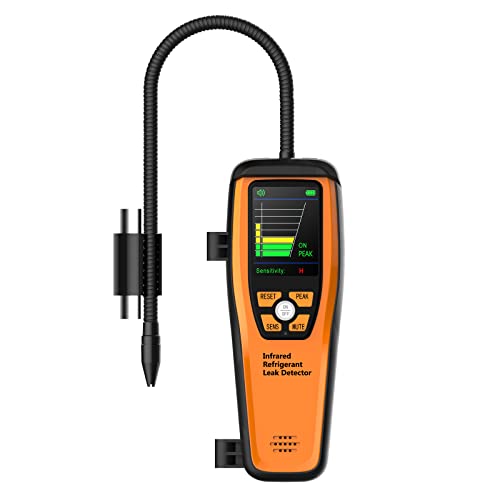
Best Value Infrared Option – Elitech ILD-200 Leak Detector
The Elitech ILD-200 is a practical infrared choice among refrigerant leak detectors, offering adjustable sensitivity and broad halogenated-gas compatibility. Its peak display helps indicate the leak’s direction, while infrared sensing is designed to provide fast response and resistance to interference.
Best For: HVAC and automotive users who want an affordable professional-style detector for common halogen refrigerants and blends.
Pros:
- Adjustable high, medium, and low sensitivity, up to 0.14 oz./yr.
- Detects CFC, HFC, HCFC, HC, HFO, and mixed refrigerants.
- Infrared sensor offers fast response, anti-interference performance, and a stated 10-year life.
- Peak display helps identify the direction of the leak while supporting quieter operation.
Cons:
- Its maximum sensitivity is lower than the Fieldpiece DR82’s stated specification.
- The listed warranty is one year.
- The supplied notes do not specify a flexible probe length or battery runtime.
The ILD-200 offers a useful balance of infrared performance, refrigerant coverage, and straightforward controls. It is a sensible option for routine HVAC or automotive inspections when extreme micro-leak sensitivity is not the primary requirement.
Best Overall – Aituzero Rechargeable Refrigerant Leak Detector
For technicians who want a versatile tool among refrigerant leak detectors, the Aituzero combines a Japanese semiconductor sensor with three sensitivity levels and a maximum sensitivity of 3 g/yr. Its color TFT display, multiple alerts, and rechargeable battery make it practical for HVAC, automotive AC, and refrigeration troubleshooting.
Best For: HVAC and refrigeration users who want real-time readings, flexible alerts, and extended cordless operation.
Pros:
- Three sensitivity levels help adapt detection to leak size and jobsite conditions.
- Sound, light, and vibration alerts can be controlled independently, with quick mute functionality.
- TFT funnel and trend-graph views show leak intensity and changes over time.
- USB-C rechargeable 2000mAh battery provides up to 8 hours of use, and the 14.5-inch gooseneck reaches tight areas.
Cons:
- The larger feature set may be more than occasional users need.
- It weighs 1.01 pounds, making it heavier than some compact battery-powered options.
Choose this model when display feedback, alert flexibility, and rechargeable field use matter as much as basic leak detection. Its broad refrigerant compatibility also supports varied HVAC, auto AC, and refrigeration work.
Best Compact Option – Elitech WJL-6000S Freon Leak Detector
The Elitech WJL-6000S is a straightforward choice among refrigerant leak detectors for users who value quick startup and simple controls. It detects all halogenated refrigerants, offers seven adjustable sensitivity levels, and uses audible and visual indicators in a compact battery-powered body.
Best For: HVAC and automotive AC users who need a lightweight, easy-to-start detector for routine inspections.
Pros:
- Detects R22, R134A, R404A, R410A, R1234YF, and other halogenated refrigerants.
- Seven sensitivity settings provide more adjustment than basic three-level detectors.
- Responds within 3 seconds and warms up in about 6 seconds.
- Lightweight 7.2-ounce design and flexible 7.9-inch probe help with portable inspections.
Cons:
- It uses replaceable batteries rather than a rechargeable battery.
- The supplied notes do not specify a numeric display or vibration alert.
- The probe is shorter than the 14.5-inch probe on the Aituzero model.
This Elitech is a sensible pick for technicians who prefer a compact, uncomplicated tool with broad halogen refrigerant coverage. Its quick warm-up and seven-position sensitivity control are useful for everyday service calls.
Best Heated-Diode Design – Elitech ILD-100H Refrigerant Leak Detector
The Elitech ILD-100H stands out among refrigerant leak detectors for its heated diode sensor and fast response. Its TFT screen displays sensitivity, leak alerts, and battery information, while high, medium, and low settings make it easier to adjust the detector for different inspection conditions.
Best For: HVAC professionals who want fast halogen refrigerant detection with on-screen operating information.
Pros:
- Heated diode sensor is designed for accurate detection of halogenated refrigerants.
- Maximum sensitivity reaches 0.1 oz/yr, with high, medium, and low settings.
- TFT screen provides clear readings for sensitivity, leakage alerts, and battery level.
- Response time is listed as within 1 second, and front buttons provide quick sensitivity and mute control.
Cons:
- It is battery powered rather than rechargeable.
- The supplied specifications list an upper temperature rating of 20 °C, which may limit use in hotter conditions.
- At 1 kg, it is substantially heavier than the WJL-6000S.
The ILD-100H is a strong fit when fast response and a clear TFT interface are priorities. Its broad halogen-gas coverage and included one-year warranty add practical value for regular service work.
How We Picked These Refrigerant Leak Detectors
We focused on the features that matter during real HVAC and refrigeration diagnostics: sensor type, stated sensitivity, refrigerant compatibility, response and reset behavior, alarm options, probe usability, display visibility, power source, and overall portability. The selection includes heated-diode, infrared, and general-purpose halogen-sniffing designs, ranging from compact rechargeable tools to professional models.
Because specifications and included accessories can vary by listing, confirm the manufacturer’s current details before purchase. A detector is a diagnostic aid, not a substitute for pressure testing, electronic isolation, or a complete leak-repair procedure.
Quick Comparison
| Type | Best suited to | Notable advantage |
|---|---|---|
| Heated diode | Frequent HVAC service | Fast, sensitive detection with familiar operation |
| Infrared | Professional technicians | Long sensor life and reduced sensitivity to contamination |
| Rechargeable compact | Maintenance and occasional use | Portable operation without disposable batteries |
| Multi-refrigerant halogen sniffer | Mixed equipment fleets | Broad application coverage |
Key Buying Factors for Refrigerant Leak Detectors
Sensor Technology
Heated-diode sensors are common, responsive, and well suited to routine service, but their sensors may eventually require replacement. Infrared models often offer long sensor life and can be a strong choice for technicians who use a detector regularly. Basic halogen sniffers may provide useful value for troubleshooting, provided their compatibility and sensitivity meet your needs.
Refrigerant Compatibility and Sensitivity
Check support for the refrigerants used in your vehicles, residential systems, or commercial equipment, such as R-22, R-410A, R-134a, R-1234yf, and newer blends. Higher sensitivity helps locate small leaks, while adjustable sensitivity can reduce false alarms in contaminated or turbulent areas.
Controls, Alarms, and Visibility
Look for clear visual indicators, audible alarms, vibration when working around loud equipment, and a useful screen or bar graph. A long flexible probe, automatic zeroing, and a quick response can make it easier to trace a leak around fittings, coils, and confined compartments.
Power and Field Durability
Rechargeable units are convenient for regular use, but verify charging time and expected runtime. Also consider protective housing, probe quality, grip, weight, and whether replacement sensors or filters are readily available.
Who Should Buy Which Refrigerant Leak Detectors?
HVAC professionals: Choose a sensitive heated-diode or infrared model with adjustable alarms, a readable backlit display, and durable construction. Infrared tools are especially appealing for high-volume service and lower long-term sensor maintenance.
Automotive technicians: Prioritize compatibility with automotive refrigerants, a flexible probe, compact handling, and a rechargeable battery if the tool will move between vehicles.
Homeowners and occasional users: A straightforward rechargeable detector can be sufficient for preliminary checks, but professional diagnosis is still recommended before opening a system or adding refrigerant.
Mixed-fleet service teams: Select a model that explicitly supports the refrigerants used across your equipment and offers adjustable sensitivity to handle different environments.