Choosing the right professional electronic refrigerant leak detector can save time on every service call and help you find smaller leaks before they become expensive failures.
Below, we focus on detection sensitivity, refrigerant compatibility, sensor type, and day-to-day usability so you can pick a tool that fits real-world HVAC and automotive work.
Best 10 Professional Electronic Refrigerant Leak Detector Picks for 2026
Budget-Friendly All-Halogen Sniffer
Elitech WJL-6000S refrigerant leak detector

- Detects all halogenated refrigerants, including R410A and R1234YF.
- 7 sensitivity levels help fine-tune leak checks.
- Fast 3-second response with audible and visual alerts.
Best For: Routine HVAC and auto AC leak checks with broad refrigerant compatibility.
Rugged Heated-Diode Classic
Inficon 705-202-G1 refrigerant leak detector
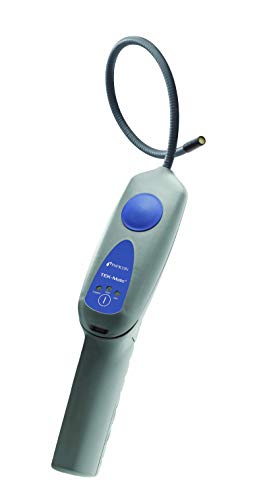
- Heated diode sensor with automatic background zeroing.
- Detects CFCs, HCFCs, HFCs, and HFOs.
- Includes a rugged carrying case for field use.
Best For: Technicians who want dependable sensing in a rugged, carry-ready package.
Ultra-Sensitive Digital Sniffer
Fieldpiece DR58 refrigerant leak detector

- Detects micro leaks below 0.03 oz/yr.
- Backlit LCD plus LED tip and beep aid pinpointing.
- 17-inch probe and 18-hour rechargeable battery.
Best For: HVACR techs who need high sensitivity and easy-to-read leak feedback.
Premium Display-and-UV Detector
Robinair LD7 refrigerant leak detector

- Color display with bar graph and sweep modes.
- UV LEDs and inspection light help find leaks in dark areas.
- Long-life sensor rated up to 10 years.
Best For: Technicians who want display guidance, UV assistance, and premium leak-tracing features.
Ultra-Sensitive Infrared Pick

- Finds micro leaks under 0.03 oz/yr
- Backlit LCD with LED tip and beep
- 10+ hour battery with USB-C charging
Best For: Technicians needing a sensitive infrared leak detector for HVACR work
Adjustable-Sensitivity Pro Choice

- Four sensitivity levels from low to super
- Automatic and manual zero modes
- Detects CFC, HCFC, HFC, HFO, blends, and A2Ls
Best For: Techs who want adjustable sensitivity and flexible zeroing
Value Infrared Sensor Model
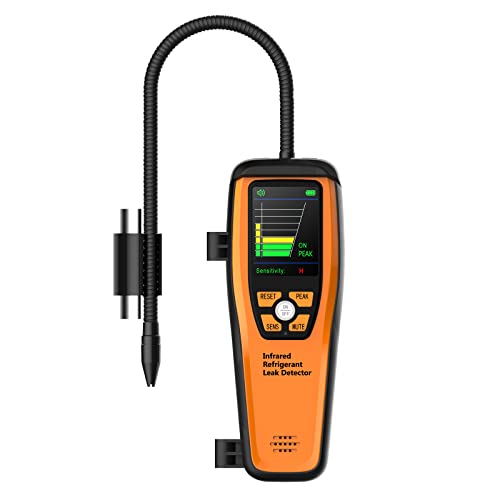
- Infrared sensor with strong anti-interference
- High, medium, and low sensitivity settings
- Large 2.8-inch screen with peak display
Best For: Professionals needing a broad-coverage infrared leak detector
A2L-ready all-rounder
WJL-6000PRO Rechargeable 3-in-1 Leak Detector

- PPM and %LEL detection
- 0.14 oz/yr sensitivity
- 1800mAh rechargeable battery
Best For: Technicians needing one detector for A2L and traditional refrigerants
Simple halogen leak checker
Elitech CLD-100 Halogen Refrigerant Leak Detector

- Corona sensor with updated analogue circuit
- 6 sensitivity levels
- Flexible 8.26-inch probe
Best For: HVAC users who need a basic halogen refrigerant sniffer
Wide-coverage heat-diode pick
Aprvtio ALD-200 Rechargeable 3-in-1 Detector

- Heated diode sensor for A1/A2L/A3
- 0.14 oz./yr sensitivity
- 2.8-inch TFT color display
Best For: Technicians and DIY users needing broad refrigerant compatibility
Budget-Friendly All-Halogen Sniffer – Elitech WJL-6000S refrigerant leak detector
If you want a professional electronic refrigerant leak detector that covers the most common halogenated refrigerants without adding much bulk, the Elitech WJL-6000S is a practical pick. It’s built for fast checks on HVAC and auto AC systems, with adjustable sensitivity and a flexible probe for reaching tight spaces.
Best For: Technicians and DIY users who need broad refrigerant compatibility and quick everyday leak checks.
Pros:
- Detects all halogenated gases, including R22, R134A, R404A, R410A, and R1234YF.
- 7 adjustable sensitivity levels let you dial in the detection range.
- Responds within 3 seconds and warms up in about 6 seconds.
- Audible and visual alarms plus dual battery indicators add convenience.
Cons:
- Battery-powered design means you’ll need to manage battery life.
- Not as feature-rich as premium models with display-based leak visualization.
Overall, this model focuses on speed, broad refrigerant support, and simple operation. It’s a strong value option if you want a straightforward leak detector for routine HVAC and AC work.
Rugged Heated-Diode Classic – Inficon 705-202-G1 refrigerant leak detector
The Inficon 705-202-G1 is a professional electronic refrigerant leak detector built around a proven heated diode sensor. It’s aimed at technicians who want dependable leak checking across common refrigerants, automatic background adjustment, and a rugged kit that’s ready for the field.
Best For: HVAC pros who value dependable sensor performance and a durable carry-ready setup.
Pros:
- Detects CFCs, HCFCs, HFCs, and HFOs, including A2L-certified use.
- Heated diode sensor and automatic background zeroing support reliable checking.
- Sensitivity of 0.25 oz./year helps catch small leaks.
- Rugged carrying case and US-based technician support add practicality.
Cons:
- Sensor life is rated at 100 hours, so it’s not the longest-lasting option here.
- Runs on D-cell batteries, which can make the tool bulkier than compact models.
This is a solid traditional leak detector for users who prioritize proven sensing and a tough, job-ready package. It’s especially appealing if you want a straightforward instrument with no-frills reliability.
Ultra-Sensitive Digital Sniffer – Fieldpiece DR58 refrigerant leak detector
The Fieldpiece DR58 is designed for users who need a professional electronic refrigerant leak detector with fast, ultra-sensitive performance. Its heated diode sensor, backlit LCD, and long probe make it a strong choice for pinpointing small leaks in HVACR systems.
Best For: HVACR technicians looking for high sensitivity, clear leak indication, and a lightweight tool.
Pros:
- Finds micro leaks down to less than 0.03 oz/yr.
- Backlit LCD, LED tip, and beep provide clear leak feedback.
- 17-inch flexible probe helps reach tight or awkward spaces.
- 18-hour USB rechargeable battery supports longer work sessions.
Cons:
- Visual alarm focus may not suit users who want the simplest audible-first tool.
- Rechargeable battery needs charging planning before longer jobs.
In practice, the DR58 stands out for sensitivity and readability. If you want a lightweight detector that helps you identify very small leaks quickly, this is one of the most capable options in the group.
Premium Display-and-UV Detector – Robinair LD7 refrigerant leak detector
If you want a professional electronic refrigerant leak detector with more visual guidance, the Robinair LD7 brings a color graphic display, sweep mode, and UV leak-finding features. It’s built for technicians working in automotive and HVAC environments who want a clearer way to trace leak intensity.
Best For: Pros who want a feature-rich detector with display feedback and UV assist.
Pros:
- Color graphic display shows leak size in bar graph and sweep modes.
- UV LEDs and an inspection light help in dark spaces and with UV dye.
- Very fast response and short warm-up time support efficient checks.
- Long-life sensor is rated to last up to 10 years.
Cons:
- Battery life is listed at about 4 hours of continuous use.
- It uses 4 AA batteries, so power management still matters on long days.
The LD7 is the most display-driven option in this roundup and is well suited to users who like visual confirmation while hunting leaks. If you want a premium, all-in-one diagnostic feel, this model is easy to justify.
Ultra-Sensitive Infrared Pick – Fieldpiece DR82 Leak Detector
If you need a professional electronic refrigerant leak detector for fast, precise HVACR troubleshooting, the Fieldpiece DR82 is built around an ultra-sensitive infrared sensor that can find micro leaks under 0.03 oz/yr. It’s designed for broad refrigerant compatibility, clear leak indication, and easier access in tight spaces without adding much bulk to the job.
Best For: Technicians who want a highly sensitive infrared sniffer with a backlit display and long battery runtime.
Pros:
- Detects very small leaks fast, with sensitivity down to <0.03 oz/yr.
- Compatible with CFC, HCFC, HFC, HFO, blends, and A2L refrigerants.
- Backlit LCD, LED tip, and beep help pinpoint leaks more easily.
- 17-inch probe, USB-C charging, and 10+ hour battery life support field use.
Cons:
- Infrared-style leak detection may be more than some casual users need.
- Replaceable filter tips add another consumable to manage.
Overall, the DR82 is a strong fit if sensitivity and clear leak confirmation matter most. Its 10-year sensor life and IP54-rated durability also make it appealing for regular HVACR work.
Adjustable-Sensitivity Pro Choice – Inficon D-TEK 3
The Inficon D-TEK 3 is a professional electronic refrigerant leak detector aimed at technicians who want control over sensitivity and zeroing. With low, medium, high, and super settings plus automatic and manual zero modes, it gives you flexible leak-hunting behavior across a wide range of refrigerants.
Best For: HVAC and refrigeration techs who want adjustable sensitivity and both automatic and manual zero modes.
Pros:
- Four sensitivity settings: low, medium, high, and super.
- Automatic and manual zero modes add flexibility in the field.
- Detects CFCs, HCFCs, HFCs, HFOs, blends, and A2Ls.
- Rugged carrying case is included.
Cons:
- Bullets provided do not specify display type or battery runtime.
- Audible alarm may be less useful in noisy environments.
For users who want a straightforward, adjustable leak detector rather than a highly specialized workflow, the D-TEK 3 has the practical feature set to cover common HVACR jobs. The included case also makes it easier to carry between calls.
Value Infrared Sensor Model – Elitech ILD-200
The Elitech ILD-200 is a professional electronic refrigerant leak detector with an infrared sensor designed for strong anti-interference performance and fast response. It offers adjustable sensitivity, a large screen, and broad halogen-gas compatibility, making it a practical pick for HVAC and automotive leak finding.
Best For: Professionals who want an infrared detector with adjustable sensitivity and wide halogen refrigerant coverage.
Pros:
- Infrared sensor is designed for faster response and longer service life than heated diode models.
- High, medium, and low sensitivity settings support different leak-search scenarios.
- Detects a wide range of halogenated gases and mixed refrigerants.
- 2.8-inch large screen shows peak display direction clearly.
Cons:
- Maximum sensitivity is listed at 0.14 oz/yr, which is not as low as some premium options.
- Details do not mention included case or battery runtime.
As a general-purpose infrared sniffer, the ILD-200 balances useful sensitivity control with broad refrigerant compatibility. It’s a solid option if you want a professional tool with a simple display and local support behind it.
A2L-ready all-rounder – WJL-6000PRO Rechargeable 3-in-1 Leak Detector
If you need a professional electronic refrigerant leak detector that can handle both traditional and A2L refrigerants, the Aprvtio WJL-6000PRO is built for broad coverage and fast field use. It combines PPM and %LEL detection, supports a wide list of refrigerants, and adds audible/visual alarms with adjustable sensitivity for more controlled leak tracing.
Best For: HVAC technicians, auto AC service, and homeowners who want one rechargeable detector for both standard and A2L refrigerants.
Pros:
- Dual detection modes: PPM for micro leaks and %LEL for A2L safety checks
- Claims 0.14 oz/yr sensitivity with auto calibration for stable readings
- Rechargeable 1800mAh battery provides over 20 hours of runtime
- All-metal probe is designed for tougher job-site durability
Cons:
- Many refrigerant types listed, so setup and mode selection may take some familiarization
- Adjustable sensitivity can require tuning to reduce false alarms in busy environments
Overall, the WJL-6000PRO stands out if you want a versatile leak detector with modern A2L support and long battery life. It is a practical option for technicians who need quick response, wide compatibility, and a durable probe in one tool.
Simple halogen leak checker – Elitech CLD-100 Halogen Refrigerant Leak Detector
The Elitech CLD-100 is a straightforward professional electronic refrigerant leak detector for halogenated refrigerants, with a traditional corona sensor and quick preheating for fast checks. It is designed for HVAC and automotive work where a flexible probe, adjustable sensitivity, and simple visual/audible alerts matter more than extra smart features.
Best For: Service techs who want a compact halogen refrigerant detector with fast response and basic, dependable controls.
Pros:
- Fast 6-second preheating and instantaneous response after warm-up
- 6 adjustable sensitivity levels with 0.21 oz/yr sensitivity
- Flexible 8.26-inch probe helps reach tight or awkward areas
- Audible and visual leak alerts with battery indicators
Cons:
- Runs on 4 AAA batteries, which are not included
- Only covers halogenated refrigerants rather than a broader A1/A2L/A3 range
The CLD-100 makes sense if you want a simple, serviceable detector focused on common halogen refrigerants like R11, R22, R134A, R404A, and R410A. Its value is in practical speed and reach, not in advanced multi-mode diagnostics.
Wide-coverage heat-diode pick – Aprvtio ALD-200 Rechargeable 3-in-1 Detector
If you want a professional electronic refrigerant leak detector with broader refrigerant coverage, the Aprvtio ALD-200 is built around a heated diode sensor and a 3-in-1 detection approach. It is aimed at HVAC and automotive work where clear concentration feedback, peak reading capture, and reduced false alarms can make leak tracing faster and easier.
Best For: HVAC professionals and DIY users who need a rechargeable detector for A1, A2L, and A3 refrigerants.
Pros:
- Heated diode sensor supports A1, A2L, and A3 refrigerants plus tracer gas
- High sensitivity up to 0.14 oz./yr for micro leak detection
- 2.8-inch TFT color display shows concentration levels clearly
- Peak Mode and Reset Function help improve usability and reduce false alarms
Cons:
- More feature-rich interface may take longer to learn than a basic sniffer
- Best results depend on proper warm-up and auto-zero calibration in clean air
For buyers who need a modern, rechargeable detector with strong refrigerant compatibility and a readable display, the ALD-200 is a solid fit. Its combination of peak mode, mute function, and durable housing makes it well suited to regular service work.
How We Picked the Best Professional Electronic Refrigerant Leak Detector
We looked for detectors that balance sensitivity, speed, and practical durability. For professional use, the best units are easy to zero in on a leak, respond quickly around fittings and coils, and stay useful across common refrigerants such as R-22, R-410A, R-134a, and newer A2L blends.
We also favored models with clear alerts, stable sensors, rechargeable power, and controls that make sense in tight mechanical rooms, hot engine bays, and commercial service environments.
Quick Comparison
Broadly, these 10 picks break into a few groups: ultra-sensitive general-purpose sniffer tools, heated diode models for strong all-around leak hunting, infrared detectors for long sensor life and clean operation, and premium professional options with better displays and sweep modes.
If you service mixed systems, prioritize compatibility. If you need fast pinpointing on small leaks, prioritize sensitivity and signal stability. If you want lower maintenance, infrared can be a smart upgrade.
Key Buying Factors for a Professional Electronic Refrigerant Leak Detector
Sensor Type
Heated diode detectors are popular for their responsiveness and strong leak-finding ability. Infrared detectors usually offer excellent stability and long service life. For frequent commercial work, the right sensor often matters more than extra features.
Sensitivity and Response
Look for a detector that can pick up very small leaks without false alarms. Fast response helps when moving across braze joints, service valves, evaporators, and compressor seals.
Refrigerant Compatibility
Make sure the detector supports the refrigerants you actually service. Many tools cover halogenated refrigerants broadly, but newer A2L and A3 compatibility can be important as systems evolve.
Display, Alerts, and Ergonomics
Good visual indicators, audible alarms, and an easy-to-read screen reduce fatigue and improve accuracy. A lightweight body and flexible probe can also make a big difference on long jobs.
Power and Maintenance
Rechargeable batteries are convenient, but sensor replacement or calibration requirements should also factor into cost of ownership. A durable detector is one you can keep in service, not just one with a strong spec sheet.
Who Should Buy Which Professional Electronic Refrigerant Leak Detector?
HVAC technicians working on residential and light commercial systems should lean toward a responsive, versatile Professional Electronic Refrigerant Leak Detector with broad refrigerant support. Automotive techs may prefer a compact model tuned for common vehicle refrigerants. Commercial service pros often benefit most from premium detectors with better displays, stronger stability, and sweep functionality for faster searching across larger systems.
If you want the simplest choice, start with the detector that matches your refrigerants first, then choose the sensor type and interface that best fit how you work every day.