Reliable drinking water is one of the most important parts of any outdoor trip or emergency kit. The best portable water purifiers make it easier to treat questionable water when access to a tap or dependable supply is limited.
We’ve gathered 10 practical options, from lightweight straw filters and squeeze systems to purifier bottles, gravity filters, electric pumps, and purification tablets, so you can choose the right balance of portability, capacity, treatment method, and convenience.
Best 10 Portable Water Purifiers Picks for 2026
Best Ultralight Pick

- 2-ounce hollow-fiber filter
- Rated up to 100,000 gallons
- Works with pouches, bottles, packs, or straw
Best For: Ultralight hiking, travel, and emergency kits
Best All-Around Purifier
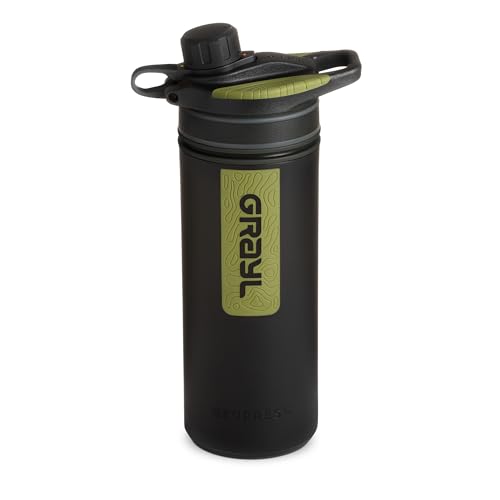
- Purifies water in about 8 seconds
- Addresses viruses, bacteria, and protozoa
- Bottle design needs no pump or batteries
Best For: Travel, survival, and broad-spectrum water treatment
Best High-Capacity Filter

- Includes two 32-ounce collapsible pouches
- 2-ounce filter rated up to 100,000 gallons
- Supports squeeze, bottle, hydration, and gravity use
Best For: Group trips, camping, and flexible camp water systems
Best Pump for Groups

- Pumps up to 1,400 ml per minute
- Uses ultrafiltration and activated-carbon stages
- Includes tubing, hose clip, and carry bag
Best For: Group camping, base camps, and emergency preparedness
Best Certified Straw
Membrane Solutions Personal Water Filter Straw S1
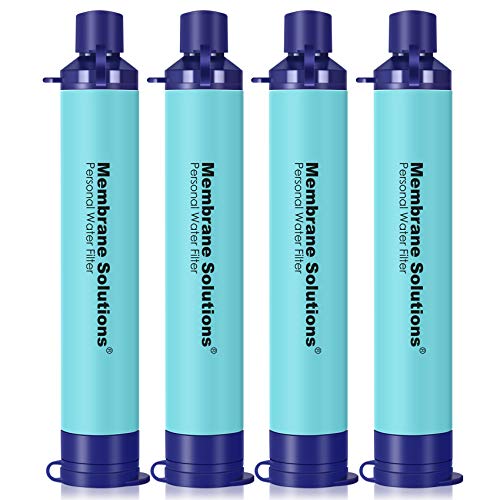
- NSF/ANSI 42, 372, and 401 certified
- 0.1-micron, five-stage filtration
- 2 ounces with up to 1,320-gallon life
Best For: Certified personal filtration for hiking, travel, and emergency kits
Best Tablet Backup
Potable Aqua Water Purification Tablets Twin Pack

- 100 tablets across two bottles
- Treats up to 50 quarts
- Lightweight, manual emergency treatment
Best For: Compact backup purification for travel, camping, and emergencies
Best Two-Pack Value
Practical Survival Reusable Water Filter Straws

- Two 0.1-micron hollow-fiber straws
- Each includes a backflushing plunger
- Reported capacity up to 1,800 gallons each
Best For: Shared outdoor use, vehicle kits, and emergency preparedness
Best Gravity-Fed Option
Waterdrop Gravity Filter Straw
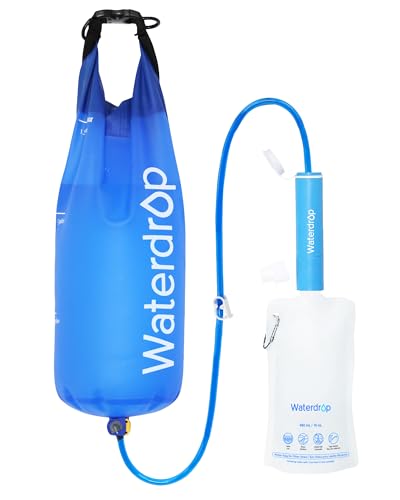
- 1.5-gallon gravity-fed water bag included
- 0.1-micron, five-stage filtration
- Up to 1,400-gallon filter capacity
Best For: Camping, backpacking, and emergency water storage
Best Ultralight Treatment

- 100 tablets for compact emergency storage
- Treats up to four gallons in 30 minutes
- Designed to reduce bacteria, viruses, and cysts
Best For: Bugout bags, hiking, camping, and backup water treatment
Best Powered Filtration
BKLES BK2000 Electric Water Filter

- Six-stage, 0.01-micron filtration system
- 700 ml-per-minute powered flow
- Up to 168,000 ml per charge stated
Best For: Extended camping trips, groups, and emergency preparedness
Best Ultralight Pick – Sawyer MINI Water Filter
The Sawyer MINI is a compact choice for anyone comparing portable water purifiers for hiking, camping, travel, or emergency preparedness. Its 2-ounce hollow-fiber filter connects to the included pouch, compatible 28 mm bottles, hydration packs, or the included straw.
Best For: Ultralight backpacking, day hikes, travel, and emergency kits where low weight and long filter life matter.
Pros:
- Weighs just 2 ounces and fits in the palm of your hand.
- Removes bacteria, protozoa, and 100% of microplastics according to the supplied specifications.
- Rated for up to 100,000 gallons and includes a cleaning plunger.
- Offers several drinking configurations, including direct-from-source use.
Cons:
- The included pouch holds only 16 ounces.
- It is a filter rather than a purifier designed to address viruses.
The MINI stands out when pack weight and exceptional rated capacity are priorities. Its manual operation and flexible connections make it practical, though users seeking virus protection may prefer a different design.
Best All-Around Purifier – GRAYL GeoPress 24 oz
The GRAYL GeoPress is a bottle-style option for shoppers seeking portable water purifiers with simple operation and broad treatment coverage. Fill the 24-ounce bottle, press the inner chamber, and drink without pumps, batteries, chemicals, or extended waiting.
Best For: International travel, camping, survival kits, and outdoor use where virus, bacteria, and protozoa protection is important.
Pros:
- Purifies 24 ounces in about 8 seconds, according to the supplied product information.
- Addresses viruses, bacteria, and protozoa.
- Also filters particulates and adsorbs VOCs, PFAS, chemicals, pesticides, heavy metals, tastes, and odors.
- Includes a replaceable cartridge rated for 65 gallons and a 10-year warranty for authorized purchases.
Cons:
- The 15.9-ounce bottle is heavier than compact inline filters.
- Its cartridge capacity is much lower than the Sawyer MINI’s stated rating.
Choose the GeoPress when comprehensive protection and fast, straightforward bottle use outweigh the added weight and cartridge replacement needs. It is particularly compelling for uncertain water sources during travel or emergencies.
Best High-Capacity Filter – Sawyer Squeeze System
The Sawyer Squeeze is a versatile selection among portable water purifiers for groups, longer trips, and flexible camp setups. The 2-ounce inline filter works with two reusable 32-ounce pouches, standard 28 mm bottles, hydration packs, or a gravity system.
Best For: Backpacking groups, camping, travel, and emergency preparedness where multiple pouch options and high rated capacity are useful.
Pros:
- Includes two 32-ounce collapsible pouches for a combined 64 ounces of supplied capacity.
- Removes bacteria, protozoa, cysts, sediment, and 100% of microplastics according to the notes.
- Weighs 2 ounces and is rated for up to 100,000 gallons.
- Can be used as a squeeze, bottle, hydration-pack, or gravity setup.
Cons:
- The supplied specifications do not indicate virus removal.
- Collapsible pouches may require more handling than a bottle-style purifier.
The Squeeze is a strong fit for users who want one lightweight filter that adapts to different camp systems. Its included pouches and gravity compatibility make it more group-friendly than the smaller MINI package.
Best Pump for Groups – Purewell Hand Purifier
The Purewell hand purifier gives portable water purifiers a pump-based format suited to shared use and fast collection. Its multistage system combines hollow-fiber ultrafiltration with activated carbon and PP cotton, and it operates without electricity from outdoor water sources.
Best For: Group camping, emergency preparedness, and situations where a pump and higher output are more practical than a squeeze pouch.
Pros:
- Supplied specifications list a flow rate of up to 1,400 ml per minute.
- Uses hollow-fiber ultrafiltration, activated carbon, and PP cotton stages.
- Rated for up to 793 gallons before reusable carbon replacement is needed.
- Includes tubing, hose clip, carry bag, and a drinking-cup-style transparent lid.
Cons:
- At about 1 pound, it is substantially heavier than the Sawyer filters.
- The notes require replacement carbon after the stated 793-gallon lifespan.
- Pumping requires more effort than bottle-based systems.
The Purewell makes sense when throughput and shared access matter more than minimal pack weight. Its multistage construction and included accessories suit emergency or base-camp use, while solo ultralight hikers may prefer a smaller filter.
Best Certified Straw – Membrane Solutions Personal Water Filter Straw S1
The Membrane Solutions S1 is one of the most compact portable water purifiers for hikers, travelers, and emergency kits. Its 0.1-micron, five-stage filtration system offers a reported flow rate of up to 500 ml per minute, while the 2-ounce body fits 28mm threaded bottles and other setups.
Best For: Backpacking, travel, emergency preparedness, and users who want a certified personal straw filter with multiple connection options.
Pros:
- Independently certified to NSF/ANSI 42, 372, and 401 standards.
- Reportedly reduces up to 99.9999% of total coliforms, including E. coli.
- Compact 7.1-inch design weighs just 2 ounces and fits 28mm threaded bottles.
- Reusable design provides up to 1,320 gallons, with removable ends for longer service life.
Cons:
- It does not lower TDS, so it is not intended for dissolved-mineral or salt removal.
- As a personal straw, it is less convenient for treating larger volumes than a gravity or pump system.
Choose this model when certifications, compact carry, and flexible bottle compatibility matter most. Its reported capacity and backflush-friendly design make it a practical option for repeated outdoor or emergency use.
Best Tablet Backup – Potable Aqua Water Purification Tablets Twin Pack
Potable Aqua tablets are a lightweight addition to any portable water purifiers kit, especially when space and simplicity matter. This twin pack contains 100 tablets total and is designed to make water bacteriologically suitable to drink when used as directed.
Best For: Emergency kits, international travel, camping, hiking, and situations where a compact chemical treatment is easier to carry than a filter.
Pros:
- Two 50-tablet bottles provide treatment for up to 50 quarts, according to the supplied details.
- Weighs just 1.44 ounces and requires no batteries or external power.
- Designed for emergency water treatment during camping, travel, and natural disasters.
- Effective against Giardia lamblia when used as directed.
Cons:
- Chemical treatment may be less appealing than mechanical filtration for some users.
- The supplied notes specify bacteriological treatment and Giardia protection, so broader contaminant reduction should not be assumed.
- Water must be used according to the product directions for effective treatment.
These tablets make a strong backup for a bug-out bag or travel pouch because they are exceptionally light and easy to store. They are best viewed as a simple treatment option for suitable water sources rather than a replacement for a filter that addresses particles or taste.
Best Two-Pack Value – Practical Survival Reusable Water Filter Straws
The Practical Survival two-pack is a useful choice among portable water purifiers when you want one filter for each of two people or a spare for an emergency kit. Each 8-inch, 2-ounce straw uses a hollow-fiber membrane rated to 0.1 micron and includes its own backflushing plunger.
Best For: Couples, families, car kits, bug-out bags, and outdoor users who want two reusable personal filters with long stated service life.
Pros:
- Two filters are included, each reportedly reducing over 99.99% of waterborne bacteria and parasites.
- 0.1-micron filtration is stated to include microplastics and organisms such as Giardia and Cryptosporidium.
- Each filter includes a backflushing plunger and is rated for up to 1,800 gallons in the supplied notes.
- Lightweight BPA-free construction is suitable for hiking, camping, travel, and emergency storage.
Cons:
- The supplied details list different capacity figures, including 1,100 and 1,800 gallons, so buyers should verify the current specification.
- These are personal straws, not a high-volume household purification system.
- They are intended for water filtration and should not be assumed to remove dissolved salts or TDS.
This two-pack stands out for shared preparedness: carry both on a trip or store one as a spare. The included plungers and long stated lifespan add practicality for repeated outdoor use, though the capacity discrepancy is worth checking before purchase.
Best Gravity-Fed Option – Waterdrop Gravity Filter Straw
The Waterdrop Gravity Water Filter Straw is a practical choice among portable water purifiers when you want a non-electric setup for camping, backpacking, or emergency preparedness. Its 1.5-gallon water bag, 0.1-micron ultrafiltration membrane, and 700 ml-per-minute maximum flow rate support convenient group hydration.
Best For: Campers, hikers, and emergency kits that need gravity-fed filtration with a large water reservoir.
Pros:
- Includes a 1.5-gallon gravity-fed water bag and a 16-ounce water pouch.
- Five-stage filtration helps reduce chlorine, particulates, sediment, bad taste, and odor.
- Rated for up to 1,400 gallons and supports backwashing to help maintain flow.
- Non-electric design connects with water bags or compatible threaded bottles.
Cons:
- Gravity-fed operation requires time and an elevated water source rather than a powered pump.
- The product is specified for source water up to 300 ppm TDS.
- Limited 30-day filter warranty.
Choose this model if capacity and simplicity matter more than compact tablet-style treatment. The included reservoir makes it especially useful for preparing several servings of drinking water at camp.
Best Ultralight Treatment – Aquatabs Purification Tablets
Aquatabs are among the most compact portable water purifiers for emergency kits, hiking, camping, and RV use. This 100-count pack treats water chemically, with each 397 mg tablet purifying up to four gallons in 30 minutes.
Best For: Bugout bags, backup supplies, and travelers who prioritize minimal weight and long-term portability.
Pros:
- Lightweight 100-tablet pack is easy to store in a backpack or emergency kit.
- Purifies up to four gallons per tablet in 30 minutes.
- Notes state reduction of 99.9999% of bacteria, 99.99% of viruses, and 99.9% of cysts including Giardia.
- Designed to avoid the bad taste, color, and odor associated with iodine tablets.
Cons:
- Tablet treatment does not provide a sediment-filtering function, so pairing it with a filter bag or straw may help with visibly dirty water.
- Requires a 30-minute treatment time.
- Does not offer the reservoir or pumping convenience of a complete filtration system.
Aquatabs make a strong lightweight backup for situations where storage space is limited. They are best viewed as a chemical treatment option, particularly when paired with separate sediment filtration for clearer water.
Best Powered Filtration – BKLES BK2000 Electric Water Filter
The BKLES BK2000 brings powered pumping and multi-stage filtration to the portable water purifiers category. Its battery-powered motor delivers up to 700 ml per minute, while the six-level system combines ultrafiltration, PP cotton, KDF, and activated carbon for camping and emergency use.
Best For: Longer trips, group hydration, and users who want powered water extraction from streams, ponds, lakes, or rivers.
Pros:
- Six-stage, 0.01-micron filtration system uses ultrafiltration, PP cotton, KDF, and activated carbon.
- Battery supports purification of up to 168,000 ml on a single charge according to the supplied notes.
- 700 ml-per-minute flow rate supports faster filling than many manual setups.
- Includes a 1.5-meter hose, storage bag, and emergency light.
Cons:
- Battery-powered operation requires charging and is less mechanically simple than a gravity filter.
- At 350 grams, it is heavier than tablet-based treatment.
- Replacement pre-filter and internal filter components must be purchased separately.
The BK2000 is a useful fit when speed and powered water intake outweigh the simplicity of a straw or tablets. Its hose and high stated single-charge capacity make it particularly suitable for extended outdoor trips or shared use.
How We Picked These Portable Water Purifiers
We selected products that address different water-treatment needs rather than treating every design as interchangeable. The roundup includes compact personal filters, higher-capacity squeeze and gravity systems, pump purifiers, bottle-based options, chemical tablets, and an electric filter. We considered portability, intended use, treatment approach, replacement or refill requirements, ease of use, and suitability for camping, hiking, travel, and emergency storage.
Before buying, check the manufacturer’s specifications carefully. “Filter” and “purifier” are not always synonymous: some products primarily reduce sediment and microorganisms, while others are designed to address additional contaminants. No portable device makes every water source safe, particularly water contaminated with fuel, industrial chemicals, or other non-biological pollutants.
Quick Comparison
| Type | Best For | Main Advantage | Trade-Off |
|---|---|---|---|
| Personal straw filter | Solo hikers and emergency kits | Very compact and simple | Usually treats one person at a time |
| Squeeze filter | Backpacking and small groups | Good balance of speed and weight | Requires squeezing and pouch handling |
| Gravity filter | Base camps and groups | Hands-off batch filtration | Needs hanging space and setup time |
| Purifier bottle | Travel and everyday carry | Collects and treats water in one container | Limited bottle capacity |
| Pump or electric filter | Emergency use and frequent filling | Can draw from shallow or awkward sources | More parts, weight, or maintenance |
| Purification tablets | Backup kits and long-term storage | Lightweight with no mechanical parts | Requires wait time and may affect taste |
Key Buying Factors for Portable Water Purifiers
Contaminant Coverage
Confirm what the product is designed to reduce or eliminate, including bacteria, protozoa, viruses, sediment, and unpleasant tastes. A filter’s micron rating is useful, but it does not by itself describe complete purification performance.
Capacity and Flow Rate
Solo users may prefer a straw or compact bottle, while families and groups generally need a squeeze, gravity, pump, or larger-batch solution. A faster flow rate can make a major difference when filling several bottles.
Weight and Packability
For backpacking, prioritize low weight and a compact packed size. Car-camping, emergency, and base-camp users can often choose a sturdier system with more capacity without worrying as much about every ounce.
Maintenance and Shelf Life
Look for replaceable cartridges, backflushing requirements, cleaning instructions, freezing precautions, and storage rules. Tablets are convenient for long-term backup storage, but always check expiration dates and packaging.
Who Should Buy Which Portable Water Purifiers?
Ultralight solo hikers: Choose a personal straw or small squeeze filter when minimal weight and direct drinking matter most.
Backpackers and travelers: A squeeze system or purifier bottle offers a practical mix of portability, capacity, and everyday convenience.
Groups and base camps: Gravity filters are often the easiest way to process repeated batches, while pump systems suit sources that are difficult to access.
Emergency-preparedness buyers: Keep a mechanical filter or purifier for immediate use and tablets as a compact backup. For any option, carry a clean storage container and follow the product’s instructions exactly.