The best energy-efficient window fans can improve ventilation and comfort without relying as heavily on air conditioning. The right choice depends on room size, window dimensions, airflow direction, controls, and operating noise.
These 10 models include reversible twin-fan designs, air circulators, remote-controlled options, thermostats, and expandable frames for common window sizes. Use the guide below to narrow the list based on your space and cooling priorities.
Best 10 Energy Efficient Window Fans Picks for 2026
Smart Temperature Control
Bionaire Reversible Window Fan

- Three reversible airflow modes
- Programmable thermostat with LED display
- Fits 24–36-inch windows
Best For: Automated cooling and flexible ventilation
Low-Wattage Airflow

- 31-watt motor with 752 CFM airflow
- Reversible intake and exhaust mode
- Fits 24–38-inch horizontal windows
Best For: Powerful, lower-wattage window circulation
Thermostat Twin Fan
Genesis High-Velocity Window Fan
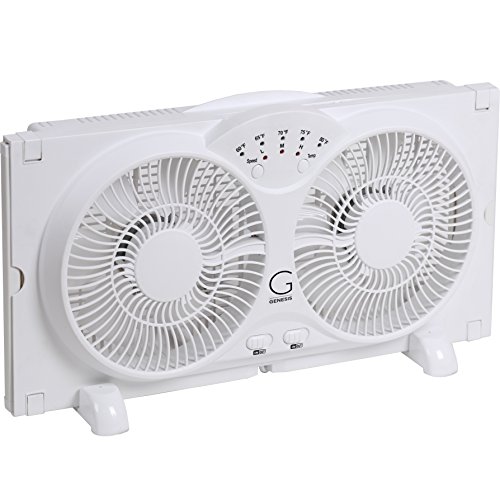
- 30-watt twin-fan design
- 60–80°F adjustable thermostat
- Expandable side panels for flexible fit
Best For: Thermostat-controlled bedroom ventilation
Simple Mechanical Cooling

- Two-speed twin-fan design
- Reversible intake or exhaust placement
- Fits 22.5–33-inch windows
Best For: Straightforward manual room ventilation
Most Versatile

- Intake, exhaust, and air-exchange modes
- 60°F–85°F thermostat control
- Fits windows 23.5–37 inches wide
Best For: Flexible room ventilation with automatic temperature control
Best Low-Profile Design

- Fits windows up to 40 inches wide
- Four speeds with timer and remote
- Automatic oscillation and washable pre-filter
Best For: Large windows and evenly distributed room airflow
Lowest Listed Wattage
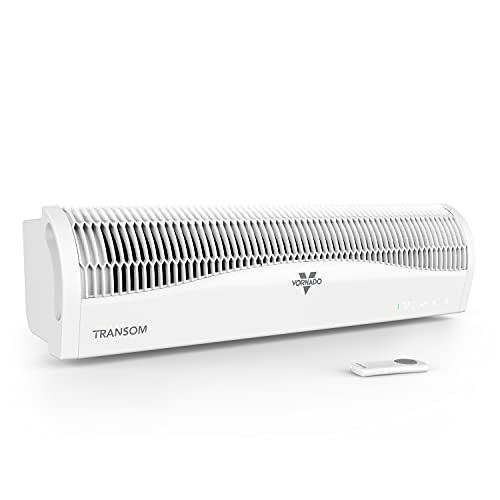
- Listed at 25 watts and 45 dB
- Electronically reversible intake and exhaust
- Fits 26–40-inch horizontal windows
Best For: Lower listed energy use and quiet whole-room circulation
Best All-Around Choice

- Three intake, exhaust, and circulation modes
- Adjustable 23.5- to 37-inch window panel
- Includes remote and foam sealing strip
Best For: Flexible whole-room airflow and varied window sizes
Best Budget-Friendly Basic
Amazon Basics 9-Inch Twin Window Fan

- 68-watt motor with two speeds
- Reversible intake and exhaust airflow
- Fits 25- to 32-inch standard windows
Best For: Simple manual ventilation in small to medium rooms
Best Remote-Controlled Option
Shinic 9-Inch Reversible Window Fan

- Remote-controlled three-speed operation
- Intake, exhaust, and circulation modes
- Fits 23.5- to 37-inch windows
Best For: Convenient adjustable airflow in bedrooms and living areas
Smart Temperature Control – Bionaire Reversible Window Fan
For shoppers comparing energy efficient window fans, the Bionaire combines three speeds with reversible airflow and a programmable thermostat. It can draw in fresh air, exhaust warm air, or exchange airflow while automatically cycling on and off around your selected temperature.
Best For: Bedrooms, home offices, and living spaces where automatic temperature control and remote operation are useful.
Pros:
- Reversible airflow supports intake, exhaust, or simultaneous exchange.
- Programmable thermostat and LED temperature display help manage operation.
- Fits 24–36-inch windows with included extender panels and requires no assembly.
- Remote control, three speeds, and a three-year limited warranty add convenience.
Cons:
- Its 120-watt rating is higher than some comparable models in this roundup.
- Installation fit depends on having a compatible window configuration.
The Bionaire is a feature-rich option when automated cycling matters more than minimizing the listed wattage. Its reversible modes and broad fit range make it flexible for everyday cooling and ventilation.
Low-Wattage Airflow – Vornado PORTAL Window Fan
The Vornado PORTAL is a strong candidate among energy efficient window fans, pairing a 31-watt motor with 752 CFM airflow. Its three speeds and reversible exhaust mode let you bring in outdoor air or remove stale indoor air from a compatible horizontal window.
Best For: Single- or double-hung windows needing powerful circulation with relatively low listed wattage.
Pros:
- 31-watt operation offers a low listed power draw.
- Reversible mode switches between intake and exhaust.
- Three speeds and quiet-operation features support adjustable comfort.
- Modular blocks provide a low-profile fit for 24–38-inch-wide windows.
Cons:
- It can only be installed horizontally.
- Screen removal may be necessary depending on window depth.
- It requires an opening at least 8 inches tall.
With its low listed wattage and high stated airflow capacity, the PORTAL stands out for shoppers prioritizing efficient circulation. Confirm the horizontal installation and window-clearance requirements before buying.
Thermostat Twin Fan – Genesis High-Velocity Window Fan
The Genesis twin fan is a practical choice for energy efficient window fans when you want thermostat control without giving up reversible ventilation. Its two 9-inch fan heads provide intake or exhaust airflow, while three speeds and a 60–80°F thermostat range support customized cooling.
Best For: Bedrooms and other rooms where dual-fan airflow, adjustable temperature control, and a wide window fit are priorities.
Pros:
- Uses 30 watts according to the supplied specifications.
- Built-in thermostat covers a 60–80°F range and includes LED indicators.
- Two 9-inch fan heads can operate for intake or exhaust purposes.
- Expandable side panels add up to 6.5 inches on each side.
Cons:
- Controls are button-based rather than remote-operated.
- The supplied notes list a brushed motor, which may be less desirable to shoppers seeking brushless operation.
- Its 706.21 CFM airflow capacity is slightly below the Vornado PORTAL’s listed capacity.
The Genesis offers a useful balance of low listed wattage, thermostat control, and twin-fan airflow. It is especially compelling when the included expandable panels match your window and remote control is not essential.
Simple Mechanical Cooling – BLACK+DECKER Dual Window Fan
The BLACK+DECKER BFW9M keeps the energy efficient window fan setup straightforward with two manually controlled speeds and reversible placement. Flip the unit to draw fresh air in or exhaust room air, while accordion expanders help fit windows from 22.5 to 33 inches.
Best For: Shoppers seeking a simple, portable twin window fan for bedrooms, kitchens, bathrooms, or living rooms.
Pros:
- 56-watt operation is listed with an energy-efficient standby shutoff feature.
- Two 9-inch fan heads provide dual airflow.
- Reversible placement supports intake or exhaust ventilation.
- Accordion expanders and removable legs help accommodate different setups.
Cons:
- Only two speed settings are available.
- It uses manual mechanical controls rather than a thermostat or remote.
- The one-year limited warranty is shorter than the Bionaire’s listed warranty.
This model suits buyers who prefer uncomplicated controls and a flexible installation range. It lacks automatic temperature management, but its reversible design and removable legs make everyday ventilation easy to configure.
Most Versatile – Shinic Twin Window Fan
For shoppers comparing energy efficient window fans, the Shinic Twin Window Fan stands out for its reversible airflow, thermostat control, and included foam sealing strip. It can draw in cool air, exhaust hot air, or exchange indoor and outdoor air while fitting windows from 23.5 to 37 inches wide.
Best For: Bedrooms and other rooms where flexible airflow direction and automatic temperature control are priorities.
Pros:
- Offers intake, exhaust, and air-exchange modes.
- Thermostat setting from 60°F to 85°F can turn the fan on or off to maintain comfort.
- Adjustable panels fit many double-hung, vertical-slider, and casement windows.
- Includes remote control and foam sealing strip to help reduce air leaks.
Cons:
- Uses 80 watts, which is higher than the Vornado TRANSOM listed here.
- The 23.5-inch minimum width may not suit smaller windows.
The Shinic is a practical choice when you want more than simple cooling. Its three airflow functions, thermostat, remote, and sealing accessory provide useful control, though buyers should measure carefully and consider its higher listed wattage.
Best Low-Profile Design – EVO Window Fan Air Circulator
The EVO Window Fan Air Circulator is a useful option among energy efficient window fans for shoppers who want adjustable airflow without giving up much of the window view. Its low-profile design fits windows up to 40 inches wide and combines four speeds, electronic exhaust, oscillation, and remote control.
Best For: Living rooms, bedrooms, and home offices where low-profile installation and broad airflow distribution matter.
Pros:
- Provides three directional airflow settings plus automatic oscillation.
- Four speed levels, timer, touch controls, and remote offer flexible operation.
- Fits windows up to 40 inches wide with adjustable side panels.
- Weather-resistant case protector, bug screen, and washable pre-filter support convenient use and maintenance.
Cons:
- The supplied notes do not specify wattage, noise level, or airflow capacity.
- Its 9.05-inch depth may require more clearance than some low-profile window openings.
The EVO emphasizes adaptable circulation and convenient controls rather than published energy-use figures. It is a strong fit for larger windows and users who value oscillation, a timer, and easy filter maintenance.
Lowest Listed Wattage – Vornado TRANSOM Window Fan
With a listed 25-watt draw, the Vornado TRANSOM is a compelling pick for shoppers seeking energy efficient window fans with whole-room circulation. It offers four speeds, electronically reversible intake and exhaust, automatic temperature control, and a weather-resistant case in a low-profile horizontal design.
Best For: Single- or double-hung windows 26 to 40 inches wide where lower listed wattage and quiet operation are important.
Pros:
- Lists 25 watts and a 45 dB noise level.
- Switches electronically between fresh-air intake and exhaust mode.
- Four speeds, remote control, and automatic temperature control support customized comfort.
- Weather-resistant construction and Soft-fit foam blocks help create a secure fit.
Cons:
- Installs only in a horizontal position.
- May require screen removal depending on window depth.
- Fits a narrower starting width than the Shinic, beginning at 26 inches.
The TRANSOM is the clearest match for buyers prioritizing the lowest listed wattage among these three products. Its installation limits are worth checking first, but the reversible airflow, quiet operation, and five-year warranty add practical value.
Best All-Around Choice – Shinic 9-Inch Twin Window Fan
For shoppers comparing energy efficient window fans, this Shinic twin model combines a 70-watt motor with three airflow modes: intake, exhaust, and circulation. Its adjustable 23.5- to 37-inch panel, foam seal strip, and remote control make it a flexible choice for bedrooms and other indoor spaces.
Best For: Households wanting flexible airflow modes, remote operation, and a wide window fit.
Pros:
- Three modes support cooling, exhausting stale air, or circulating room air.
- Expandable panel fits windows from 23.5 to 37 inches.
- Includes foam sealing tape to help reduce air leaks around the frame.
- Three speeds, remote control, carrying handles, and detachable feet add convenience.
Cons:
- The remote requires two AAA batteries, which are not included.
- At 49 dB, it may not be completely silent.
With 450 CFM airflow, ETL certification, and a broad adjustment range, this model is a strong fit when installation flexibility and controllable ventilation matter.
Best Budget-Friendly Basic – Amazon Basics 9-Inch Twin Window Fan
This Amazon Basics twin fan is a straightforward option for shoppers seeking energy efficient window fans for small to medium rooms. Its 68-watt motor, two speeds, expandable side panels, and reversible airflow provide essential cooling and exhaust functionality without extra controls.
Best For: Buyers who prefer simple manual operation for standard-size windows.
Pros:
- Two speed settings offer basic comfort adjustment.
- Reversible airflow allows the fan to bring air in or exhaust air out.
- Expandable panels fit standard windows from 25 to 32 inches wide.
- ETL specification and a copper motor support dependable operation.
Cons:
- It has fewer speeds and modes than the three-speed Shinic models.
- Manual push-button controls do not include a remote.
- The supplied notes list feet but do not mention a foam sealing strip.
This is a practical pick when you want reversible window ventilation and uncomplicated controls in a typical 25- to 32-inch window.
Best Remote-Controlled Option – Shinic 9-Inch Reversible Window Fan
This Shinic model is a useful choice among energy efficient window fans when remote control and adjustable ventilation are priorities. The 70-watt fan offers low, medium, and high speeds, three airflow modes, a 450 CFM capacity, and a 23.5- to 37-inch expandable panel.
Best For: Bedrooms, living rooms, and other indoor spaces where convenient remote adjustment is helpful.
Pros:
- Three modes handle intake, exhaust, and outdoor-air circulation.
- Remote control lets you change function and speed from a distance.
- Expandable, lockable panel accommodates windows from 23.5 to 37 inches.
- Foam seal strip helps create a tighter fit and minimize air leaks.
Cons:
- The two AAA batteries for the remote are not included.
- Its listed 49 dB noise level may be noticeable in quiet rooms.
With ETL certification, portable feet, and both window-mount and freestanding use, this fan balances convenience with versatile indoor airflow control.
How We Picked the Best Energy Efficient Window Fans
We focused on practical features that affect everyday electricity use, comfort, and ventilation rather than treating a high airflow rating as the only measure of performance. The lineup includes models with multiple speed settings, reversible intake and exhaust modes, thermostats, programmable controls, remote controls, low-noise operation, and adjustable frames.
We also considered installation flexibility. Expandable side panels and stated window ranges make it easier to match a fan to an existing opening, while weather-resistant construction can be useful when the fan remains installed during changing conditions. Energy efficiency varies with speed, runtime, room conditions, and fan design, so buyers should compare features and use patterns rather than rely on a single efficiency claim.
Quick Comparison
- Best for advanced controls: Bionaire, with a thermostat, LED display, remote, and reversible airflow.
- Best for premium whole-room circulation: Vornado TRANSOM, with multiple speeds, remote control, exhaust mode, and a weather-resistant case.
- Best for compact value: BLACK+DECKER 9-inch and Amazon Basics twin window fans.
- Best for wide window compatibility: EVO and several shinic models, which accommodate larger openings with expandable designs.
- Best for straightforward reversible airflow: Vornado PORTAL and Genesis twin-fan models.
Key Buying Factors for Energy-Efficient Window Fans
Airflow Direction and Fan Configuration
Reversible airflow lets you bring in cooler outdoor air, exhaust warm indoor air, or use separate fan functions for ventilation. Twin fans can be convenient for intake and exhaust, while an air circulator may better distribute air throughout a room.
Window Fit and Installation
Measure the usable window opening, not just the frame’s advertised width. Check whether the fan’s side panels lock securely and whether the installation method works with your window style. A close fit can reduce air leakage and improve practical performance.
Controls, Thermostats, and Runtime
Multiple speeds help you use only as much airflow as needed. A thermostat can reduce unnecessary runtime by responding to room temperature, while a remote control is useful when the fan is installed above a bed, desk, or seating area.
Noise and Energy Use
Low-noise operation matters in bedrooms, offices, and nurseries. For lower consumption, use the lowest effective speed, turn the fan off when ventilation is no longer needed, and avoid operating it against closed windows or doors when airflow cannot circulate.
Who Should Buy Which Energy Efficient Window Fans?
Choose a thermostat-equipped model such as the Bionaire if you want more automated temperature control. Select a Vornado model if whole-room air movement, sturdy construction, and convenient controls are higher priorities. Twin-fan models from Genesis, BLACK+DECKER, shinic, or Amazon Basics suit shoppers who mainly want affordable reversible ventilation.
For wide windows, prioritize the listed adjustable-width range and verify your measurements before ordering. If nighttime comfort is the priority, concentrate on low-noise claims, speed control, and remote operation. Finally, choose a fan that matches your normal ventilation routine: a simpler model is often the better value if you only need occasional intake or exhaust.