Choosing among dust extractors for small workshops means balancing suction, filtration, capacity, noise, and available floor space. The right setup captures dust at the tool, reduces cleanup, and helps keep fine particles out of the air.
This roundup compares compact shop vacuums, portable collectors, cyclone separators, wall-mounted systems, and ambient air filtration options so you can match the equipment to your tools and workshop routine.
Best 10 Dust Extractors for Small Workshops Picks for 2026
High-Capacity Choice

- 1,300 CFM airflow
- Dual 4-inch inlets
- 50-gallon mobile collection bag
Best For: Small woodworking workshops needing high capacity
Versatile Tool Extractor

- Dual vacuum and extractor modes
- Automatic power-tool activation
- HEPA filter with filter-cleaning features
Best For: Portable, multipurpose workshop cleanup
Compact Workshop Pick
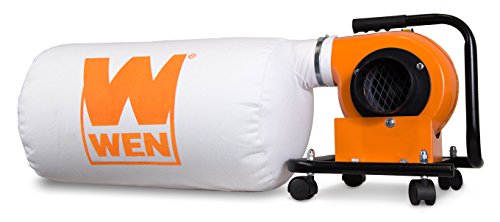
- 660 CFM airflow
- 12-gallon 5-micron bag
- Optional wall mount and lockable casters
Best For: Space-conscious workshops with one connected tool
Pre-Separator Upgrade
Dustopper PRO Cyclone Separator

- Protects the vacuum filter
- Low-profile bucket-top design
- Includes two high-flow sweep elbows
Best For: Improving an existing shop-vac dust system
Best Portable Extractor
DYNAVEX 12-Gallon Dust Extractor

- 142 CFM airflow from a 1.5 HP motor
- 0.5-micron HEPA filtration
- Auto-start tool connection and 12-gallon tank
Best For: Mobile garage and small-workshop woodworking
Best Filter-Saving Add-On
Cyclone Dust Collector Separator

- Pre-separates over 99% of debris
- Compatible with wet/dry vacuums and extractors
- Helps reduce filter clogging and suction loss
Best For: Existing shop-vac owners seeking cleaner filtration
Best High-Flow Collector
VEVOR 560 CFM Wall-Mount Dust Collector

- 560 CFM airflow from a 1 HP motor
- 21-gallon collection bag with bottom zipper
- 2.5-micron filtration for wood dust
Best For: Small and medium shops needing high airflow and capacity
Best with Extra Features
SHOPMAX 20-Gallon Dust Collector

- 677 CFM airflow from a 6.3-amp motor
- 20-gallon dust capacity
- Five hose adapters and transport wheels
Best For: Small shops wanting portable, high-capacity dust collection
High-Airflow Workhorse
VEVOR 1100 CFM Vortex Dust Collector

- 1100 CFM airflow with a 1.5HP motor
- 42-gallon collection bag
- 2.5-micron filtration for wood dust
Best For: Small to medium shops needing extended, high-volume collection
Air-Cleaning Specialist
Abestorm DecDust 1350IG Air Filtration System

- 1050-1350 CFM ambient air filtration
- MERV-11 filters with built-in ionizer
- Ceiling, workbench, or direct-mount installation
Best For: Workshops needing supplemental airborne dust and odor control
High-Capacity Choice – WEN DC1300 Dust Collector
For small workshops that need to collect dust from larger woodworking machines, the WEN DC1300 is a high-capacity option. Its 1,300 CFM airflow, dual 4-inch inlets, and 50-gallon collection bag suit setups where mobility and extended collection time matter.
Best For: Small woodworking workshops using one or two dust-producing tools.
Pros:
- Moves up to 1,300 CFM of air.
- Dual 4-inch inlets can connect up to two tools.
- Large 50-gallon vertical collection bag reduces emptying frequency.
- Mobile base with four swivel casters makes repositioning easier.
Cons:
- Its larger 50-gallon format may take more floor space than compact extractors.
- The unit has one speed and one power level.
The DC1300 is a practical pick when airflow and capacity take priority over a compact footprint. Its mobile base helps offset the larger design in a flexible workshop layout.
Versatile Tool Extractor – ECOMAX 8-Gallon HEPA Shop Vac
The ECOMAX combines everyday shop-vac cleaning with power-tool dust extraction, making it a versatile choice among dust extractors for small workshops. Its power-tool activation, HEPA filter, and included accessory kit support both connected-tool work and general cleanup.
Best For: Small workshops that want one portable vacuum for power tools, floor cleaning, and debris collection.
Pros:
- Dual-mode operation handles standard vacuuming and tool extraction.
- Power-tool activation starts the vacuum when the connected tool turns on.
- HEPA filtration, dust-full indicator, and semi-automatic filter cleaning support sustained use.
- Includes a 10-foot anti-static hose and multiple nozzles and filters.
Cons:
- The 8-gallon tank is smaller than a dedicated 50-gallon dust collector.
- Its listed noise level is 75 dB.
- It is corded and requires a 120-volt power source.
Choose the ECOMAX when flexibility is more important than maximum collection volume. Automatic tool activation and the included accessories make it especially convenient for mixed workshop cleanup.
Compact Workshop Pick – WEN DC3401 Dust Collector
The WEN DC3401 is a compact dust collector for small workshops where storage and portability are important. It provides up to 660 CFM through a 4-inch dust port and includes a 12-gallon collection bag, lockable casters, and an optional wall-mount setup.
Best For: Space-conscious woodworkers using a single tool connection and needing easy storage.
Pros:
- Compact 34.25-by-13-by-14.2-inch design weighs 17 pounds.
- 660 CFM airflow supports connection to woodworking tools through the 4-inch port.
- 12-gallon 5-micron zippered bag provides a manageable collection capacity.
- Lockable swivel casters, carrying handle, and optional wall mount improve placement flexibility.
Cons:
- Its 660 CFM airflow is lower than the larger WEN DC1300.
- The single 4-inch port is intended for one tool connection at a time.
- The 12-gallon bag requires more frequent emptying than a larger collector.
The DC3401 makes sense when a small footprint matters more than maximum airflow. Its lightweight body and wall-mount option are useful for garages and compact workshop layouts.
Pre-Separator Upgrade – Dustopper PRO Cyclone Separator
The Dustopper PRO is a compact pre-separator rather than a standalone vacuum or dust collector. It seals to a standard 5-gallon bucket and captures debris before it reaches your shop vacuum, making it a useful add-on for dust extractors for small workshops.
Best For: Small workshops looking to protect a shop-vac filter and reduce maintenance.
Pros:
- Separates dust and debris before it reaches the vacuum filter.
- Low-profile design fits more easily in tight workshop spaces.
- Includes two high-flow sweep elbows to help reduce airflow restriction from sharp turns.
- Works with a standard 5-gallon bucket and is made from anti-static resin.
Cons:
- It requires a compatible shop vacuum and standard 5-gallon bucket to create a collection system.
- It is a separator kit, not a powered dust extractor.
- Users outside the USA are responsible for import tariffs.
The Dustopper PRO is best viewed as a maintenance and filter-life upgrade for an existing vacuum setup. Its low-profile form can add pre-separation without taking up the space of a tall cyclone.
Best Portable Extractor – DYNAVEX 12-Gallon Dust Extractor
For small workshops that need a self-contained solution, the DYNAVEX is a practical choice among dust extractors for small workshops. Its 1.5 HP motor produces 142 CFM of airflow, while the 12-gallon steel tank helps reduce emptying during sawing, sanding, and routing.
Best For: Woodworkers who want a mobile extractor with HEPA filtration and automatic tool activation.
Pros:
- 0.5-micron HEPA filter helps capture fine particles.
- 12-gallon tank limits interruptions for emptying.
- Auto-start socket synchronizes with a connected power tool.
- Includes a hose, adapters, clamps, and replacement paper filters.
Cons:
- The linked tool socket is limited to 550 watts.
- Continuous auto-linked operation is limited to one hour.
- Wheels require optional installation.
The DYNAVEX combines useful capacity, portability, and fine-particle filtration in one compact unit. It is especially appealing for a garage or small shop, provided your connected tools stay within the auto-start socket’s limits.
Best Filter-Saving Add-On – Cyclone Dust Collector Separator
This cyclone separator is an add-on rather than a standalone extractor, making it useful when comparing dust extractors for small workshops. It pre-separates more than 99% of debris before air reaches a compatible shop vac or dust extractor, helping preserve suction and reduce filter clogging.
Best For: Small-shop users who already own a wet/dry vacuum or extractor and want better debris separation.
Pros:
- Pre-separates over 99% of debris according to the supplied product information.
- Parabolic design supports a fast airstream and efficient capture.
- Included adapters fit virtually all wet/dry shop vacuums and dust extractors.
- Rigid, cut-to-fit PVC connection is designed for an airtight setup.
Cons:
- Requires a separate shop vac or dust extractor.
- Its performance depends on the connected vacuum system.
- It adds another component to the dust-collection setup.
For workshops that already have a capable vacuum, this separator can be a straightforward way to keep the vacuum filter cleaner and maintain suction. It is best viewed as a filtration and maintenance upgrade, not a replacement for an extractor.
Best High-Flow Collector – VEVOR 560 CFM Wall-Mount Dust Collector
The VEVOR wall-mount collector offers high airflow for woodworkers comparing dust extractors for small workshops. Its 1 HP induction motor delivers 560 CFM, while the 21-gallon collection bag provides substantial capacity for coarse sawdust and sanding debris.
Best For: Small or medium woodworking shops that prioritize high airflow and a large collection bag.
Pros:
- 560 CFM airflow provides strong collection performance.
- 21-gallon bag reduces the frequency of emptying.
- 2.5-micron filtration helps capture fine wood dust and shavings.
- Bottom zipper allows debris removal without detaching the bag.
Cons:
- Wall-mount form factor may require suitable installation space.
- It is rated at up to 90 dB, so it may be noticeable during extended use.
- Supplied information lists only the dust collector, without a hose or tool adapters.
The VEVOR is a strong capacity-and-airflow option for a workshop with a suitable wall location. Its 2.5-micron filtration and zipper-bottom bag simplify routine collection, though buyers should plan for any additional ducting or connections needed for their tools.
Best with Extra Features – SHOPMAX 20-Gallon Dust Collector
For small workshops needing practical dust extractors, the SHOPMAX 20 Gal. 6.3 amp Dust Collector combines a 677 CFM airflow rating with a 20-gallon collection capacity. Its five hose adapters support connection to a range of woodworking machines, while the wheels and carrying handle make repositioning easier.
Best For: Small woodworking shops that need a portable collector with generous capacity and multiple hose connections.
Pros:
- 6.3-amp motor provides up to 677 CFM of airflow.
- 20-gallon capacity helps reduce emptying frequency.
- Five hose adapters support various woodworking tools.
- Wheels and an onboard handle simplify transport.
Cons:
- Its 55-pound weight may still be substantial for frequent lifting.
- The listed dimensions indicate a relatively tall footprint.
The SHOPMAX is a straightforward choice when capacity, basic mobility, and flexible tool connections matter more than a compact benchtop design. Its two-year limited warranty adds some ownership reassurance.
High-Airflow Workhorse – VEVOR 1100 CFM Vortex Dust Collector
Among dust extractors for small workshops, the VEVOR 1.5HP vortex system stands out for its 1100 CFM airflow and large 42-gallon filter bag. It is designed to handle coarse sawdust and fine debris, with 2.5-micron filtration and a clip-style bag system intended to simplify maintenance.
Best For: Small to medium woodworking operations that prioritize strong airflow and longer collection runs.
Pros:
- 1100 CFM suction supports fast removal of coarse and fine debris.
- Large 42-gallon non-woven bag reduces interruptions.
- 2.5-micron filtration helps capture wood dust and chips.
- 1.5HP induction motor is designed for steady suction.
Cons:
- Its 68.1-pound weight and large dimensions require substantial floor space.
- Noise is rated below 90 dB, which may be noticeable in a small shop.
The VEVOR favors capacity and airflow over a small footprint. It makes the most sense for workshops with enough room for a full-size collector and a need to keep woodworking sessions moving with fewer bag changes.
Air-Cleaning Specialist – Abestorm DecDust 1350IG Air Filtration System
The Abestorm DecDust 1350IG takes a different approach to dust extractors for small workshops: it filters circulating shop air rather than connecting directly to a woodworking machine. Its 1050-1350 CFM airflow, MERV-11 filters, and built-in ionizer are suited to managing airborne dust and odors in rooms up to 1,700 square feet.
Best For: Workshops needing supplemental ambient air filtration for carving, turning, scroll sawing, or similar work.
Pros:
- 1050-1350 CFM airflow is specified for rooms up to 1,700 square feet.
- Three installation options support ceiling or workbench placement.
- Touch controls and a remote provide convenient operation.
- Includes four replaceable MERV-11 filters and mounting hardware.
Cons:
- It is an ambient air filtration system, not a source-connected dust collector.
- Filters are expected to be replaced every two to four months.
- It cannot be shipped to California according to the supplied notes.
At 27 pounds, the Abestorm is easier to mount or position than the larger bag-style collectors in this roundup. Use it as an air-cleaning complement when airborne particles and odors are the main concern, rather than as the sole collector for machine-generated chips.
How We Picked These Dust Extractors for Small Workshops
We focused on equipment suited to limited workshop space and common woodworking tasks, including table saws, miter saws, sanders, routers, and portable power tools. We considered published airflow, filtration claims, collection capacity, portability, hose or ducting compatibility, and installation style. Since airflow ratings are often measured under different conditions, they are best used as a comparison point rather than a guarantee of performance at the tool.
The selection includes dedicated dust collectors, HEPA-rated shop vacuums, cyclone separators, and an ambient air filtration unit. That mix matters because no single machine is ideal for every type of dust or every workshop layout.
Quick Comparison
- Small portable jobs: Choose a compact shop vac or portable extractor with a suitable filter and tool connection.
- Stationary woodworking tools: A high-airflow collector with a larger bag is generally better for sawdust and chips.
- Fine dust: Look for HEPA or low-micron filtration, then use proper bags and keep filters maintained.
- Longer collection runs: A cyclone separator can protect the main vacuum and reduce filter loading.
- Limited floor space: Wall-mounted collectors or hanging air filters can preserve valuable bench and floor area.
Key Buying Factors
Airflow and Static Pressure
CFM alone does not tell the whole story. A collector must maintain useful airflow through the hose, fittings, separator, and tool port. Larger hoses and short, smooth runs usually improve performance, while restrictive adapters can reduce capture.
Filtration and Dust Type
Coarse chips and ordinary sawdust are easier to collect than fine sanding dust. For small workshops, prioritize a sealed system, a properly rated filter, and compatible disposable bags where available. An ambient air cleaner can supplement source capture but should not replace extraction at the tool.
Capacity, Noise, and Maintenance
Larger bags mean fewer interruptions, but they also require more storage and may be harder to move. Check replacement-bag availability, filter-cleaning procedures, motor noise, and whether the collection container is easy to remove without spilling dust.
Mobility and Connections
A mobile base is useful when one extractor serves several tools. Confirm hose diameter, included adapters, outlet compatibility, and whether the unit can support your intended ducting. Wall-mounted models work well when floor space is limited, provided the mounting surface is suitable.
Who Should Buy Which Dust Extractors for Small Workshops?
Apartment, garage, or bench-top users: Choose a compact HEPA shop vacuum or portable extractor for occasional tool use and easy storage.
Small woodworking shops with stationary saws: Select a higher-airflow collector with a generous bag and mobile base. Add a cyclone separator if frequent chip collection causes filter clogging.
Users running several tools: Consider a larger collector or wall-mounted system, but verify that the airflow and hose size match the tools used most often.
Dust-conscious finishing areas: Pair source extraction with an ambient air filtration unit. Keep the air cleaner running after work, and still wear appropriate respiratory protection when tasks create airborne fine dust.