The best deep cycle batteries for camping provide dependable power for lights, refrigerators, electronics, pumps, and other off-grid essentials. The right choice depends on your usable capacity, charging setup, weight limits, and camping style.
We compare AGM and LiFePO4 batteries in several sizes, from compact 20Ah and 35Ah options to high-capacity 200Ah models, so you can match battery performance to your RV, solar system, marine setup, or weekend campsite.
Best 10 Deep Cycle Batteries for Camping Picks for 2026
Reliable AGM Value
Weize 12V 100Ah Deep Cycle Battery

- Maintenance-free sealed AGM construction
- Low 1–3% monthly self-discharge
- 100Ah capacity; 57-pound battery
Best For: RVs, camping, solar, and moderate off-grid power
Lightweight Lithium Pick
BIC Group 31 12V 100Ah LiFePO4 Battery
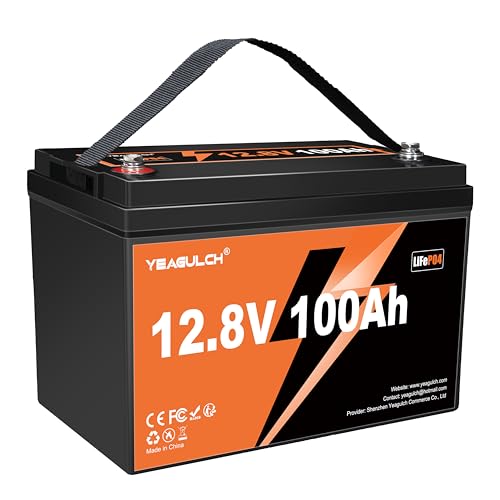
- 21.6-pound LiFePO4 design
- Up to 95% usable capacity
- 1,280Wh with 100A BMS
Best For: Portable camping, RV, solar, and off-grid systems
High-Capacity AGM
Renogy 12V 200Ah Deep Cycle Battery

- Large 200Ah nominal capacity
- Maintenance-free AGM construction
- 127.9-pound, upright-installation design
Best For: Large RV, solar, and extended camping systems
Extended Lithium Runtime
DUMFUME 12V 150Ah LiFePO4 Battery

- 1,920Wh capacity with 4,000+ cycles
- 100A BMS and IP65 waterproof rating
- Compact 41.03-pound design
Best For: RV, camper-van, solar, and off-grid camping power
Reliable AGM Power

- Sealed AGM design with minimal maintenance
- Supports common camping appliances
- Works across a wide temperature range
Best For: RVs, cabins, and stationary camping power setups
Compact Lithium Companion
ECO-WORTHY 12V 20Ah LiFePO4 Battery
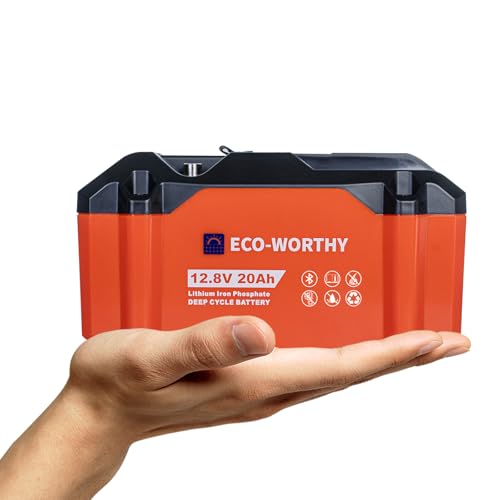
- Lightweight 5.4-pound portable design
- Bluetooth 5.1 battery monitoring
- 4,000-plus-cycle LiFePO4 chemistry
Best For: Small camping electronics, kayaks, radios, and fishfinders
Budget Backup
Daakmax 12V 35Ah AGM Battery 2-Pack
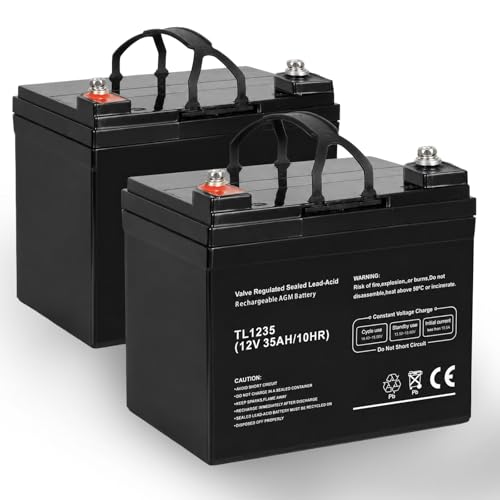
- Two rechargeable 12V, 35Ah AGM batteries
- Maintenance-free sealed design with low self-discharge
- One-year warranty and vibration-resistant ABS casing
Best For: Compact RV, solar, and backup-power systems
Long-Life Upgrade
CHITOLI 12V 100Ah LiFePO4 Battery

- 100Ah Group 24 lithium energy-storage battery
- 4,000+ cycles at 100% depth of discharge
- 100A smart BMS and five-year manufacturer warranty
Best For: Lightweight RV, camping, marine, and solar energy storage
Marine Compact Pick

- 50Ah deep-cycle power for trolling motors
- Sealed, low-maintenance AGM construction
- Compact marine design with USA-based support
Best For: Small boats, kayaks, and marine-focused camping trips
Reliable AGM Value – Weize 12V 100Ah Deep Cycle Battery
For campers seeking dependable deep cycle batteries for camping without regular upkeep, the Weize 12V 100Ah AGM battery offers sealed, maintenance-free operation. Its low 1–3% monthly self-discharge rate also makes it practical for seasonal or occasional use.
Best For: RVs, camping setups, solar systems, and other moderate 12V off-grid applications.
Pros:
- Sealed AGM design helps reduce leakage and maintenance.
- 100Ah capacity with up to 1,100A maximum discharge for five seconds.
- Low monthly self-discharge supports longer storage between charges.
- Includes a one-year warranty and weighs 57 pounds.
Cons:
- Considerably heavier than comparable lithium batteries.
- Lead-acid chemistry generally provides less usable capacity than LiFePO4.
- Charging and discharging require attention to the specified temperature ranges.
The Weize is a straightforward AGM choice when affordability, sealed construction, and familiar lead-acid technology matter more than minimizing weight. Confirm the terminal orientation and available mounting space before buying.
Lightweight Lithium Pick – BIC Group 31 12V 100Ah LiFePO4 Battery
This BIC Group 31 battery is a strong lightweight option among deep cycle batteries for camping. Its LiFePO4 chemistry offers up to 95% usable capacity, while the 21.6-pound design is much easier to carry and install than a comparable lead-acid battery.
Best For: Campers, RV owners, solar users, and off-grid systems that need extended runtime with less weight.
Pros:
- Provides 1,280Wh and up to 4,000 cycles at 100% depth of discharge.
- Uses up to 95% of its capacity compared with the stated 50% for lead-acid batteries.
- Built-in 100A BMS supports protection and system compatibility.
- Can be connected in series or parallel, up to four units as recommended.
Cons:
- Not intended for car starting, golf carts, or high-power trolling motors over 700W.
- Requires charging and discharging at least once every six months during storage.
- Compatibility with the charger and inverter should be confirmed before installation.
Choose this battery when portable weight and usable energy are priorities. It is particularly appealing for camping power systems, but its application limits mean it should not be treated as a starting battery or high-power trolling-motor battery.
High-Capacity AGM – Renogy 12V 200Ah Deep Cycle Battery
For larger camping power demands, the Renogy 12V 200Ah AGM battery provides twice the nominal capacity of a 100Ah battery. Its sealed AGM construction, low self-discharge, and performance in cooler conditions make it suitable for substantial RV or solar installations.
Best For: Large RV electrical systems, solar storage, and extended camping setups with room for a heavy battery.
Pros:
- 200Ah nominal capacity supports longer runtimes between charges.
- AGM construction is maintenance-free and designed to reduce acid leakage.
- Self-discharge is rated below 3% per month at 77°F.
- Two-year prorated warranty and reference C20 capacity of 200Ah.
Cons:
- At 127.9 pounds, it is substantially heavier than lithium alternatives.
- Large 20.5 × 9.4 × 8.8-inch dimensions require careful installation planning.
- Recommended installation is upright; upside-down installation is not permitted.
The Renogy makes sense when capacity is the priority and your camper can accommodate a heavy AGM battery. Check the mounting surface, orientation, and ventilation or installation requirements of your specific system before purchase.
Extended Lithium Runtime – DUMFUME 12V 150Ah LiFePO4 Battery
The DUMFUME 12V 150Ah LiFePO4 battery balances camping runtime with a relatively compact, 41.03-pound package. Its 1,920Wh energy rating, 100A BMS, and IP65 waterproof rating make it a versatile candidate for RV, camper-van, and off-grid power systems.
Best For: Campers needing more capacity than 100Ah while keeping weight and installation space below a large AGM battery.
Pros:
- Offers 1,920Wh of energy and over 4,000 cycles to 80% capacity.
- 100A BMS protects against overcharge, over-discharge, short circuit, and overheating.
- Supports up to 4S4P series and parallel expansion.
- Compact 10.04 × 7.68 × 9.84-inch form factor and five-year warranty.
Cons:
- Charging performance requires temperatures of at least 5°C.
- It is designed for energy storage rather than engine starting.
- Extended storage requires a full maintenance cycle every six months.
This DUMFUME battery is a practical middle ground for campers who want more stored energy without the bulk of a 200Ah AGM unit. Verify low-temperature charging conditions, system compatibility, and available clearance before committing to the installation.
Reliable AGM Power – Renogy 12V 100Ah AGM Battery
For campers who want dependable, low-maintenance power, this Renogy AGM battery is a practical choice among deep cycle batteries for camping. Its sealed lead-acid design provides stable discharge for common appliances, while the battery’s low self-discharge rate helps it hold a charge during storage.
Best For: RVs, cabins, and camping setups needing a rugged 12V battery for appliances such as refrigerators, CPAP machines, laptops, or coffee makers.
Pros:
- Sealed AGM chemistry minimizes routine troubleshooting.
- Supports parallel connections up to 4P and series connections.
- Provides discharge performance from -4°F to 140°F.
- Has a monthly self-discharge rate below 3% at 77°F.
Cons:
- At 63.9 pounds, it is considerably heavier than comparable lithium batteries.
- It has a two-year prorated warranty.
This is a solid option when safety, straightforward operation, and appliance support matter more than minimizing weight. Its AGM construction suits stationary or vehicle-based camping, but campers carrying the battery frequently may prefer a lighter LiFePO4 model.
Compact Lithium Companion – ECO-WORTHY 12V 20Ah LiFePO4 Battery
This compact ECO-WORTHY battery is designed for portable power needs, making it a convenient pick among deep cycle batteries for camping. Its LiFePO4 chemistry, Bluetooth monitoring, built-in protection, and 5.4-pound weight suit small outdoor equipment and low-draw electronics.
Best For: Campers, kayak users, amateur-radio operators, and small-appliance setups that need lightweight 12V power with phone-based monitoring.
Pros:
- Compact 8.70-by-4.45-by-4.61-inch design weighs 5.4 pounds.
- Bluetooth 5.1 provides real-time voltage, current, capacity, and lifespan monitoring.
- Offers 4,000-plus cycles and a stated lifespan exceeding 10 years.
- Includes low-temperature charging and discharge cutoffs.
Cons:
- Its 20Ah capacity is much smaller than 100Ah camping batteries.
- The DC port should remain within a 5A limit.
- The 5.5-by-2.5mm adapter wiring is not included.
Choose this model when portability and monitoring are more important than running larger appliances. The modest capacity is well matched to fishfinders, radios, USB devices, and other small loads, while the BMS adds useful protection for outdoor use.
Long-Life Group 24 – 12V 100Ah LiFePO4 Deep Cycle Battery
This Group 24 LiFePO4 battery combines 100Ah capacity with a built-in 100A BMS, giving campers a lightweight alternative to lead-acid power. For buyers comparing deep cycle batteries for camping, its long cycle rating and low-temperature protection make it suited to recurring RV and off-grid use.
Best For: RVs, solar systems, trolling motors, and off-grid camping setups that need substantial capacity and long-term lithium performance.
Pros:
- 100Ah capacity provides substantial 12V energy storage.
- Built-in 100A BMS protects against overcharge, over-discharge, overcurrent, and short circuits.
- Low-temperature protection helps prevent charging damage in cold conditions.
- Rated for up to 15,000 charge cycles and backed by a 10-year warranty.
Cons:
- The supplied notes do not specify Bluetooth monitoring or included charging equipment.
- Its Group 24 format may require compatibility checks before installation.
With 100Ah of capacity and a 26-pound weight, this battery offers a strong balance of usable power and portability for larger camping systems. Verify your equipment’s Group 24 fit and LiFePO4 charging compatibility before buying.
Budget Backup – Daakmax 12V 35Ah AGM Battery 2-Pack
For campers building a compact backup setup, these deep cycle batteries for camping provide two rechargeable 12V, 35Ah sealed AGM batteries. Their maintenance-free design and rugged casing suit RV, solar, UPS, marine, and off-grid applications.
Best For: Campers who want a two-battery AGM pack for compact RV, solar, or backup-power systems.
Pros:
- Two rechargeable 12V, 35Ah batteries provide flexible system capacity.
- Sealed AGM construction is maintenance-free and has low self-discharge for storage.
- Heavy-duty ABS casing is designed for vibration resistance and leak-proof safety.
- Includes a one-year warranty and dedicated support.
Cons:
- Each battery offers less capacity than the 100Ah lithium option in this roundup.
- Lead-acid AGM construction is heavier than lithium; individual weight is not specified.
This pack is a practical choice when you need two matching batteries and prefer simple, sealed AGM operation. Confirm your available space, wiring, and charging setup before installation.
Long-Life Upgrade – CHITOLI 12V 100Ah LiFePO4 Battery
This CHITOLI lithium battery is a strong option among deep cycle batteries for camping when extended runtime, low weight, and cycle life matter. The 12V 100Ah Group 24 battery weighs 22.6 pounds and is designed for energy storage in RV, marine, camping, trolling-motor, and solar applications.
Best For: Campers upgrading from lead-acid to a lightweight, high-capacity energy-storage battery.
Pros:
- 100Ah capacity supports larger energy-storage needs.
- LiFePO4 chemistry delivers 4,000+ cycles at 100% depth of discharge, with higher cycle claims at lower discharge levels.
- Built-in 100A smart BMS helps protect against overcharging, over-discharging, overcurrent, and short circuits.
- Group 24 form factor, 22.6-pound weight, and five-year manufacturer warranty simplify replacement planning.
Cons:
- Designed for energy storage rather than engine starting.
- Requires the specified 14.6V charging voltage and recommended 20A charging current.
- It is a single battery, unlike the two-battery AGM pack.
With its high capacity, lighter construction, and long stated lifespan, this model is well suited to campers who use power regularly. Verify charger compatibility and available Group 24 space before switching from lead-acid.
Marine Compact Pick – Newport 12V 50Ah AGM Battery
Campers who combine shoreline trips with boating may appreciate this 12V 50Ah AGM battery. It is a sealed, rechargeable deep-cycle model designed for steady power in trolling motors and compatible 12V marine electronics, with a compact format suited to smaller watercraft.
Best For: Kayaks, jon boats, inflatable boats, and camping setups that need portable marine-oriented 12V power.
Pros:
- 50Ah capacity is intended for steady, all-day trolling-motor performance.
- Sealed AGM construction provides a low-maintenance marine power solution.
- Compact, manageable design is easier to carry to a dock or shoreline.
- Newport offers USA-based in-house customer support and a one-year limited warranty.
Cons:
- 50Ah capacity is lower than the 100Ah lithium battery in this roundup.
- At 32 pounds, it is heavier than the listed 22.6-pound lithium option.
- Its stated optimization is for Newport trolling motors and compatible 12V boating electronics.
This battery makes the most sense for campers whose power needs center on small boats or trolling motors. For broader off-grid energy storage, compare its 50Ah capacity and lead-acid weight with the alternatives.
How We Picked the Best Deep Cycle Batteries for Camping
We selected batteries across the main camping use cases, including RV power systems, portable setups, solar storage, trolling motors, and small off-grid installations. Our comparison considers chemistry, capacity, battery management features, maintenance requirements, expected cycle life, portability, and compatibility with common 12V equipment.
AGM batteries remain useful for shoppers who want sealed, maintenance-free lead-acid storage at a lower upfront cost. LiFePO4 models generally offer lower weight, deeper usable discharge, longer cycle life, and more consistent voltage, although they typically cost more and require appropriate charging equipment.
Quick Comparison
| Battery type | Best suited for | Main advantage | Important trade-off |
|---|---|---|---|
| AGM | Budget RV, marine, and backup systems | Simple installation and broad compatibility | Heavier with less usable capacity per rated amp-hour |
| LiFePO4 | Frequent camping and portable solar systems | Lightweight, long-lasting, and efficient | Higher purchase price and charging requirements |
| 20–50Ah | Small electronics, kayaks, and short trips | Compact and easier to carry | Limited runtime for large appliances |
| 100–200Ah | RV living, refrigerators, and larger solar systems | More reserve power | Greater size, weight, and cost |
Key Buying Factors for Deep Cycle Batteries for Camping
Capacity and Usable Energy
Battery capacity is measured in amp-hours. A 100Ah battery can provide substantially more runtime than a 35Ah model, but actual results depend on the appliance load, inverter efficiency, temperature, and allowable depth of discharge. LiFePO4 batteries commonly provide more usable energy than similarly rated AGM batteries because they can generally be discharged more deeply.
Battery Chemistry and Cycle Life
Choose AGM when initial cost, straightforward replacement, and compatibility with an existing charger matter most. Choose LiFePO4 when low weight, frequent cycling, and long-term value are priorities. Check the manufacturer’s charging guidance, especially for cold-weather use, because lithium batteries may need low-temperature protection.
Size, Terminals, and Installation
Confirm the battery’s dimensions, terminal position, case format, and mounting space before ordering. Group 24 and Group 31 batteries are not interchangeable in every compartment. Also verify that your charger, solar controller, inverter, and wiring can handle the battery’s chemistry and maximum current.
Protection and Operating Conditions
A built-in BMS can protect lithium batteries against overcharge, over-discharge, excess current, and temperature issues. For outdoor use, review the enclosure rating and avoid assuming that a water-resistant label makes a battery suitable for submersion or exposed installation.
Who Should Buy Which Deep Cycle Batteries for Camping?
Choose a compact 20Ah or 35Ah battery for lights, small electronics, fish finders, and short outings. A 50Ah model suits kayaks, trolling motors, and modest portable power needs. For most RV weekends, solar storage, and refrigerator support, a 100Ah battery is the practical starting point. Select a 150Ah or 200Ah model when you need longer runtimes, operate multiple appliances, or want more reserve between charging sessions.
For frequent travelers and weight-sensitive setups, a 100Ah LiFePO4 battery is often the best all-around upgrade. For occasional camping or a budget replacement in an established lead-acid system, a 100Ah or 200Ah AGM battery can be the more economical choice.