Choosing the right basement heater starts with more than just BTUs. Venting type, room size, thermostat control, and installation requirements all matter when you want reliable heat without wasting energy.
Below, we break down the best options for different basement layouts, budgets, and heating needs so you can quickly narrow down the right fit.
Best 10 Natural Gas Wall Heater for Basement Picks for 2026
Direct-Vent Pick
Comfort Glow 17,000 BTU Gray Heater

- 17,000 BTU thermostatic heat
- Direct vent, no electricity needed
- Includes vent kit and safety features
Best For: Basements needing installed, vented heat
Smart Comfort Pick
Rinnai FC824N Ventless Thermostat Heater
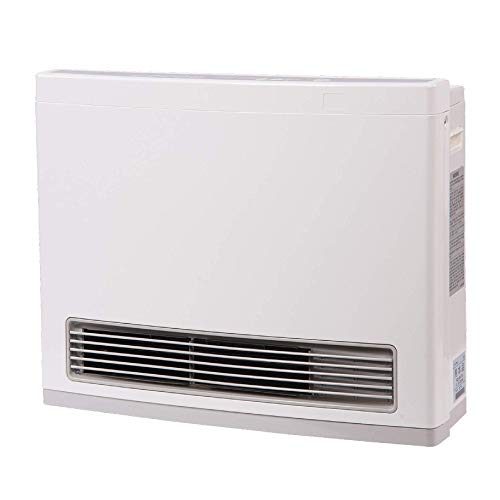
- Ventless natural gas heat with thermostat
- Built-in safety sensors and lock
- Professional installation recommended
Best For: Basements needing ventless heat with precise control
High-Coverage Pick
Ashley 25,000 BTU Dual Fuel Wall Heater

- 25,000 BTU output for up to 825 sq. ft.
- Works with natural gas or propane
- Sealed burn system with safety pilot
Best For: Larger basements needing higher heat output
Budget Ventless Pick
KWN211 12,000 BTU Gas Wall Heater

- No electricity required
- Vent-free infrared heat with manual control
- ODS safety sensor built in
Best For: Smaller basements needing simple ventless heat
High-Output Whole-Basement Heat
Mr. Heater 30,000 BTU Vent Free Blue Flame Natural Gas Heater

- 30,000 BTU/hr heats up to 1,000 sq. ft.
- No electricity or outdoor venting required.
- Built-in thermostat and low-oxygen shut-off.
Best For: Large finished basements needing vent-free whole-room heat.
Efficient Direct-Vent Comfort
Rinnai EX11DTN Direct Vent Wall Furnace

- Direct vent design with advanced modulating technology.
- Programmable thermostat and cool-to-touch cabinet.
- Rated coverage up to 1,600 sq. ft.
Best For: Basements that can use direct vent installation and efficient control.
Compact Flexible Basement Heater
ProCom Natural Gas Ventless Blue Flame Heater

- 10,000 BTU heats up to 500 sq. ft.
- Wall-mount hardware and base feet included.
- Thermostat control with ODS safety shutoff.
Best For: Small basements or flexible placement needs.
High-Output Pick
Mr. Heater 20,000 BTU Vent Free Natural Gas Heater

- 20,000 BTU output heats up to 700 sq. ft.
- Vent-free design needs no outdoor venting.
- Built-in thermostat and low oxygen shut-off.
Best For: Medium basements that need stronger vent-free heat coverage
Heavy-Duty Pick
30,000 BTU Dual Fuel Vent-Free Wall Heater
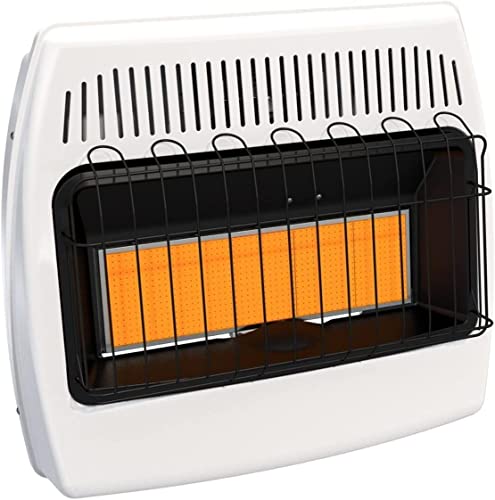
- 30,000 BTU output for up to 1,000 sq. ft.
- Dual-fuel compatibility with natural gas or propane.
- ODS and auto shut-off for added safety.
Best For: Large basements needing high-output, fuel-flexible heat
Direct-Vent Pick – Comfort Glow 17,000 BTU Gray Heater
If you want a natural gas wall heater for basement use that feels more like a permanent heating solution, this Comfort Glow direct-vent model is built for that job. It delivers 17,000 BTU of thermostatic heat for spaces up to about 500 sq. ft., and the wall-mounted design keeps floor space open. Because it vents directly through the wall, it also avoids the need for a chimney and can keep working during power outages.
Best For: Basements that need dependable, vented heat with thermostat control and no electric dependency.
Pros:
- 17,000 BTU output heats up to 500 sq. ft.
- Direct vent design works without electricity and needs no chimney
- Electronic ignition, safety pilot, and built-in pressure regulator add protection
- Includes professional vent kit for installation
Cons:
- Requires venting through the wall, so installation is more involved
- Best suited to thicker walls within the included vent kit range
- Room coverage is lower than higher-BTU alternatives
This is a strong fit if you want a safer, more traditional basement heater with vented operation and thermostat control. It is less about portability and more about steady, installed comfort.
Smart Comfort Pick – Rinnai FC824N Ventless Thermostat Heater
For buyers comparing a natural gas wall heater for basement spaces, the Rinnai FC824N stands out for its ventless design and programmable thermostat. It uses natural gas, mounts indoors, and is designed to deliver controlled warmth without ductwork. Safety features like a flame failure device, overheat switch, oxygen depletion sensor, and tilt switch make it a practical option when safety and convenience matter.
Best For: Basements where ventless installation and precise temperature control are priorities.
Pros:
- Ventless and ductless design simplifies installation
- Programmable thermostat supports more precise temperature control
- Built-in safety features include ODS, overheat switch, and tilt switch
- Cool-to-touch cabinet with safety lock adds family-friendly convenience
Cons:
- Professional installation is recommended
- Uses a floor-mount form factor rather than a true wall mount
- Not the most compact option for tight basement layouts
This model is best if you want a controlled, modern-feeling heater and are comfortable planning for professional setup. It is less of a simple DIY pick and more of a long-term comfort solution.
High-Coverage Pick – Ashley 25,000 BTU Dual Fuel Wall Heater
If your natural gas wall heater for basement needs lean toward larger spaces, this Ashley direct-vent unit brings a higher 25,000 BTU output and coverage up to 825 sq. ft. It is designed for natural gas or propane, includes matchless Piezo lighting, and uses a sealed burn system that is approved for bedrooms and living spaces. The wall-mount format helps it stay out of the way while delivering quiet operation from its stainless steel burner.
Best For: Larger basements that need stronger heat output and dual-fuel flexibility.
Pros:
- 25,000 BTU heat output covers up to 825 sq. ft.
- Designed for natural gas or propane use
- Sealed burn system and safety pilot add protection
- Includes vent kit components for installation
Cons:
- Heavier and bulkier than smaller wall heaters
- Direct-vent setup requires proper installation planning
- More heater than some small or partially finished basements need
This is a good choice when basement size pushes you beyond mid-range heaters and you want the option to run gas or propane. It trades compactness for stronger output and more flexibility.
Budget Ventless Pick – KWN211 12,000 BTU Gas Wall Heater
When you need a straightforward natural gas wall heater for basement use, the KWN211 keeps things simple with vent-free infrared heat and manual controls. It runs without electricity, uses electronic ignition, and includes an oxygen depletion sensor for added safety. With coverage listed up to 400 to 500 sq. ft., it is aimed at smaller basement areas where easy operation matters more than advanced controls.
Best For: Smaller basements or utility spaces where a no-electricity ventless heater makes sense.
Pros:
- No electricity required
- Vent-free infrared design with manual heat settings
- Built-in oxygen depletion sensor adds safety support
- Lightweight wall-mounted design is easier to handle
Cons:
- No thermostat, so temperature control is manual
- Lower 12,000 BTU output than larger alternatives
- Ventless operation may not suit every basement setup
This model makes sense if you want a basic heater that is simple to run and does not depend on power. It is a practical pick for smaller, more straightforward basement heating needs.
High-Output Whole-Basement Heat – Mr. Heater 30,000 BTU Vent Free Blue Flame Natural Gas Heater
If you need a natural gas wall heater for basement use that can cover a larger area, this Mr. Heater model is built for higher-output indoor heating. It delivers 30,000 BTU/hr, heats up to 1,000 square feet, and does not require electricity or outdoor venting, which makes it a practical option for finished basements where vent-free installation fits local requirements.
Best For: Finished basements that need strong, whole-space heat without relying on electricity.
Pros:
- 30,000 BTU output is rated to heat up to 1,000 square feet.
- Battery-operated electronic ignition is included, and no electricity is required.
- Built-in adjustable thermostat helps control room temperature.
- Includes low oxygen safety shut-off for indoor use.
Cons:
- Vent-free design may not suit every basement setup or preference.
- Blower fan kit is sold separately if you want added circulation.
- Best fit is for spaces that can use a natural gas, wall-mount heater.
This is a strong choice when basement size matters more than compact form, since its heating coverage is the biggest in the group. The tradeoff is that it is a higher-capacity vent-free heater, so it is most useful when that style matches the room and installation plan.
Efficient Direct-Vent Comfort – Rinnai EX11DTN Direct Vent Wall Furnace
For a natural gas wall heater for basement spaces that need efficient, controlled heating, the Rinnai EX11DTN focuses on steady comfort and safety. It uses direct vent design, advanced modulating technology, and a programmable thermostat to help reduce cold spots while keeping the heating output matched to the room’s needs.
Best For: Basements where direct venting is preferred and efficient temperature control matters most.
Pros:
- Advanced modulating technology helps maintain consistent temperatures.
- Direct vent wall furnace design supports indoor safety-focused installation.
- Programmable thermostat adds convenient temperature control.
- Rated to heat up to 1,600 square feet, with a cool-to-the-touch cabinet.
Cons:
- Requires direct vent installation, so setup is more involved than vent-free models.
- Lower BTU output than some larger heaters, despite broader coverage claims.
- Heavier unit at 53 pounds may be less convenient to handle.
This model stands out if you want a more refined heating solution rather than a simple high-heat box. Its focus on efficiency, safety features, and programmable control makes it a strong basement pick when direct vent installation is the right fit.
Compact Flexible Basement Heater – ProCom Natural Gas Ventless Blue Flame Heater
If you want a natural gas wall heater for basement use that can also sit on the floor, this ProCom unit is a flexible small-space option. It produces up to 10,000 BTU, heats up to 500 square feet, and includes both wall-mount hardware and base feet, so you can adapt it to the layout of a smaller basement area.
Best For: Smaller basements or multi-use spaces that need a compact heater with install flexibility.
Pros:
- Compact 10,000 BTU output is sized for up to 500 square feet.
- Includes both wall mount hardware and base feet for flexible placement.
- Thermostat control offers High/Medium/Low settings.
- Push button ignition and ODS safety shutoff add convenience and protection.
Cons:
- Not designed for larger basement spaces.
- Ventless design may not be the right choice for every home.
- Lower heat output makes it better for supplemental or smaller-area heating.
For basements where space is limited, this heater’s slim profile and dual mounting options are the main advantages. It is less about maximum coverage and more about giving you a practical, easy-to-place heating solution for smaller rooms.
Vented Pick – Comfort Glow 11,000 BTU Direct Vent Heater
If you want a natural gas wall heater for basement spaces that favors steady, direct-vent operation, this Comfort Glow model is built around efficient spot heating. It delivers 11,000 BTUs, heats up to about 350 sq. ft., and uses thermostatic control to help keep temperatures more consistent.
Best For: Smaller basements or other enclosed rooms where you want vented natural gas heat without relying on electricity.
Pros:
- Direct vent design does not require a chimney.
- No electricity needed, which helps during power outages.
- Electronic ignition, safety pilot, and built-in pressure regulator add safety-focused features.
- Includes a professional vent kit for installation on 4.5″ to 10″ thick walls.
Cons:
- Coverage is limited compared with larger output heaters.
- Installation is more involved because it uses a vent kit.
- Not the right fit if you need to heat a large basement area.
Overall, this is a practical pick if your basement needs compact, vented warmth and you prefer a wall-mounted heater with built-in safety features. Its 11,000 BTU output is best suited to smaller areas, but the no-electricity design is a real plus in utility spaces.
High-Output Pick – Mr. Heater 20,000 BTU Vent Free Natural Gas Heater
For a natural gas wall heater for basement use where stronger room coverage matters, this Mr. Heater model steps up with 20,000 BTUs and a claimed heating range up to 700 sq. ft. It is vent-free, uses electronic ignition, and includes built-in thermostat control for simpler everyday operation.
Best For: Medium-size basements, garages, or similar indoor spaces that need more heating coverage without outdoor venting.
Pros:
- Higher 20,000 BTU output for broader coverage.
- Vent-free setup avoids the need for outdoor venting.
- No electricity required, so it can still run during outages.
- Built-in thermostat and low oxygen safety shut-off add convenience and safety features.
Cons:
- Listed high-altitude restriction limits where it can be used.
- Blower fan kit is sold separately.
- Vent-free heaters may not suit buyers who specifically want direct venting.
This model is a strong fit when you want more output than a small wall heater can provide and you do not want the extra work of venting outdoors. Its combination of thermostat control, safety shut-off, and solid heat coverage makes it a sensible basement option.
Heavy-Duty Pick – 30,000 BTU Dual Fuel Vent-Free Wall Heater
30,000 BTU Natural Gas/Propane Wall Heater for Indoor Use - Dual Fuel, Vent-Free
Check Price On AmazonIf you need a natural gas wall heater for basement heating with more muscle, this 30,000 BTU vent-free unit is designed for larger indoor areas. It uses infrared/radiant heat, is thermostatically controlled, and can run on either natural gas or propane, which adds flexibility for different setups.
Best For: Larger basements or multi-use indoor spaces where high output and dual-fuel flexibility are priorities.
Pros:
- 30,000 BTU output is the strongest in this group.
- Dual-fuel design works with natural gas or propane.
- No electricity and no outside venting required.
- Includes an oxygen depletion sensor and auto safety shut-off.
Cons:
- Not sold in CA, AK, or HI.
- Vent-free operation may not appeal to everyone.
- Heavier and larger than smaller wall heaters.
For bigger basement spaces, this heater stands out for raw output and fuel flexibility. It combines thermostatic control with safety features and high efficiency, making it a practical option when you need more heat than a compact wall unit can deliver.
How We Picked the Best Natural Gas Wall Heater for Basement
We focused on heaters that make sense for below-grade spaces: strong heat output, wall-mounted or space-saving designs, thermostat compatibility, and clearly defined vented or vent-free operation. We also weighed coverage area, ignition type, and whether each model is better suited to a finished basement, workshop, or utility space.
Quick Comparison: What Matters Most
For a Natural Gas Wall Heater for Basement use, the biggest decision is vented versus vent-free. Direct vent models move combustion exhaust outside and can be a better fit for enclosed or frequently occupied basements. Vent-free models are often easier to install and can deliver fast warmth, but they require more attention to room size, air quality, and local code requirements.
From there, compare BTU output to your square footage. Lower-output units are usually enough for smaller, insulated basements, while larger or draftier spaces need more capacity. Also look for thermostatic control if you want steadier temperatures instead of constant cycling.
Key Buying Factors for a Natural Gas Wall Heater for Basement
Heating Capacity
Match BTUs to the basement’s size, insulation, ceiling height, and how often the space is used. Oversizing can cause short cycling, while undersizing leaves cold spots.
Venting and Code Requirements
Direct vent and vent-free systems are not interchangeable. Check local regulations before buying, especially in finished basements or homes with tight air sealing.
Controls and Convenience
Thermostats, electronic ignition, and programmable settings improve comfort and efficiency. These features matter more in basements where temperatures can swing widely.
Installation and Placement
Measure wall clearance, nearby framing, and gas line access before you choose a unit. Some models are simpler for retrofit projects, while others are better for permanent installations.
Who Should Buy Which Natural Gas Wall Heater for Basement?
If you want a cleaner installation and more controlled combustion, choose a direct vent unit. If you need fast supplemental heat for a finished basement and local rules allow it, a vent-free model may be the more practical choice. Smaller, well-insulated rooms usually do fine with lower BTU heaters, while larger basements or open layouts should prioritize higher output and stronger airflow.
For the best long-term satisfaction, buy the heater that fits your basement’s real conditions, not just its square footage on paper. The right balance of output, venting, and controls will deliver more comfort and fewer headaches over time.