Choosing among welding machines for automotive work depends on the metal thickness, repair type, available power, and the level of control you need. This roundup includes portable multiprocess welders, gasless MIG models, stick machines, and dedicated plastic repair tools.
Use the comparison and buying advice below to narrow the list by capability, portability, operating cost, and suitability for body panels, brackets, frames, and plastic components.
Best 10 Welding Machines for Automotive Work Picks for 2026
Plastic Repair Specialist

- Repairs many automotive plastic components
- Heats staples in about 1–2 seconds
- Includes 1,000 staples in six styles
Best For: Bumper, dashboard, trim, and other plastic repairs
Versatile Shop Upgrade
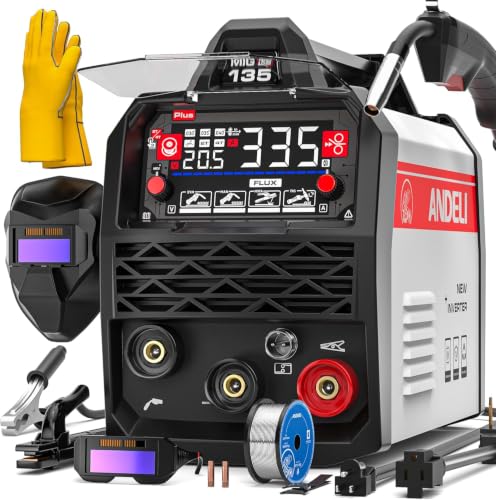
- Combines pulse MIG, MIG, stick, and lift TIG
- Works with 110V or 220V power
- Includes helmet, gloves, wire, and accessories
Best For: Flexible automotive and workshop welding
Complete Plastic Repair Kit
220W Automotive Plastic Welder

- Supports staples and plastic-rod repairs
- Includes 1,002 staples and 100 plastic rods
- Covers several common automotive plastics
Best For: Comprehensive bumper and plastic-part repairs
Thin-Panel Friendly Pick

- Handles gasless MIG, stick, and lift TIG
- Synergic control helps limit burn-through
- Includes two sizes of flux-core wire
Best For: Thin mild-steel auto panels and DIY repairs
Best Portable Stick Welder

- 20–200A adjustable output
- 3.7-pound portable design
- Includes rods and basic accessories
Best For: Portable automotive repairs and DIY stick welding
Best Versatile MIG Welder
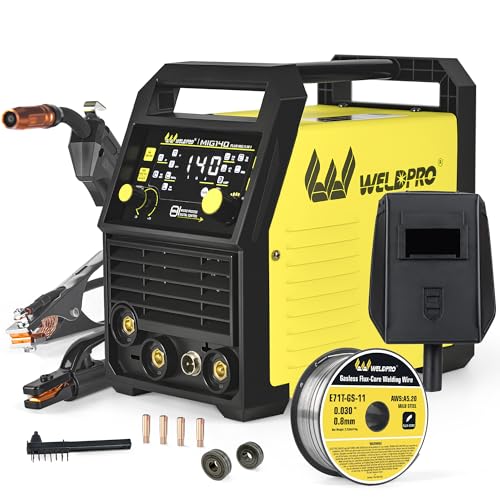
- Five welding processes in one unit
- Automatic 110V/220V detection
- Includes flux-core wire and helmet
Best For: Flexible garage and automotive repair work
Best Handheld Welder
Saker Portable 120A ARC Welder
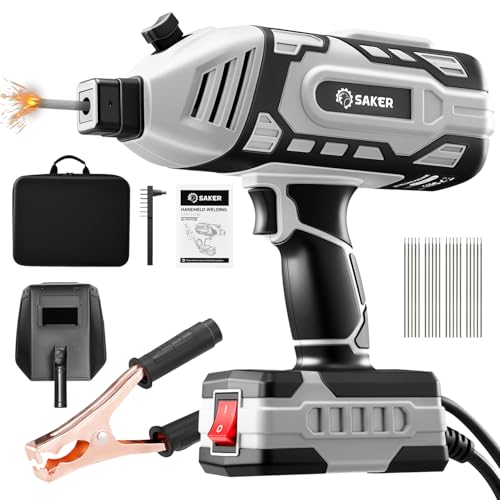
- 20–120A five-setting output
- Only 3.3 pounds
- Hot-start and thermal protection
Best For: Light automotive repairs and mobile welding tasks
Portable Stick Specialist

- 200A-rated 110V stick welder
- Hot Start, Arc Force, and Anti-Stick
- 5-pound body with shoulder strap
Best For: Mobile and outdoor stick-welding repairs
Outdoor Repair Choice
SEESII 135A Multi-Process Welder

- Gasless MIG, MMA, and Lift TIG modes
- Portable 7.7-pound 110V design
- Includes flux-core wire and MIG torch
Best For: Outdoor auto repairs and farm maintenance
Plastic Repair Specialist – ATOLS Plastic Welder Kit
For automotive projects involving cracked bumpers, dashboards, lamp holders, or other plastic components, the ATOLS kit is a focused option among welding machines for automotive work. It uses heated staples to reinforce damaged plastic and includes six staple shapes for different repair needs.
Best For: DIY repairs to automotive and motorcycle plastic parts, including bumpers, spoilers, headlights, and dashboards.
Pros:
- Designed to repair at least 98% of plastics, according to the supplied product information.
- Heats staples in about 1–2 seconds and includes a front operating light.
- Includes 1,000 stainless-steel staples in six styles plus pliers and a carry case.
- Ergonomic rubber handle supports comfortable extended use.
Cons:
- It is intended for plastic repair rather than metal welding.
- The corded AC design is less convenient where an outlet is unavailable.
This is a practical, portable choice when your automotive repair work centers on plastic reinforcement rather than conventional metal fabrication. The broad staple assortment makes it adaptable for common bumper and trim repairs.
Versatile Shop Upgrade – ANDELI 135A Pulse MIG Welder
The ANDELI 135A is a multiprocess option for shoppers comparing welding machines for automotive work. Its 110V/220V input, pulse flux-core MIG mode, stick mode, and lift TIG capability give it flexibility for vehicle repairs and broader workshop projects.
Best For: Automotive users who want one portable machine for flux-core MIG, stick, and occasional lift TIG work.
Pros:
- Offers four functions: pulse flux-core MIG, gasless MIG, lift TIG, and MMA.
- Dual-voltage operation supports both 110V home outlets and 220V setups.
- Supports .030, .035, and .040-inch flux-core wire and includes adjustable inductance.
- Includes a helmet, gloves, wire, torch accessories, and a 4.1-inch LED display.
Cons:
- The lift TIG torch is sold separately.
- Its stated maximum material thickness is 5.0 mm, so heavier fabrication may require a larger machine.
With multiprocess capability and dual-voltage flexibility, this model suits users who want more than a basic gasless MIG unit. Its 9.04-pound listed weight also makes it convenient for mobile automotive work.
Complete Plastic Repair Kit – 220W Automotive Plastic Welder
This 220W kit is built for automotive plastic repair and offers two approaches: embedding hot staples or welding with plastic rods. For shoppers seeking welding machines for automotive work focused on bumpers and trim, the extensive consumables package adds useful material coverage.
Best For: Repairing plastic bumpers, fenders, dashboards, motorcycle parts, and other ABS, PP, TPO, TPE, and related components.
Pros:
- Provides both hot-staple reinforcement and plastic-rod welding.
- Includes 1,002 hot staples, 100 plastic rods, mesh, foil, sponges, pliers, and smoothing tips.
- 220W output is designed for rapid heating, with overheat protection.
- An LED headlamp and nonslip handle support visibility and handling.
Cons:
- It uses a 110V US plug and is not described as dual-voltage.
- This is a plastic repair tool, not a conventional metal MIG or stick welder.
The combination of staples, rods, and finishing accessories makes this one of the more comprehensive plastic-focused choices in the roundup. It is especially useful when repairs vary across different automotive plastics.
Thin-Panel Friendly Pick – YESWELDER 135A MIG
The YESWELDER 135A is a compact gasless machine aimed at accessible automotive welding. Its synergic control helps match voltage to wire-feed speed, while the small voltage adjustment range is intended to help reduce burn-through on thin auto body panels.
Best For: Beginners and mobile DIY users repairing mild-steel automotive panels with flux-core wire.
Pros:
- Supports gasless flux-core MIG, stick, and lift TIG with an additional TIG torch.
- Synergic control and ±3V micro-adjustment help tune settings for thin panels.
- 135A output handles mild steel up to 3/32 inch, according to the supplied notes.
- Includes .030 and .035-inch flux-core wire and weighs 11.4 pounds.
Cons:
- Lift TIG requires an extra torch.
- It is a 110V machine, without the dual-voltage flexibility of some alternatives.
- Its stated material capability is limited to relatively light-duty automotive work.
This model is a sensible entry point for thin automotive steel and outdoor repairs where shielding gas is inconvenient. Its portability and beginner-oriented controls are useful, though heavier fabrication calls for a more powerful welder.
Best Portable Stick Welder – Super Mini 200A Stick Welder
For shoppers comparing welding machines for automotive work, this compact 110V stick welder offers adjustable 20–200A output in a highly portable package. It can handle mild steel and cast iron from 0.06 to 0.2 inches thick, while its hot-start, anti-stick, and arc-force functions make it approachable for home repairs and DIY projects.
Best For: Portable automotive repairs, garage projects, and beginners working with compatible stick electrodes.
Pros:
- Wide 20–200A adjustment range for varied repair tasks.
- Lightweight 3.7-pound mini design fits easily in a toolbox or backpack.
- Includes 20 rods, gloves, and chip hammers for a ready-to-use setup.
- Built-in hot start, anti-stick, arc force, and thermal protection.
Cons:
- Stick welding requires electrode selection and polarity setup.
- Stainless steel use is specifically limited to E308L-16 rods.
- It is designed for 110V operation rather than dual-voltage use.
This is a practical choice when portability and a broad amperage range matter more than MIG convenience. Its included accessories and inverter controls add value for occasional automotive and household repairs.
Best Versatile MIG Welder – WELDPRO 5-in-1 140A Welder
Among welding machines for automotive work, the WELDPRO stands out for combining synergic MIG, flux-core MIG, MMA, Lift TIG, and spot welding in one compact unit. Its 140A output, automatic 110V/220V detection, LED display, and included flux-core setup make it suitable for varied garage and workshop repairs.
Best For: Automotive DIYers and home workshops needing MIG, flux-core, stick, Lift TIG, and spot-welding flexibility.
Pros:
- Five welding modes support a broad range of repair and fabrication tasks.
- Automatically detects 110V or 220V input without manual switching.
- Supports gasless flux-core wire and includes a 2-pound spool, torch, helmet, and tips.
- Compact 7.5-pound design with a carry handle for easier transport.
Cons:
- Maximum 140A output is more suited to light- and medium-duty work than heavy fabrication.
- Flux-core operation is emphasized; gas-based MIG equipment is not listed among the included components.
- Its many modes may require more setup than a single-process welder.
For automotive users who want one machine for body repairs, brackets, and general metalwork, this model offers unusually broad process coverage. Automatic voltage detection and synergic controls also reduce setup demands for newer welders.
Best Handheld Welder – Saker Portable 120A ARC Welder
The Saker is a compact option for shoppers seeking welding machines for automotive work in tight spaces or away from a full workshop. This 110V ARC welder provides five current settings from 20–120A, supports 3/32-inch rods, and uses IGBT inverter technology for easier arc starting and stable current delivery.
Best For: Light automotive repairs, mobile jobs, fencing, ironwork, and general home metal repairs.
Pros:
- Five-position 20–120A adjustment helps match current to the task.
- Handheld 3.3-pound design is easy to carry and maneuver.
- Hot-start ignition supports smoother arc starts with compatible rods.
- Thermal management and overheat protection support longer operation.
Cons:
- Its 120A maximum output is narrower than higher-amperage welders in this roundup.
- Rod support is specified for 3/32-inch electrodes, limiting consumable flexibility.
- Only the portable welding machine is listed among the included components.
This Saker model makes sense when easy transport and simple current adjustment are priorities. It is best suited to lighter-duty automotive and household repairs rather than thick-material or high-volume fabrication.
Versatile Garage Pick – 145A 3-in-1 MIG Welder
For shoppers comparing welding machines for automotive work, this compact 3-in-1 model offers MIG, flux-core-style wire welding, Lift TIG, and stick capability in one 110V unit. Its synergic controls and digital display make setup approachable for beginners, while manual adjustments give more experienced users control over welding parameters.
Best For: Home garages, DIY maintenance, and light automotive or fabrication projects where portability and process flexibility matter.
Pros:
- Combines MIG, Lift TIG, and stick welding in one machine.
- Synergic control can automatically adjust voltage and current after selecting the process and wire diameter.
- Lightweight, compact design is easy to carry and store.
- Includes a helmet, gloves, wire, rods, brush, and welding cables for a ready-to-start kit.
Cons:
- The 145A output is oriented toward DIY, maintenance, and light-duty work rather than demanding production use.
- The supplied specifications list differing weight and dimension figures, so verify the seller’s current listing before purchase.
This is a practical all-around choice when an automotive hobbyist wants multiple welding processes without buying separate machines. Built-in overheat, overcurrent, and overvoltage protection add reassurance for home-shop use.
Portable Stick Specialist – 200A Mini Inverter Welder
Among welding machines for automotive work, this 110V stick welder stands out for its small footprint and high stated amperage. It uses synergic control with a digital display, while Hot Start, Arc Force, and Anti-Stick features are designed to make electrode welding easier and more consistent.
Best For: Mobile repairs, outdoor maintenance, and automotive or metalwork tasks that suit stick welding and require a lightweight machine.
Pros:
- Compact 5-pound design with a shoulder strap for easy transport.
- Supports commonly used E6013, E6011, E6010, and E7018 electrodes from 1/16 to 1/8 inch.
- Hot Start, Arc Force, and Anti-Stick functions help with ignition and rod control.
- Includes a helmet, gloves, rods, brush, electrode holder, and ground clamp.
Cons:
- It is a stick-only machine, so it does not provide MIG or TIG processes for sheet-metal applications that may benefit from them.
- Although rated at 200A, it is still a compact 110V unit; match expectations to the stated 60% duty cycle and material range.
This model makes the most sense for buyers who prioritize portability and stick-welding features over multiprocess flexibility. Its included accessories and protective functions make it convenient for occasional repairs away from the main workshop.
Outdoor Repair Choice – SEESII 135A Multi-Process Welder
For welding machines for automotive work in a garage, driveway, or outdoor setting, the SEESII combines gasless flux-core MIG, MMA stick, and Lift TIG modes on 110V power. Its included flux-core wire avoids the need for a gas cylinder, while the adjustable 30A-135A range is specified for work on mild steel up to 5/16 inch.
Best For: DIY auto repairs, farm fixes, and outdoor welding where portability and gasless flux-core operation are useful.
Pros:
- Provides gasless MIG, stick, and Lift TIG capability in one portable unit.
- Includes a 1-pound spool of flux-core wire, MIG torch, ground clamp, brush, and contact tips.
- IGBT inverter design delivers a stated 30A-135A range and stable arc force.
- Automatic over-current and overheat protection supports safer operation.
Cons:
- The Lift TIG torch is not included.
- At 135A, it is better suited to DIY and repair work than heavy continuous fabrication.
- Flux-core welding can be less suitable than shielded processes when clean, highly finished welds are the priority.
This is a strong fit for buyers who want a flexible, outdoor-ready machine without carrying a gas cylinder. The missing TIG torch is the main additional purchase to account for if Lift TIG is part of your plan.
How We Picked the Best Welding Machines for Automotive Work
We organized these 10 machines by the jobs automotive users are most likely to tackle: sheet-metal repair, exhaust and bracket work, heavier steel, occasional fabrication, and plastic trim repair. We also considered input voltage, welding processes, portability, controls, included accessories, and whether a machine is better suited to beginners or experienced operators.
Product descriptions identify several compact inverter and multiprocess designs, including gasless flux-core MIG, lift TIG, and MMA/stick functions. The plastic welders are included for bumper covers and trim rather than metal welding, so they should be evaluated as specialty repair tools.
Quick Comparison
| Best For | Recommended Type | Why It Matters |
|---|---|---|
| Thin automotive sheet metal | Flux-core MIG or MIG-capable multiprocess welder | Offers faster, easier control than stick for many body repairs. |
| Outdoor or dirty work | Gasless flux-core MIG | Does not require a shielding-gas cylinder, though it creates more spatter. |
| Heavier brackets and repairs | Stick/MMA welder | Works with larger electrodes and can handle demanding steel work. |
| Precise, clean welds | Lift TIG-capable machine | Useful when appearance and heat control matter, with the right torch and setup. |
| Plastic bumpers and trim | Hot-staple plastic welder | Joins or reinforces compatible thermoplastics rather than metal. |
Key Buying Factors for Welding Machines for Automotive Work
Process and Material Compatibility
For most automotive sheet metal, a MIG-style process is the most practical starting point. Flux-core models are convenient and portable, while gas MIG generally provides cleaner results when a cylinder, regulator, and suitable workspace are available. Stick welding is better for thicker steel than thin body panels, where burn-through can be difficult to avoid.
Power and Duty Cycle
Check whether the machine supports 110V, 220V, or both. A 110V unit is convenient in a home garage, but a 220V supply can provide more headroom for thicker material. Do not judge capability by peak amperage alone; duty cycle, wire or electrode size, and thermal protection affect sustained performance.
Controls, Accessories, and Setup
Synergic controls and digital displays can simplify wire-feed and amperage adjustments, especially for beginners. Confirm what is included: gun, work clamp, electrode holder, TIG torch, consumables, and gas hardware may not all come in the box. Always match wire, rods, polarity, and settings to the material.
Safety and Workspace
Use a properly rated helmet, gloves, jacket, ventilation, and fire-resistant work area. Remove flammable materials from the vehicle, disconnect sensitive electronics as appropriate, and follow the machine manual. Automotive welding often involves confined spaces and coated metals, so ventilation and surface preparation are essential.
Who Should Buy Which Welding Machines for Automotive Work?
DIY bodywork users: Choose a compact MIG or gasless flux-core model with adjustable output and good low-amperage control. Garage fabricators: A dual-voltage multiprocess machine offers broader capability for brackets, exhaust work, and repairs. Outdoor or occasional users: A lightweight gasless MIG or stick inverter is easier to transport and set up. Plastic repair specialists: Choose one of the dedicated hot-stapler kits for compatible bumpers, housings, and trim; it is not a substitute for a metal welder.