Choosing among TIG welding machines means balancing arc control, material compatibility, power requirements, and budget. The right model can produce cleaner welds and give you the flexibility to work in a home shop, garage, or professional workspace.
This roundup compares ten selected welders, including AC/DC TIG machines for aluminum, compact DC TIG and stick units, and multi-process models for buyers who want more than one welding process.
Best 10 Tig Welding Machines Picks for 2026
Best All-Around AC/DC Pick
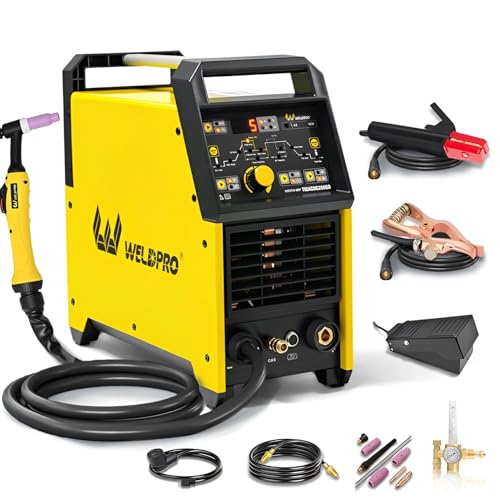
- Five welding modes, including AC/DC TIG and stick
- 110V/220V dual-voltage portable design
- Foot pedal and adjustable pulse controls included
Best For: DIY users and fabricators needing aluminum and steel capability
Best Connected DC TIG Pick

- App-controlled monitoring and parameter adjustment
- Five modes with pulse TIG and MMA
- 120V/240V input and three-year warranty
Best For: DC welding on steel, stainless steel, copper, and thin metal
Best Budget Multiprocess Option

- MIG, flux-core, stick, and lift TIG functions
- 110V/220V input with 160A output
- Synergic and manual control modes
Best For: DIY and fabrication work centered on MIG with occasional lift TIG
Best Waveform Control

- Seven TIG and stick/spot welding methods
- AC/DC output for aluminum and steel
- Square, triangular, and pulse waveform controls
Best For: Experienced welders seeking detailed aluminum and precision control
Best Aluminum Pick
Sunstac 250A AC/DC Pulse TIG Welder

- AC TIG is designed for aluminum and alloys
- 250A output with 110V/220V input
- Pulse, spot, stick, and LCD controls
Best For: Aluminum welding and precision TIG projects
Best Portable Value
ARCCAPTAIN 200A Stick/Lift TIG Welder
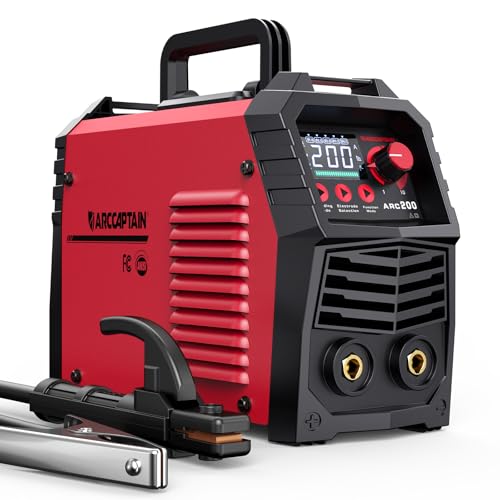
- Combines stick and lift TIG modes
- Lightweight design with shoulder strap
- Synergic controls and 110V/220V support
Best For: Mobile repairs, DIY, and outdoor maintenance
Best Simple DIY Option
S7 200A DC TIG and Stick Welder

- DC TIG and stick welding in one unit
- 110V/220V dual-voltage design
- Digital display and standard consumable compatibility
Best For: Home repairs, hobby projects, and mild or stainless steel
Most Versatile Pick
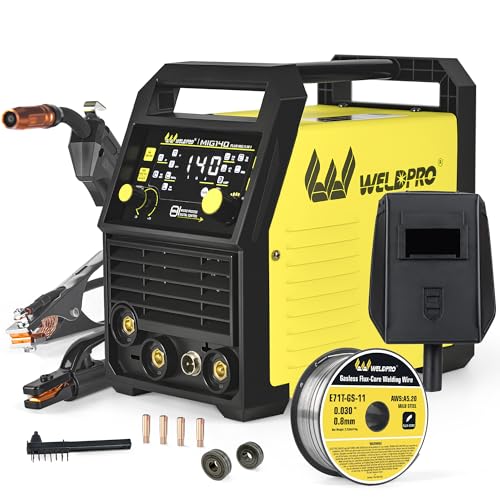
- Five modes include Lift TIG, MIG, MMA, and spot welding
- Automatic 110V/220V detection with synergic controls
- Portable kit includes helmet, torch, wire, and accessories
Best For: DIY users needing one compact machine for multiple welding tasks
Best Balanced Stick/TIG Option
ARCCAPTAIN 200A Lift TIG Welder

- MMA and Lift TIG modes in one machine
- Supports several common stick electrodes
- 110V/220V operation with synergic and manual controls
Best For: Garage, automotive, and outdoor maintenance projects
Best All-Around AC/DC Pick – Weldpro 200A Pulse TIG Welder
For shoppers comparing tig welding machines, the Weldpro 200A stands out as a versatile AC/DC option with five welding modes, dual-voltage input, and adjustable pulse controls. Its AC capability supports aluminum work, while the included foot pedal allows real-time amperage adjustment.
Best For: DIY users and fabricators who need one portable machine for aluminum, steel, precision TIG, and stick welding.
Pros:
- Offers AC TIG, DC TIG, AC/DC pulse TIG, and stick welding in one unit.
- Automatically supports 110V or 220V input for home or workshop use.
- Includes a foot pedal and adjustable pulse, AC balance, and frequency controls.
- High-frequency arc start and multiple protection systems support controlled operation.
Cons:
- The 40% duty cycle applies at the full 200A output.
- The extensive controls may require setup time for beginners.
This is a strong choice when versatility matters most. It combines aluminum-ready AC TIG with portable dual-voltage operation and hands-free current control, making it more adaptable than a basic DC-only machine.
Best Connected DC TIG Pick – ARCCAPTAIN TIG 205P Pro
Among tig welding machines, the ARCCAPTAIN TIG 205P Pro is notable for app control and detailed DC TIG adjustment. It supports pulse, lift, spot, and MMA welding, plus 120V/240V input, but its DC-only design is intended for steel, stainless steel, copper, and similar materials rather than aluminum.
Best For: Welders who want app-based monitoring and precise DC welding controls for thin metal and general steel projects.
Pros:
- App control enables parameter adjustment, preset recall, monitoring, and error-code analysis.
- Provides five modes: DC TIG, pulse TIG, lift TIG, spot TIG, and MMA.
- Offers adjustable pulse, slope, flow, spot, and current settings.
- Includes 120V/240V compatibility, protection features, a three-year warranty, and lifetime technical support.
Cons:
- DC output only, so it is not suitable for aluminum welding.
- The compatible TIG foot pedal is not listed as included.
The 205P Pro is a practical pick for users focused on controlled DC TIG work and modern setup assistance. Choose a machine with AC output instead if aluminum welding is a priority.
Best Budget Multiprocess Option – YESWELDER 160A MIG Welder
For buyers seeking tig welding machines with broader fabrication flexibility, the YESWELDER 160A combines MIG, flux-core, stick, and lift TIG functions. Its synergic controls can recommend voltage and wire speed based on thickness, making it approachable for beginners, while manual controls remain available.
Best For: DIYers and automotive or fabrication users who primarily need MIG and flux-core welding with occasional lift TIG capability.
Pros:
- Combines flux-core MIG, gas MIG, stick, and lift TIG in one machine.
- Supports 110V/220V input and delivers up to 160A output.
- Synergic settings simplify setup, while manual adjustment suits experienced users.
- Works with common .030-inch and .035-inch wire and several stick electrode types.
Cons:
- A lift TIG torch must be purchased separately.
- Lift TIG is less feature-rich than a dedicated AC/DC TIG welder.
- It is a DC power-source machine, so it is not the choice for AC aluminum TIG.
This machine makes sense when MIG is your main process and TIG is an occasional secondary option. Its wire-feed versatility and beginner-friendly controls are more important strengths than specialized TIG precision.
Best Waveform Control – ARCCAPTAIN AC/DC TIG 200A
Among tig welding machines designed for aluminum and precision work, the ARCCAPTAIN TIG200PACDC offers seven welding methods and AC/DC output. Its pulse, square-wave, and triangular-wave options provide additional ways to manage heat input and weld-pool behavior across aluminum, steel, stainless steel, copper, and other metals.
Best For: Experienced users who want AC/DC aluminum capability with waveform options and extensive digital parameter control.
Pros:
- Supports AC and DC TIG, pulse variants, square and triangular waveforms, stick, and spot TIG.
- Designed for aluminum, magnesium alloys, steel, stainless steel, carbon steel, and copper.
- Provides adjustable AC balance, frequency, pulse settings, slopes, and flow times.
- Large LED display and included TIG torch, flow meter, ground clamp, and accessories support setup.
Cons:
- The foot pedal remote is not included.
- The broad range of parameters may be more than beginners need.
- The product notes provide a 12 kg machine weight but list a 42.7-pound item weight, so shipping weight may be higher.
This is the most feature-focused option in the group for waveform experimentation and aluminum TIG. It is best suited to welders who will use the expanded controls rather than those seeking a simple entry-level interface.
Best Aluminum Pick – Sunstac 250A AC/DC Pulse TIG Welder
For shoppers comparing tig welding machines, the Sunstac 250A stands out as an AC/DC model built especially for aluminum work. Its 110V/220V input, pulse functions, LCD screen, and multiple TIG modes give users broad control for both precision projects and general metal welding.
Best For: Aluminum welding, thin-material precision work, and users who want AC/DC TIG versatility.
Pros:
- AC TIG supports aluminum and aluminum alloy welding.
- Offers up to 250A with 110V/220V dual-voltage operation.
- Includes high-frequency, pulse, spot, and stick welding functions.
- LCD display and parameter-saving function simplify setup and repeat jobs.
Cons:
- Foot pedal remote control is not included.
- AC-mode current measurement may be inaccurate, and AC balance can affect readings.
The Sunstac is the most feature-rich option here for aluminum and controlled TIG work. Buyers should account for the separate foot pedal and understand the stated AC measurement limitation.
Best Portable Value – ARCCAPTAIN 200A Stick/Lift TIG Welder
Among tig welding machines, the ARCCAPTAIN is a practical portable choice for users who need stick welding plus lift TIG in one compact unit. Its lightweight design, dual-voltage setup, synergic controls, and included carrying accessories suit home, farm, garage, and outdoor maintenance jobs.
Best For: Beginners, mobile repairs, outdoor maintenance, and general stick welding with occasional lift TIG use.
Pros:
- Combines stick and lift TIG modes in one machine.
- Weighs about 7.2 pounds and includes a shoulder strap.
- Synergic control helps match current and voltage to electrode diameter.
- Supports 110V/220V use and includes electrode and ground cables.
Cons:
- Lift TIG torch is not included.
- It is oriented toward lift TIG rather than AC or high-frequency TIG.
- Users must wait for the screen and fan to stop before powering on again.
The ARCCAPTAIN prioritizes portability and straightforward stick welding over advanced TIG control. It is a strong fit for accessible, occasional lift TIG work, provided you purchase a compatible torch separately.
Best Simple DIY Option – S7 200A DC TIG and Stick Welder
The S7 200A is one of the more straightforward tig welding machines for home users and hobbyists. It combines DC TIG and stick welding with dual-voltage input, a digital current display, standard TIG consumable compatibility, and built-in protection for everyday garage and workshop projects.
Best For: DIY repairs, stainless or mild steel work, and beginners seeking a simple TIG/stick setup.
Pros:
- Combines DC TIG and stick welding in one compact inverter machine.
- Supports 110V and 220V input for flexible use.
- Digital current display makes output adjustments easier.
- Works with common TIG consumables and includes overheat and overload protection.
Cons:
- DC TIG is not intended for aluminum welding.
- The supplied notes do not identify advanced pulse, AC, or high-frequency TIG features.
- It is heavier than the ARCCAPTAIN portable model at about 18 pounds.
The S7 offers a balanced feature set for basic home fabrication and repair. Choose it for simple DC TIG and stick work rather than aluminum welding or advanced TIG process control.
Most Versatile Pick – WELDPRO 140A 5-in-1 Welder
For shoppers comparing tig welding machines, the WELDPRO stands out as a compact multiprocess option with Lift TIG, MIG, MMA, and spot-welding modes. Its automatic 110V/220V detection, synergic controls, LED display, and included accessories make it especially practical for varied home and workshop projects.
Best For: DIY users who want one portable machine for Lift TIG, flux-core MIG, stick, and spot welding.
Pros:
- Five welding functions, including Lift TIG, MIG, MMA, and spot welding
- Automatically detects 110V or 220V input
- Includes a MIG torch, flux-core wire, helmet, contact tips, and electrode holder
- Lightweight 7.5-pound design with a carry handle
Cons:
- Lift TIG rather than dedicated high-frequency TIG operation
- Maximum output is 140A
- Its MIG thickness range is listed as 1–4mm
The WELDPRO is a strong choice when versatility matters more than specialized TIG controls. It is well suited to occasional repairs and mixed-material projects, particularly where portability and a ready-to-weld package are priorities.
Best Balanced Stick/TIG Option – ARCCAPTAIN 200A Lift TIG Welder
Among tig welding machines designed around stick welding, the ARCCAPTAIN 200A offers a useful MMA and Lift TIG combination. It supports common electrode types, provides adjustable hot start and arc force, and uses synergic control to simplify setup for newer welders while retaining manual adjustment for experienced users.
Best For: Home repair, automotive, garage, and outdoor maintenance work that requires both stick and Lift TIG capability.
Pros:
- Combines MMA stick welding with Lift TIG
- Supports 6010, 6011, 6013, and 7018 rods
- 110V/220V operation with a clear LED display
- Includes an upgraded Lift TIG torch, shoulder strap, and handle
Cons:
- Lift TIG does not provide the controls of a dedicated TIG system
- Requires a pause while the display and cooling fan stop before restarting or changing input voltage
- Heavier than the smallest mini welders at 7.2 pounds for the machine alone
The ARCCAPTAIN is a practical middle ground for buyers who primarily use stick electrodes but want TIG flexibility. Its display, synergic mode, and adjustable arc-start features make it approachable without eliminating manual control.
Best Ultra-Portable Pick – HONE 205A Mini Lift TIG Welder
For buyers seeking tig welding machines for light repairs and mobile work, the HONE 205A is a very compact stick welder with Lift TIG mode. Its 20–205A adjustment range, inverter design, hot start, arc force, anti-stick, and VRD protection support straightforward welding with common rods, while the included accessories help beginners get started.
Best For: Portable 110V stick welding and occasional Lift TIG work on small DIY, fence, trailer, and repair projects.
Pros:
- Very compact 4.4-pound welder with a 20–205A range
- Offers both stick and Lift TIG modes
- Includes 25 welding rods, gloves, mask, brush, and chipping hammer
- Features hot start, arc force, anti-stick, VRD, and overload protection
Cons:
- TIG torch is not included
- Operates on 110V only
- Designed primarily as a stick welder rather than a full-featured TIG machine
The HONE makes sense when portability and included stick-welding supplies are more important than a complete TIG setup. Remember to budget for a compatible TIG torch if you plan to use its Lift TIG function.
How We Picked These Tig Welding Machines
We focused on the features that most directly affect usability and welding capability: AC/DC operation, pulse control, amperage range, dual-voltage input, included accessories, multi-process support, and portability. AC TIG is important for aluminum, while DC TIG is suitable for materials such as steel and stainless steel. Models with stick, MIG, or flux-core functions were included for buyers who need one machine to handle several jobs.
Because specifications and included equipment can vary by seller or package, verify the current listing for torch type, foot-pedal availability, duty cycle, consumables, warranty coverage, and input-power requirements before purchasing.
Quick Comparison
- Best for aluminum: Choose an AC/DC TIG welder with adjustable AC balance, frequency, and pulse controls.
- Best for general home-shop use: A dual-voltage AC/DC model offers flexibility across 120V and 240V outlets.
- Best for steel and stainless steel: A DC TIG machine can provide precise, clean welds without the added cost of AC circuitry.
- Best for versatility: MIG, flux-core, stick, and lift-TIG combinations can cover repair and fabrication tasks with fewer machines.
- Best for portability: Compact 120V stick or lift-TIG units are easier to transport and use on basic circuits.
Key Buying Factors for Tig Welding Machines
AC/DC Capability
Buy AC/DC Tig Welding Machines if aluminum is part of your workload. DC-only machines are generally more affordable and can handle steel, stainless steel, copper, and similar metals, but they cannot provide the alternating-current cleaning action needed for aluminum TIG welding.
Amperage and Duty Cycle
Higher maximum amperage helps with thicker material, but the practical output also depends on duty cycle, heat management, and available input power. For occasional repairs, a compact unit may be sufficient. Frequent fabrication or thicker aluminum work calls for more headroom and a stronger duty cycle.
Pulse and Arc Controls
Pulse settings can help manage heat, limit distortion, and improve control on thin material. Adjustable AC balance and frequency are especially useful when TIG welding aluminum. A foot pedal can make amperage changes more intuitive, although torch-mounted or panel controls may be preferable for portability.
Input Power and Accessories
Dual-voltage operation allows a welder to run from either 120V or 240V power, but output may be limited on a standard household circuit. Check plug type, breaker requirements, gas fittings, torch connections, and whether a regulator, foot pedal, ground clamp, or consumable kit is included.
Who Should Buy Which Tig Welding Machines?
Buy an AC/DC pulse model if you weld aluminum, want refined arc control, or expect to take on varied fabrication work. Choose a DC TIG and stick machine for steel and stainless-steel projects where affordability and straightforward operation matter most.
Choose a multi-process welder if you also need MIG, flux-core, or stick welding for repairs and heavier work. Pick a compact 110V unit for occasional maintenance, light fabrication, and easy transport, while recognizing that household power can limit performance on thick material.
Before ordering, match the machine to your metals, thickness range, electrical service, and desired control method. Also budget for an argon cylinder, regulator, tungsten electrodes, filler rod, protective equipment, and proper ventilation if they are not included.