The best soldering stations give you more control than a basic soldering iron, with steadier temperatures, replaceable tips, and features that make detailed electronics work easier.
We compared 10 soldering stations across power, temperature control, included accessories, rework capabilities, and value to help you choose the right setup for your bench.
Best 10 Soldering Stations Picks for 2026
Professional Precision
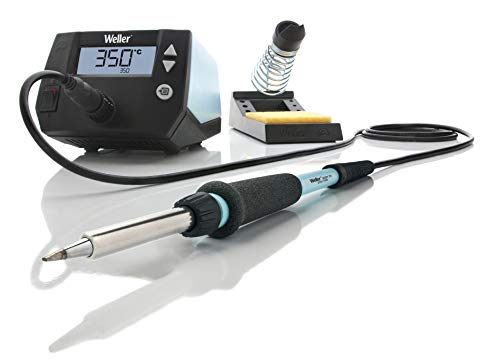
- 70-watt iron with ±4°F temperature stability
- ESD-safe design with password-protected settings
- Includes safety rest, sponge, and 1.6 mm tip
Best For: Precise electronics soldering and repeatable bench work
Accessory-Rich Value
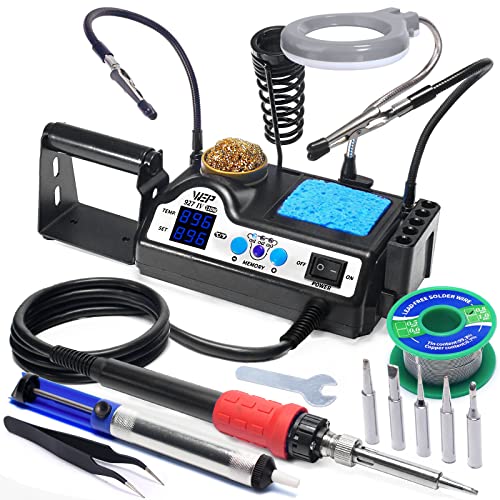
- 110-watt heating element with 194°F–896°F range
- Three preset channels and adjustable sleep timer
- Built-in magnifier, helping hands, storage, and tips
Best For: Compact, accessory-packed electronics workstations
Simple Digital Control

- 100-watt station with 120°F–899°F range
- Rotary encoder simplifies temperature adjustment
- Listed temperature stability of ±1.8°F
Best For: Precise soldering with straightforward digital operation
Hot-Air Rework Powerhouse
WEP 882D 2-in-1 Rework Station

- Combines soldering iron and hot-air rework
- Independent controls and LED displays
- Includes tips, nozzles, solder wire, and repair tools
Best For: Electronics repair requiring both soldering and hot air
Reliable Bench Pick
Weller 70W Digital Soldering Station

- 15-second heat-up from 212°F to 650°F
- LCD controls with presets and standby mode
- Includes three tips, holder, and helping hands
Best For: General electronics work and hobbyist benches
High-Power Feature Pick
FNIRSI DWS-200 200W Soldering Station

- 200W output with fast heating and melting
- Three TFT display modes and three presets
- Includes two handles, nine tips, and two helping hands
Best For: High-power, multi-purpose soldering and repair work
Precision Control Pick
YIHUA 939D+ Digital Soldering Station

- 392°F–896°F adjustable temperature range
- 20-millisecond temperature compensation
- Metallic build with built-in transformer
Best For: Frequent precision soldering and electronics repair
Best Precision Kit
YIHUA 982D SE 200W Soldering Station

- 200W power with rapid two-second heating
- Automatic calibration with built-in thermometer
- Includes 11 C245 and C210 cartridge tips
Best For: Precision electronics work and frequent tip changes
Best 2-in-1 Rework Station
WEP 8786D-I SE Hot Air Soldering Station
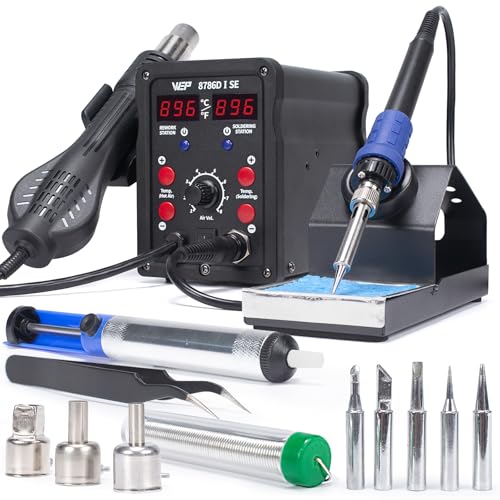
- Combines soldering iron and hot air rework
- Includes five tips and three hot air nozzles
- Separate digital temperature and airflow controls
Best For: Desoldering, component rework, and space-saving benches
Best Starter Soldering Kit
YIHUA 926 III 60W Soldering Station
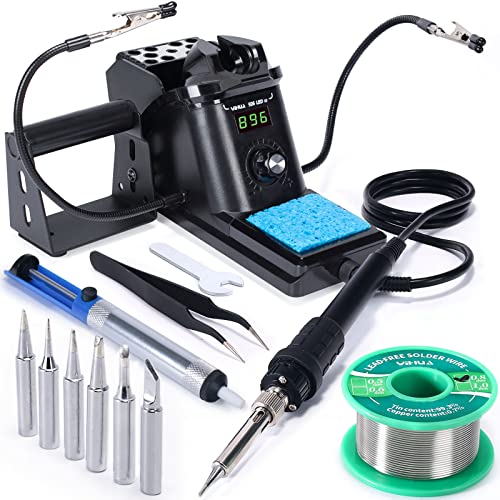
- Compact 60W station with digital temperature display
- Adjustable sleep mode and PID stabilization
- Includes helping hands, six tips, and desoldering tools
Best For: Beginners and general-purpose electronics projects
Professional Precision – Weller WE1010NA
The Weller WE1010NA is a dependable choice among soldering stations for electronics work that benefits from steady temperature control and a familiar digital interface. Its 70-watt iron, ESD-safe design, and heat-resistant silicone cable support controlled, repeatable soldering.
Best For: Electronics hobbyists, technicians, and makers who prioritize temperature stability and protected settings.
Pros:
- 70-watt heating power helps complete soldering jobs efficiently.
- Temperature stability of ±4°F supports consistent results.
- LCD display, intuitive navigation, standby mode, and password protection add convenience.
- Includes a safety rest, sponge, and 1.6 mm screwdriver tip.
Cons:
- Its single-channel design is less flexible for users switching among saved temperatures.
- The kit includes fewer accessories than some all-in-one stations.
The WE1010NA is a focused, well-equipped station for precise bench work. Choose it when stable heat, ergonomic handling, and setting protection matter more than a large accessory bundle.
Accessory-Rich Value – WEP 927-IV 110W Kit
The WEP 927-IV stands out among soldering stations by combining 110-watt heating performance with built-in workbench accessories. Its presets, sleep timer, magnifying LED, helping hands, and storage features make it practical for users who want an organized setup.
Best For: Hobbyists and repair users who need high power, quick temperature changes, and many integrated accessories.
Pros:
- 110-watt heating element and a 194°F–896°F adjustment range support varied jobs.
- Three preset channels simplify switching between commonly used temperatures.
- Sleep mode and an adjustable 0–99-minute timer help reduce wear when idle.
- Includes helping hands, LED magnifier, tip storage, cleaner, solder wire, and extra tips.
Cons:
- It is rated for 110–127V USA power and should not be connected to a 220V socket.
- The integrated accessories may be unnecessary for users with an already equipped workbench.
This is a strong space-saving kit for broad electronics work, especially where magnification and component holding are useful. Its accessory-heavy design offers convenience, while the 110-watt element provides substantial heating capacity.
Simple Digital Control – Hakko FX888DX-010
The Hakko FX888DX-010 is a refined option among soldering stations for users who want digital control without a complicated interface. Its rotary encoder improves temperature adjustment, while the 100-watt station provides a broad 120°F–899°F operating range.
Best For: Electronics users who value straightforward temperature adjustment, strong power, and precise control.
Pros:
- Rotary encoder provides an intuitive way to adjust temperature.
- 100-watt power supports demanding soldering tasks.
- Temperature stability of ±1.8°F is well suited to controlled work.
- Includes an iron holder, sponge, tip cleaner, user manual, and T18-D16 chisel tip.
Cons:
- No manufacturer warranty is listed in the supplied details.
- The package includes fewer workholding and magnification accessories than bundled kits.
The FX888DX is a focused station rather than a complete accessory workstation. Its combination of rotary control, high power, and tight listed temperature stability makes it appealing for users who already have basic bench accessories.
Hot-Air Rework Powerhouse – WEP 882D 2-in-1 Rework Station
The WEP 882D expands beyond conventional soldering stations by combining a soldering iron with a hot-air rework system. Separate displays and controls let you adjust iron temperature, hot-air temperature, and airflow for electronics repair and component rework.
Best For: Electronics repair users who need both traditional soldering and hot-air rework in one compact unit.
Pros:
- Two-in-one design combines soldering and hot-air rework capabilities.
- PID control, calibration, sleep mode, standby mode, and automatic shutdown support controlled operation.
- Soldering temperature adjusts from 392°F–896°F, while hot air adjusts from 212°F–896°F.
- Includes solder wire, five tips, three nozzles, tweezers, a cleaner, and a desoldering pump.
Cons:
- Its broader functionality may be more than needed for basic soldering-only tasks.
- It is rated for 110–127V USA power and should not be connected to a 220V socket.
The WEP 882D is the most versatile option here for rework-oriented projects. Select it when hot air, variable airflow, and a ready-to-use accessory kit are more valuable than a dedicated soldering-only station.
Reliable Bench Pick – Weller 70W Digital Soldering Station
The Weller 70W is a practical choice among soldering stations for general electronics work, offering a 15-second heat-up, digital temperature adjustment, and a comfortable pencil-grip iron. Its included tips and helping hands make it ready for a variety of tasks.
Best For: Hobbyists and electronics users who want a straightforward, dependable station with useful starter accessories.
Pros:
- Heats from 212°F to 650°F in about 15 seconds.
- LCD display supports Fahrenheit or Celsius readings, presets, and standby mode.
- Includes three tips, an iron holder, and helping hands.
- Seven-year manufacturer warranty is included.
Cons:
- Temperature range tops out at 896°F, with a listed lower rating of 350°F.
- Single-channel design supports one soldering iron setup at a time.
With useful controls, quick tip changes, and a long stated warranty, this Weller station is a balanced option for routine soldering and repair work.
High-Power Feature Pick – FNIRSI DWS-200 200W Soldering Station
The FNIRSI DWS-200 stands out among soldering stations for high-power work, combining 200W output with a claimed one-second heating time and three display modes. Its F210 and F245 handles, multiple tips, and dual helping hands broaden its usefulness for precision and larger soldering jobs.
Best For: Users who need fast heating, high power, flexible handles, and hands-free support for varied electronics work.
Pros:
- 200W design reaches its adjustable 212°F–842°F range quickly.
- TFT display offers temperature, curve, or combined display modes.
- Three temperature presets simplify repeated work.
- Includes F210 and F245 handles, nine tips, and two adjustable helping hands.
Cons:
- Its 842°F upper temperature rating is lower than some competing stations.
- The feature-rich kit may be more equipment than occasional users need.
The DWS-200 is the most powerful and accessory-rich option here, making it appealing when speed, handle flexibility, and workholding support matter more than simplicity.
Precision Control Pick – YIHUA 939D+ Digital Soldering Station
The YIHUA 939D+ is a solid option among soldering stations for frequent users who value precise adjustment and temperature stability. It combines a 120W system, 392°F–896°F control range, digital Fahrenheit/Celsius display, and a built-in transformer designed to provide contact-safe voltage.
Best For: Frequent hobby, repair, school-lab, and professional-style soldering where controlled heat and durable construction are priorities.
Pros:
- Temperature control spans 392°F to 896°F.
- Intelligence temperature control monitors and compensates within 20 milliseconds.
- Brushed-aluminum control panel and metal-alloy iron stand are heat-resistant.
- Includes a detachable 907F iron, sponge, holder, and brass tip cleaner.
Cons:
- Designed for 110–127V operation with a US-standard plug.
- Includes fewer soldering tips than the Weller and FNIRSI kits.
- Technical coverage is stated as 12 months.
The 939D+ emphasizes steady, repeatable control and robust construction, making it a strong fit for users who solder regularly and prefer a compact, focused setup.
Best Precision Kit – YIHUA 982D SE 200W Soldering Station
For demanding electronics work, the YIHUA 982D SE is one of the more capable soldering stations in this roundup. Its 200W output, C245 and C210 cartridge compatibility, rapid two-second heating, and automatic temperature calibration make it well suited to users who regularly change tips or need precise, repeatable results.
Best For: Electronics repair, precision soldering, and users who want broad cartridge-tip flexibility.
Pros:
- 200W station with C245 and C210 hot-swappable cartridge support.
- Adjustable 194°F–842°F temperature range with PID control and four presets.
- Automatic calibration includes a built-in thermometer, and the kit includes 11 tips and two handpieces.
Cons:
- Its advanced features and multiple accessories may be more than occasional users need.
- The temperature range tops out at 842°F, below some competing stations.
The 982D SE stands out when tip changes, calibration, and fast heat-up matter. It is a feature-rich choice for a dedicated electronics bench rather than a minimalist starter setup.
Best 2-in-1 Rework Station – WEP 8786D-I SE Hot Air Soldering Station
The WEP 8786D-I SE combines a conventional soldering iron with a hot air rework station, making it a practical option for electronics repair and desoldering. Separate controls, digital readouts, adjustable hot air volume, and included rework accessories give this soldering station useful versatility in a compact package.
Best For: Rework tasks involving both soldering and hot air desoldering.
Pros:
- Combines soldering and hot air functions in one station.
- Soldering temperature adjusts from 392°F–896°F, while hot air adjusts from 212°F–896°F.
- Includes five soldering tips, three hot air nozzles, tweezers, solder wire, and a desoldering pump.
Cons:
- Designed for 110–127V USA power and should not be connected to a 220V socket.
- The kit has one channel rather than separate multi-channel control.
Choose this model when space and budget favor a combined workstation. Its standby and sleep functions also help reduce unnecessary heating when the tools are resting.
Best Starter Soldering Kit – YIHUA 926 III 60W Soldering Station
The YIHUA 926 III is a compact, accessory-packed option for general electronics projects. This 60W soldering station offers PID temperature stabilization, a digital display, adjustable sleep mode, and a broad 194°F–896°F range, while the included helping hands and desoldering tools make it easier to begin working immediately.
Best For: Beginners, hobbyists, and everyday electronics soldering.
Pros:
- Compact design with an integrated holder and rear tip-storage slots.
- Digital controls support °C/°F conversion, adjustable sleep mode, and calibration.
- Includes two helping hands, six tips, lead-free solder, tweezers, a solder sucker, and other accessories.
Cons:
- Its 60W output is less powerful than the 200W precision station in this roundup.
- It uses a 110–127V US-standard power plug.
The 926 III is a sensible all-in-one entry point for routine soldering. It prioritizes compact storage and included tools, making it appealing when you want a complete workbench kit without adding accessories separately.
How We Picked the Best Soldering Stations
We evaluated these Soldering Stations for the features that matter during real electronics work: heat-up speed, temperature stability, control layout, tip availability, safety features, and overall versatility. We also considered whether each station is best suited to occasional repairs, hobby projects, frequent circuit-board assembly, or advanced rework.
Accessory bundles were considered for practical value rather than quantity alone. Helping hands, tip cleaners, spare tips, solder wire, hot-air nozzles, and magnifiers can reduce the need for additional purchases, but core performance and dependable heat control remain the most important factors.
Quick Comparison
| Best For | Recommended Type | What to Look For |
|---|---|---|
| General electronics repair | Digital soldering station | Reliable temperature control and common replacement tips |
| Frequent bench work | 70W–110W station | Fast recovery, sleep mode, and durable handpiece |
| High-demand soldering | 200W station | Strong thermal recovery for larger joints and ground planes |
| SMD and component rework | 2-in-1 soldering and hot-air station | Adjustable airflow, multiple nozzles, and stable heating |
| Beginners and occasional users | Accessory-rich entry-level kit | Simple controls, safety features, and useful included tools |
Key Buying Factors for Soldering Stations
Power and Heat Recovery
Wattage indicates available heating capacity, but it does not guarantee better performance by itself. Higher-power models generally recover heat faster when soldering large joints, thick wires, connectors, or boards with extensive copper. For delicate electronics, stable regulation is often more important than maximum wattage.
Temperature Control
Digital displays, preset channels, rotary controls, and calibration functions can make it easier to set repeatable temperatures. Look for a broad usable range and a station that maintains temperature under load. Sleep or standby modes are useful for reducing tip wear during pauses.
Tips, Ergonomics, and Maintenance
Confirm that replacement tips are readily available and that the included tip shapes match your work. A lightweight iron, flexible cable, secure stand, and effective brass-wool or sponge cleaner improve day-to-day usability. ESD-safe construction is especially valuable when working on sensitive components.
Hot-Air Capability
A 2-in-1 station can handle desoldering, shrinking tubing, and many SMD tasks, but it takes more bench space and requires careful airflow control. Choose one when rework is a regular need, not simply because it includes more accessories.
Who Should Buy Which Soldering Stations?
Choose a conventional digital station such as the Weller, Hakko, or YIHUA 939D+ when you primarily solder through-hole components, wires, connectors, and routine circuit-board joints. These are typically simpler and easier to maintain.
Choose a higher-power model such as the FNIRSI DWS-200 or YIHUA 982D SE if you frequently work with larger thermal loads and want faster recovery. For SMD repair or desoldering, the WEP 882D-I or WEP 8786D-I SE offers the broader functionality of hot air alongside a soldering iron.
Accessory-focused kits, including the YIHUA 926 III and WEP 927-IV, are practical for beginners who need a ready-to-use bench setup. Before buying, verify voltage compatibility, tip availability, warranty coverage, and whether the station’s controls and accessories match your actual projects.