The best power inverters turn a vehicle’s 12-volt battery into usable AC power for laptops, chargers, small appliances, and other essential devices. The right choice depends on more than the advertised wattage.
We selected 10 options ranging from compact car adapters to high-output 12V models, emphasizing output capacity, outlet selection, portability, safety features, and everyday versatility.
Best 10 Power Inverters Picks for 2026
Best Compact Car Pick
300W BESTEK Vehicle Power Inverter
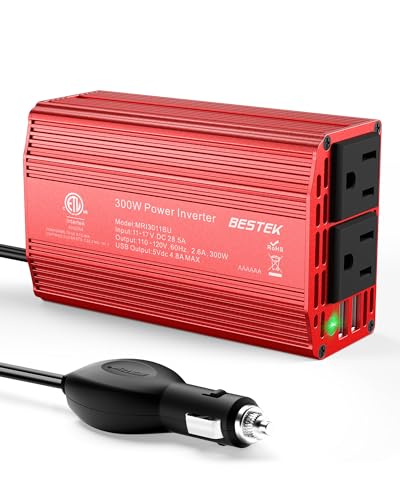
- 300W continuous, 700W peak output
- Two AC outlets and two USB ports
- Compact 11–17V vehicle design
Best For: Portable charging during road trips, work travel, and camping
Best Pure Sine Wave Option

- 2,000W continuous, 4,000W surge output
- Pure sine wave power for sensitive loads
- LCD monitoring and 23-foot remote
Best For: RV, truck, solar, and off-grid power systems
Best Budget Road-Trip Pick
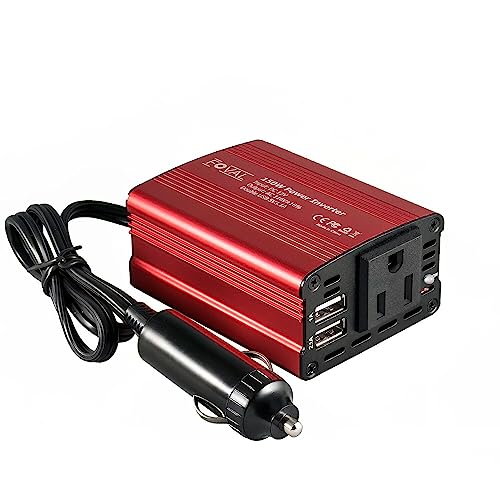
- 150W continuous, 300W peak output
- One AC outlet plus dual USB ports
- Compact aluminum vehicle adapter
Best For: Basic phone, tablet, laptop, and small-device charging
Best High-Output Modified Sine Wave Pick

- 3,000W continuous, 6,000W surge output
- Four AC outlets and four USB ports
- LCD fault monitoring with remote control
Best For: High-demand RV, truck, boat, camping, and emergency setups
Best for Easy Setup
BESTEK 300W Car Power Inverter

- 300W continuous, 700W peak pure sine output
- Two AC outlets and dual 4.8A USB charging
- Protection features and Tesla compatibility
Best For: Sensitive electronics and versatile in-car charging
Best Higher-Wattage Value
Pro Chaser 400W Vehicle Inverter

- 400W continuous and 800W peak output
- Dual AC sockets and two USB charging ports
- Compact design with a 30-inch power cord
Best For: Road trips and moderate vehicle-powered loads
Best Compact Multi-Port Option

- Two AC outlets and four USB charging ports
- Lightweight, cellphone-sized portable design
- Multiple built-in electrical protections
Best For: Everyday charging on commutes, camping trips, and road trips
Versatile Vehicle Backup

- 750W continuous, 1,000W peak output
- Dual AC outlets plus USB-C and QC 3.0
- Digital display with multiple protections
Best For: Camping, road trips, and emergency vehicle charging
High-Capacity Road Power

- 1,000W continuous and 2,000W peak output
- LCD with voltage, battery, and fault information
- Dual AC outlets with 36W USB-C
Best For: Car camping, truck sleepers, and portable electronics
Multi-Port Charging Value
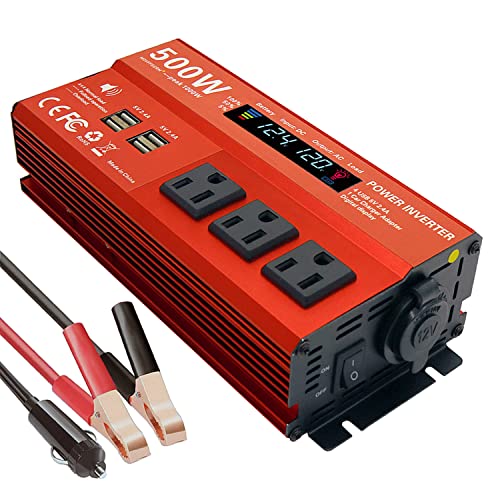
- 500W continuous, 1,000W peak output
- Three AC outlets and four USB ports
- Includes lighter plug and battery clips
Best For: Charging multiple small electronics in vehicles or campsites
Best Compact Car Pick – 300W BESTEK Vehicle Power Inverter
For everyday vehicle charging, this BESTEK power inverter converts 11–17V DC into 300W of AC power, with a 700W peak rating. Its compact design, dual AC outlets, and USB charging make it practical for road trips, work travel, and camping.
Best For: Drivers who want a compact inverter for laptops, tablets, phones, cameras, and other moderate-power electronics.
Pros:
- Two AC outlets and two 4.8A USB ports support multiple devices.
- Compact, lightweight aluminum housing is easy to carry.
- Includes protection against overheating, voltage issues, short circuits, and overloads.
- Compatible with 11–17V vehicles, including Tesla applications noted by the manufacturer.
Cons:
- Modified sine wave output may not suit every sensitive appliance.
- 300W continuous output is intended for smaller electronics rather than high-demand equipment.
- Vehicle cigarette-lighter connection limits installation flexibility.
This is a convenient choice when portability and everyday charging matter more than high-output capacity. The built-in fan, fuse, and long warranty add practical reassurance for regular vehicle use.
Best Pure Sine Wave Option – BELTTT 2000W Inverter
This BELTTT power inverter delivers 2,000W of continuous 12V DC-to-120V AC power and up to 4,000W of surge capacity. Its pure sine wave output is designed for sensitive and inductive equipment, while the LCD and remote improve control in off-grid setups.
Best For: RV, truck, outdoor, and off-grid users who need high-capacity, utility-like AC power for sensitive electronics.
Pros:
- Pure sine wave output is suitable for sensitive loads such as televisions and home theater equipment.
- 2,000W continuous and 4,000W peak capacity support larger loads.
- LCD displays input, output, battery, and load status.
- Includes dual AC sockets, a 20A outlet, USB port, hardwire connection, and 23-foot remote.
Cons:
- At 7.7 pounds, it is less portable than compact vehicle inverters.
- Requires a suitable 12V battery or solar-powered setup and proper installation.
- One-year warranty is shorter than some competing options.
With high output, pure sine wave performance, and detailed monitoring, this model is built for more demanding installations. It is a strong fit when clean power and remote operation are priorities.
Best Budget Road-Trip Pick – FOVAL 150W Car Power Inverter
The FOVAL 150W power inverter is a small vehicle adapter for charging everyday electronics from a 12V cigarette-lighter socket. It combines one AC outlet with two USB ports and provides up to 300W of peak output for short startup demands.
Best For: Travelers who need an inexpensive, lightweight inverter for phones, tablets, laptops, small medical devices, and similar electronics.
Pros:
- Credit-card-sized aluminum design weighs about 8 ounces.
- Two USB ports provide up to 3.1A total output for simultaneous charging.
- Protection features address overheating, voltage problems, short circuits, overloads, and overcharging.
- Quiet cooling fan helps manage heat during use.
Cons:
- 150W continuous output limits use with high-powered appliances.
- Modified sine wave output may be unsuitable for some sensitive equipment.
- Only one AC outlet is available.
This is a practical grab-and-go option for basic in-car charging. Its small footprint and two USB ports are especially useful when space is limited, but buyers should stay within its modest wattage rating.
Best High-Output Modified Sine Wave Pick – Cantonape 3000W Inverter
For demanding battery-powered applications, the Cantonape power inverter supplies 3,000W of continuous 12V-to-120V AC power and 6,000W of surge capacity. Four AC outlets, four USB ports, an LCD, and a remote make it suited to larger mobile or emergency setups.
Best For: RV, truck, boat, camping, and emergency users who need substantial output and multiple connection points.
Pros:
- 3,000W continuous and 6,000W surge ratings support larger loads.
- Four AC outlets and four USB ports allow several devices to connect at once.
- LCD reports voltage, battery capacity, load, frequency, and fault codes.
- Remote control and multiple safety protections add convenience and monitoring.
Cons:
- Modified sine wave output may not be appropriate for every sensitive appliance.
- High-power operation requires a capable 12V battery system and suitable cabling.
- Its approximately 2.6 kg body is less convenient to carry than compact car models.
This inverter emphasizes capacity and connectivity rather than minimum size. It makes sense for users who need to power several moderate-demand devices from a battery system, provided the connected equipment is compatible with modified sine wave output.
Best for Easy Setup – BESTEK 300W Car Power Inverter
For power inverters that need to handle more sensitive electronics, the BESTEK delivers 300 watts of continuous pure sine wave power from a vehicle socket. It adds two AC outlets, dual fast-charging USB ports, and broad protection features in a compact design.
Best For: Drivers who want cleaner power for laptops, cameras, game consoles, CPAP or nebulizer equipment, and other electronics.
Pros:
- Pure sine wave output with 300W continuous and 700W peak power.
- Two AC outlets plus two USB ports providing up to 4.8A total.
- Compatible with Tesla and other new-energy vehicles using 11–17V input.
- Includes overheating, over- and under-voltage, overload, short-circuit, and overcharging protection.
Cons:
- Its 300W continuous capacity is not intended for high-draw appliances.
- It is larger and heavier than some cellphone-sized vehicle inverters.
The BESTEK is the strongest choice here when waveform quality and device protection matter more than maximum wattage. Its pure sine output and multiple charging options make it especially versatile for road trips and vehicle-based work.
Best Higher-Wattage Value – Pro Chaser 400W Vehicle Inverter
The Pro Chaser is a practical option among power inverters for travelers who want a little more continuous capacity. It supplies 400 watts from a 12V vehicle source, with dual AC sockets, two USB ports, and a flexible 30-inch cord.
Best For: Road trips, family travel, and powering moderate-demand devices such as laptops, breast pumps, DVD players, and bottle warmers.
Pros:
- Provides 400W continuous output and 800W peak output.
- Includes two 110V AC sockets and dual USB charging ports.
- Compact cellphone-sized body with a 30-inch cord for flexible placement.
- Built-in protection against overload, voltage issues, and overheating.
Cons:
- Uses modified sine wave output rather than pure sine wave.
- Should be used in a cool, dry environment as directed by the manufacturer.
Choose the Pro Chaser if you value extra wattage and portability for everyday travel. Its modified sine wave design suits many standard chargers and moderate loads, but users with sensitive equipment may prefer a pure sine wave model.
Best Compact Multi-Port Option – PiSFAU 200W Car Inverter
For simple vehicle charging, the PiSFAU is one of the more compact power inverters available. Its 200-watt DC-to-AC output supports two AC outlets and four USB charging ports while keeping the cigarette-lighter form factor lightweight and easy to carry.
Best For: Commuters, campers, and road-trip passengers who need several charging ports for phones, tablets, laptops, and small electronics.
Pros:
- Two AC outlets and four USB ports support multiple devices.
- Compact 5-by-2.7-by-1.4-inch design weighs about 8.8 ounces.
- High-efficiency circuitry and heat-dissipation design are intended to reduce noise and energy loss.
- Protection against overheating, undervoltage, overvoltage, overload, and short circuits.
Cons:
- Its 200W output is lower than the other listed inverters.
- Modified sine wave output may be less suitable for sensitive electronics.
- The four USB ports share a 24W, 4.8A charging specification.
The PiSFAU makes the most sense when portability and port count are priorities. It is well suited to charging several low- to moderate-power devices, but its lower capacity and modified sine wave output limit it for demanding equipment.
Versatile Vehicle Backup – TWING 1000W Car Inverter
The TWING 1000W is a practical choice among power inverters for vehicle-based backup charging, camping, and emergency use. It supplies 750 watts continuously and up to 1,000 watts at peak, with dual AC outlets, QC 3.0 USB, and 30W USB-C charging.
Best For: Road trips, camping, outage preparation, and charging multiple everyday electronics from a 12V vehicle battery.
Pros:
- Includes two AC outlets, QC 3.0 USB, and 30W PD3.0 USB-C.
- Digital display and protections for overvoltage, low voltage, overload, short circuit, and overheating.
- Can connect through a cigarette lighter or directly to a 12V battery.
Cons:
- Its 750W continuous rating is lower than the 1,000W peak rating.
- Modified sine wave output may not suit every sensitive appliance.
- The cigarette-lighter connection is intended for lower-power loads; higher loads require the battery connection.
With multiple charging options and a compact 3-pound design, this TWING model is a flexible vehicle inverter. Check the load requirements carefully and use a well-ventilated, dry location during operation.
High-Capacity Road Power – OLTEANP 1000W Inverter
The OLTEANP 1000W is one of the more capable power inverters for car camping, truck use, and portable backup. It delivers 1,000 watts continuously and 2,000 watts of peak surge power, while its LCD reports input voltage, output voltage, battery status, and protection codes.
Best For: Users who need higher continuous output for laptops, TVs, routers, game consoles, and other compatible devices during travel or outages.
Pros:
- Provides 1,000W continuous output and 2,000W peak surge capacity.
- LCD display shows operating information and troubleshooting codes.
- Offers two AC outlets, 36W USB-C, and 5V/3A USB charging.
- Includes both battery clips and a cigarette-lighter adapter.
Cons:
- Modified sine wave output is not recommended for refrigerators, microwaves, air conditioners, laser printers, or sensitive medical devices.
- The cigarette-lighter socket supports up to 150W; higher loads require direct battery connection.
- It is intended for 12V systems, not higher-voltage batteries.
This model stands out for its strong continuous rating, clear LCD, and useful connection options. Its included usage guidance is important: match the connection method and device load before powering equipment.
Multi-Port Charging Value – MOVFFGGRM 500W Inverter
The MOVFFGGRM 500W is a compact option among power inverters when multiple charging ports matter more than maximum AC capacity. It provides 500 watts continuously, 1,000 watts at peak, three AC outlets, four 2.4A USB ports, and a cigarette-lighter outlet.
Best For: Families, passengers, and campers charging several small electronics such as laptops, game consoles, DVD players, phones, and string lights.
Pros:
- Combines three AC outlets with four 2.4A USB ports and a cigarette-lighter outlet.
- Uses an aluminum body and fan to assist heat dissipation.
- Includes both a cigarette-lighter plug and battery clips.
- Provides protections against overheating, voltage issues, short circuits, overloads, and overcharging.
Cons:
- Its 500W continuous rating is below the 1,000W peak figure.
- Loads above 150W require connection directly to the 12V battery rather than the cigarette-lighter socket.
- Modified sine wave output may be unsuitable for some sensitive equipment.
The MOVFFGGRM emphasizes convenient multi-device charging in a relatively compact package. It is best suited to modest loads, and the 150W cigarette-lighter limitation should be kept in mind when planning use.
How We Picked These Power Inverters
We focused on the specifications that matter most in real-world use: continuous wattage, peak or surge capacity, AC outlet count, USB charging, input-voltage compatibility, portability, and display or protection features. The selection includes compact models for phones and laptops, midrange vehicle inverters for multiple devices, and higher-output units for demanding loads.
Advertised wattage is not the only deciding factor. A useful inverter should also match the vehicle’s electrical system, provide appropriate overload and overheating protection, and offer enough connection options for the devices you plan to run.
Quick Comparison
- Small electronics: 150W to 300W models are suitable for phones, tablets, laptops, cameras, and chargers.
- Several devices: 400W to 1000W options provide more headroom for multiple chargers, small tools, and entertainment equipment.
- Higher-demand equipment: 2000W to 3000W models are intended for substantially larger loads, but they require heavier wiring and a properly sized battery.
- Clean power: Pure sine wave models are the safer choice for sensitive electronics, medical equipment, and devices with motors or complex power supplies.
Key Buying Factors for Power Inverters
Continuous and Surge Wattage
Use continuous wattage as the primary comparison point. Startup-heavy devices can briefly demand much more power, so check the inverter’s surge rating before connecting refrigerators, pumps, power tools, or other motor-driven equipment. Add the running wattage of all devices and leave extra capacity rather than operating at the limit.
Modified Sine Wave Versus Pure Sine Wave
Modified sine wave inverters are often adequate for basic chargers and simple electronics. Pure sine wave output more closely resembles household electricity and is preferable for sensitive electronics, audio equipment, variable-speed motors, and appliances that may run poorly or become noticeably warmer on lower-quality output.
Vehicle Compatibility and Installation
Lower-output models can usually connect through a 12V accessory socket, but high-wattage inverters should generally connect directly to the battery with correctly sized cables and appropriate fusing. Confirm the vehicle voltage, cable requirements, ventilation needs, and whether the alternator can support the load.
Ports, Safety, and Usability
Count the AC outlets and USB ports you actually need. LCD displays can help monitor input voltage and load, while protection against low voltage, overload, short circuits, and overheating improves safety. Fans, alarms, remote controls, and compact designs can also matter depending on where the inverter will be used.
Who Should Buy Which Power Inverters?
Choose a compact 150W–300W inverter for road trips, commuting, laptop charging, camera batteries, and small personal electronics. Choose a 400W–1000W model when you need several outlets, more USB charging, or occasional use with moderately demanding equipment. Choose a 2000W–3000W inverter only when you have a suitable battery system, heavy-duty connections, and a clear need for high continuous output. For sensitive or expensive equipment, prioritize a pure sine wave design regardless of size.