Portable reverse osmosis systems make it easier to produce highly filtered drinking water without permanently modifying your plumbing. Countertop designs can be especially useful for apartments, rentals, offices, RVs, and kitchens where installation space is limited.
This roundup compares 10 models across filtration stages, UV treatment, mineral restoration, capacity, dispensing design, and portability so you can choose a system that fits your water-quality goals and daily routine.
Best 10 Portable Reverse Osmosis Systems Picks for 2026
Best Emergency-Ready Option
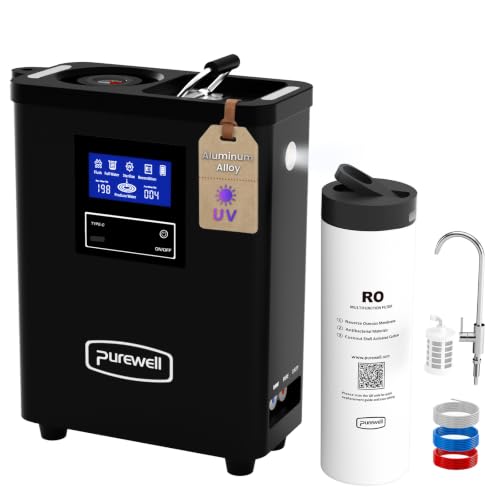
- RO plus dual UV treatment
- Up to 6.5 hours of battery use
- Emergency lighting and carry bag included
Best For: Camping, RV trips, and power outages
Best High-Output Countertop Model

- Five-stage RO and UV filtration
- Fast approximately 15-second cup fill
- Efficient 4:1 pure-to-drain ratio
Best For: Kitchens, offices, apartments, and RVs
Best DIY Flexible System

- Four-stage RO and DI filtration
- 100 GPD output for varied applications
- Quick-connect DIY installation
Best For: DIY users, RVs, boats, and aquariums
Best for Mineral-Enhanced Water

- Seven-stage RO filtration with tested contaminant reduction
- Adds minerals for a smoother-tasting drink
- Auto-fills a detachable 40-ounce glass pitcher
Best For: Small households wanting installation-free RO water with mineral enhancement
Best for Smart Monitoring
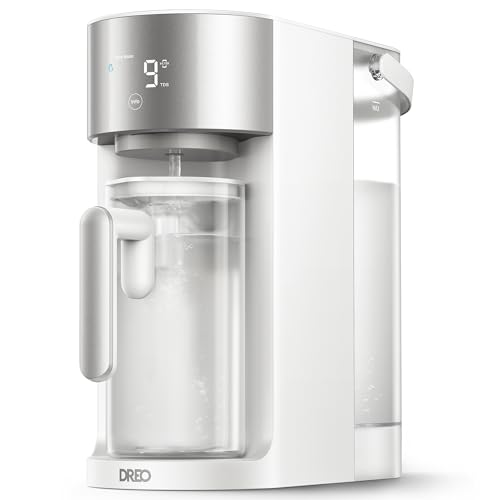
- Real-time raw and purified-water TDS monitoring
- Auto-fill pitcher and self-cleaning tube flushing
- Compact design with twist-in filter replacement
Best For: Small households wanting automated operation and visible water-quality readings
Best for Glass-Carafe Convenience

- No-install countertop setup with a glass carafe
- Five-stage RO filtration with remineralization
- Smart display and selectable automatic dispensing
Best For: One or two people who prefer glass storage and easy countertop operation
Best Glass-Carafe Pick

- Four-stage RO filtration targets numerous contaminants
- No plumbing or drilling; countertop plug-in design
- Includes a lidded borosilicate-glass carafe
Best For: Glass-carafe users seeking broad countertop filtration
Best Compact Option
PHILIPS Installation-Free Countertop RO

- Slim 5-by-13-by-14-inch countertop footprint
- Five-stage filtration with listed NSF certifications
- Includes a 16.9-ounce portable glass bottle
Best For: Small kitchens, offices, dorms, RVs, and studios
Best Remineralization Pick
Bluevua RO100ROPOT Countertop RO

- Five-stage RO filtration includes remineralization
- Glass carafe and filter-life monitor included
- 2:1 pure-to-drain ratio and automatic standby mode
Best For: Users prioritizing remineralized water and monitoring
Best Travel Pick – Bluevua ROPOT-Travel
The Bluevua ROPOT-Travel is a compact choice among portable reverse osmosis systems for renters, travelers, offices, and small living spaces. Its six-stage filtration combines reverse osmosis and UV treatment, while the plug-and-play design produces water without plumbing.
Best For: Travelers, dorm residents, renters, and anyone wanting a portable countertop purifier with an included glass bottle.
Pros:
- Six-stage filtration with UV treatment and a 0.0001-micron RO membrane.
- Compact 10 x 5 x 13.5-inch design with a stainless steel carry handle.
- Produces 18-ounce servings in under three minutes and includes a glass bottle.
- Self-cleaning function, filter-life alert, and 3:1 filtered-to-waste ratio.
Cons:
- Requires a power outlet, so it is not suited to completely off-grid use.
- Dispenses into the included bottle rather than directly to a plumbed faucet.
For everyday portability, the Bluevua stands out through its small footprint, glass bottle, UV stage, and simple operation. It is a practical fit when convenience and reduced bottled-water use matter as much as filtration.
Best Emergency-Ready Option – Purewell Portable Electric RO
The Purewell K8680/P01 is one of the more rugged portable reverse osmosis systems for camping, RV travel, outdoor teams, and power-outage preparation. It combines RO filtration with dual UV lamps, a rechargeable battery, status monitoring, and emergency lighting.
Best For: Campers, RV users, off-grid travelers, and households preparing for outdoor or emergency water needs.
Pros:
- 0.0001-micron RO membrane with dual UV treatment.
- 54W charging supports up to 6.5 hours of use and can reverse-charge devices through USB-C.
- Fills a 2.1-liter bottle in about three minutes.
- Aluminum-alloy body, carry bag, night-vision lighting, and emergency-light mode.
Cons:
- Designed for fresh or brackish water, not ocean seawater.
- Battery operation and added emergency features may be more than needed for basic countertop use.
Purewell is a strong choice when portability involves more than moving the unit between rooms. Its battery, lighting, self-cleaning cycle, and water-quality display make it particularly useful for outdoor and contingency scenarios.
Best High-Output Countertop Model – SimPure Y7P-BW
The SimPure Y7P-BW is a countertop option for shoppers who want portable reverse osmosis systems without installation but still need fast dispensing. Its five-stage RO and UV setup is designed for tap or well water with TDS below 500 ppm and delivers room-temperature water on demand.
Best For: Kitchens, apartments, offices, RVs, and users who prioritize fast dispensing and efficient water use.
Pros:
- Five-stage RO and UV purification tested against NSF/ANSI 58 standards.
- 418 GPD flow rate can dispense a cup in approximately 15 seconds.
- 4:1 pure-to-drain ratio helps limit wastewater.
- Quick-change filters provide up to 528 gallons of purified water.
Cons:
- Only dispenses room-temperature water; it does not provide hot or cold water.
- Its 17.3 x 7.5 x 17-inch size is less compact than travel-focused models.
- Requires a power supply and supports feed water up to 500 ppm TDS.
The Y7P-BW favors capacity and speed over ultra-portable size. It makes sense for a fixed countertop location where no plumbing is available and frequent dispensing is more important than temperature control.
Best DIY Flexible System – Geekpure 4-Stage Portable RO
The Geekpure 4-Stage 100 GPD system is a flexible choice among portable reverse osmosis systems for apartments, RVs, boats, mobile homes, and aquarium applications. Unlike self-contained electric dispensers, it uses quick-connect tubing and requires DIY installation, making it better suited to users comfortable configuring a filtration setup.
Best For: DIY users, RV and boat owners, aquarium keepers, and anyone needing a customizable 100 GPD system.
Pros:
- Four stages include sediment, carbon, RO, and DI filtration.
- RO membrane filters to 0.0001 micron, with DI treatment intended to bring TDS near zero.
- 100 GPD capacity and approximately 260 ml-per-minute output.
- Quick-connect fittings, color-coded tubes, and NSF/ANSI-compliant components simplify setup.
Cons:
- Requires DIY installation and water pressure between 40 and 100 psi.
- Tankless and without a faucet, it cannot turn on and off automatically.
- Produces a 1:2 pure-to-waste ratio and requires filter flushing before first use.
Geekpure offers the most setup flexibility in this group, but it is not a plug-and-play countertop dispenser. Choose it when you value configurable tubing, DI polishing, and broad use cases more than instant installation.
Best for Mineral-Enhanced Water – Waterdrop C2SL Countertop RO
The Waterdrop C2SL is a practical choice for shoppers comparing portable reverse osmosis systems for a small household. It requires no plumbing, adds minerals for a smoother taste, and automatically fills its included glass pitcher.
Best For: One or two people who want installation-free RO water with mineral enhancement and simple voice-guided operation.
Pros:
- Seven-stage filtration uses a 0.0001 μm RO membrane and is tested to reduce various contaminants, including PFAS, lead, fluoride, and microplastics.
- Mineral filtration adds calcium, magnesium, potassium, and sodium for a less-flat taste.
- Includes a detachable 40-ounce glass pitcher, smart display, voice alerts, and a 3:1 pure-to-drain ratio.
- Designed to filter up to 528 gallons or last up to 12 months, depending on water quality and usage.
Cons:
- The 108-ounce feed tank and 40-ounce pitcher may be limiting for larger households.
- It requires a power outlet and is rated for feed water up to 500 ppm TDS.
With its compact footprint, mineral add-back, and automatic pitcher refill, the C2SL stands out when taste and convenience matter as much as filtration. Its stated capacity and 1–2-person design make it less suited to high-volume use.
Best for Smart Monitoring – DREO RO Water Filter 112
The DREO RO Water Filter 112 is a compact option for shoppers evaluating portable reverse osmosis systems with hands-free features. Its built-in TDS monitoring, auto-fill pitcher, and self-cleaning functions are designed to simplify everyday use.
Best For: One or two people who want real-time water-quality information, automatic refills, and quick filter changes.
Pros:
- Seven-in-one RO filtration is tested by SGS to reduce 99.9% of possible contaminants, including PFOA, PFOS, chlorine, and fluoride.
- Displays raw and purified-water TDS readings and provides filter-change reminders.
- Auto-fill sensing and self-cleaning tube flushing reduce routine attention.
- Its 3:1 pure-to-drain ratio and twist-in filter replacement support convenient maintenance.
Cons:
- The filter is rated for 265 gallons, or 1,000 liters, which is less than some systems with year-long capacity claims.
- The 3-liter tank and 1.1-liter pitcher are intended for lighter daily use.
- It requires an electrical outlet and supports source water up to 500 ppm TDS.
The DREO combines useful monitoring with hands-free dispensing in a slim countertop design. It is a strong fit for users who prioritize visible TDS data and automated upkeep, though its capacity is best matched to a small household.
Best for Glass-Carafe Convenience – Bluevua RO100ROPOT-Lite
The Bluevua RO100ROPOT-Lite is a convenient pick for shoppers comparing portable reverse osmosis systems that need no plumbing. It combines five-stage filtration, a borosilicate glass carafe, automatic dispensing, and a compact design intended for one or two people.
Best For: Small households seeking a countertop RO system with a glass carafe, smart status display, and quick water delivery.
Pros:
- Five-stage filtration uses a 0.0001 μm RO membrane to reduce TDS, PFOA, PFOS, chlorine, fluoride, arsenic, lead, and more.
- Requires no installation or plumbing and dispenses into a high-borosilicate glass carafe.
- Smart LED controls monitor filter life and water quality, with selectable water volume.
- Produces filtered water at a stated 3:1 pure-to-drain ratio and includes yearly filter replacement.
Cons:
- The 0.26-liter-per-minute flow rate may feel slow when filling larger containers.
- Its countertop footprint is wider than some slim models, at approximately 9.7 by 9.5 inches.
- The system is designed for one or two people rather than high-volume household demand.
The ROPOT-Lite is appealing if a glass serving vessel and no-installation setup are priorities. Its smart display and automatic dispensing add convenience, while the compact capacity and moderate flow rate keep it better suited to lighter daily use.
Best Glass-Carafe Pick – AquaTru Glass Carafe
The AquaTru Glass Carafe is a practical choice for shoppers comparing portable reverse osmosis systems without plumbing or drilling. Its four-stage filtration is designed to reduce contaminants including lead, fluoride, arsenic, microplastics, and PFOA/PFOS, while purified water collects in a lidded borosilicate-glass carafe.
Best For: Households wanting a countertop RO system with a glass carafe and broad contaminant reduction for drinking, cooking, coffee, tea, or pet water.
Pros:
- No installation, tools, or drilling required.
- Four-stage filtration is tested and certified to NSF standards by IAPMO.
- Includes a removable glass carafe with lid and a one-year warranty.
- Pre/carbon, RO, and VOC carbon filters have clearly stated replacement intervals.
Cons:
- Requires access to a standard electrical outlet.
- Filter capacity is limited to a maximum feed-water TDS of 300 ppm.
- At 14 inches long and 14.7 pounds, it is less suited to frequent carrying than smaller units.
Choose this model if a glass serving carafe and detailed contaminant-focused filtration matter more than minimizing countertop weight or footprint. The removable carafe also makes it convenient to chill or serve purified water.
Best Compact Option – PHILIPS Installation-Free Countertop RO
The PHILIPS countertop RO filter suits shoppers who want one of the more compact portable reverse osmosis systems for a kitchen, office, dorm, RV, or studio. It has a slim 5-by-13-by-14-inch footprint, plug-and-play operation, a five-stage process, and an integrated filter rated for up to 12 months.
Best For: Small-space users who value a slim countertop footprint, included portable glass bottle, and simple maintenance routines.
Pros:
- Installation-free design fits easily on many countertops.
- Five-stage filtration reduces TDS and filters impurities as small as 0.0001 microns, according to the supplied specifications.
- NSF/ANSI/CAN 372 and NSF/ANSI 58 certifications are listed for the system.
- Includes a 16.9-ounce portable glass bottle and a two-year machine warranty.
Cons:
- Flow is 266 milliliters per minute, so it is slower than a typical tap.
- Requires daily source-water replacement and monthly self-cleaning.
- The stated 16.9-ounce capacity is smaller than the reservoirs of some countertop systems.
This PHILIPS model is a strong fit when available counter space is the main concern. Its maintenance schedule is straightforward, but the smaller capacity and measured flow rate make it better for individual or light-duty use than high-volume serving.
Best Remineralization Pick – Bluevua RO100ROPOT Countertop RO
The Bluevua RO100ROPOT is a portable reverse osmosis system for shoppers who want countertop operation, a glass carafe, and remineralization in one unit. Its five-stage filtration includes a remineralization filter, while a filter-life monitor displays service information and water quality.
Best For: Users who want remineralized RO water, a larger stated water capacity, and monitoring features without installing an under-sink system.
Pros:
- No plumbing or installation is required.
- Five-stage filtration includes a remineralization filter for balanced taste.
- Automatic standby mode helps reduce power use, and the stated pure-to-drain ratio is 2:1.
- Includes a borosilicate-glass carafe and filter-life monitor.
Cons:
- Its 0.26-liter-per-minute flow rate is relatively deliberate.
- The unit measures 10.9 by 15.4 by 14.3 inches, so it needs substantial counter space.
- Warranty coverage is one year and requires registration.
The RO100ROPOT stands out for buyers who prefer remineralized water and want visibility into filter service life. Consider its larger footprint and slower flow before choosing it for a busy household or limited counter.
How We Picked the Best Portable Reverse Osmosis Systems
We focused on countertop and installation-free models that are practical for everyday drinking water. The comparison considers filtration configuration, stated contaminant-reduction features, clean-water capacity, dispensing speed, controls, portability, maintenance requirements, and overall convenience. Models with UV treatment, mineral addition, glass carafes, or higher-capacity designs may suit different priorities, so the best choice depends on how and where you plan to use the system.
Reverse osmosis performance also depends on source-water quality, filter condition, and correct use. Always check the manufacturer’s specifications for tested contaminants, replacement intervals, operating temperature, and acceptable feed-water limits.
Quick Comparison
| What to Compare | Why It Matters |
|---|---|
| Filtration stages | More stages can add sediment, carbon, RO, UV, or polishing treatment, but the stage count alone does not guarantee better performance. |
| Water capacity | Larger reservoirs reduce refilling during the day, while compact tanks are easier to move and store. |
| Mineral restoration | Some systems add minerals after RO filtration to change taste and water composition. |
| Portability | Handles, compact dimensions, and removable tanks matter for apartments, travel, offices, and RV use. |
| Operating cost | Replacement filters, electricity, water waste, and filter availability affect long-term value. |
Key Buying Factors for Portable Reverse Osmosis Systems
Filtration and Water-Treatment Features
Look for a clearly explained filtration path rather than choosing solely by stage count. Sediment and carbon filters typically protect the RO membrane and improve taste, while UV treatment can provide an additional disinfection step. If PFAS, lead, fluoride, or other specific contaminants are your concern, confirm that the exact model has supporting test data or certification for those claims.
Capacity, Speed, and Waste-Water Handling
Consider how much water your household drinks and how often you want to refill the tank. High-output models can be more convenient for several users, while smaller units may fit better on crowded counters. Also check whether the design collects reject water, recirculates it, or requires separate handling, since this affects efficiency and cleanup.
Maintenance and Usability
Useful features include filter-life indicators, automatic shutoff, leak protection, straightforward controls, and easy-to-clean reservoirs. Replacement filters should be easy to find and reasonably priced. A glass carafe may appeal if you want less plastic contact, while a lighter plastic system may be more convenient to move.
Who Should Buy Which Portable Reverse Osmosis Systems?
- For renters and small kitchens: Choose a compact, installation-free countertop model with a manageable reservoir and simple controls.
- For families or frequent use: Prioritize higher capacity, faster dispensing, and readily available replacement filters.
- For extra treatment features: Consider a model with UV purification or clearly documented contaminant-reduction claims.
- For taste preference: A mineral-added system may be preferable if you dislike the flatter taste sometimes associated with RO water.
- For offices, RVs, and occasional travel: Favor lighter units with easy setup, removable tanks, and dimensions that suit your available surface.
Before ordering, measure your counter space, confirm the outlet requirements, review filter costs, and decide where you will store or reuse reject water. Those practical details often matter as much as the filtration specifications.