The best portable power stations make it easier to keep essential devices running when you are camping, traveling, working remotely, or dealing with a power outage.
This roundup compares 10 models across compact, midrange, and high-capacity categories, so you can match battery size, output, recharge speed, and portability to the way you plan to use one.
Best 10 Portable Power Stations Picks for 2026
Best Compact 1,000Wh Pick

- 1,070Wh capacity and 1,500W output
- 23.8-pound design with foldable handle
- LFP battery and app-controlled fast charging
Best For: Camping, road trips, and light home backup
Best UPS Features
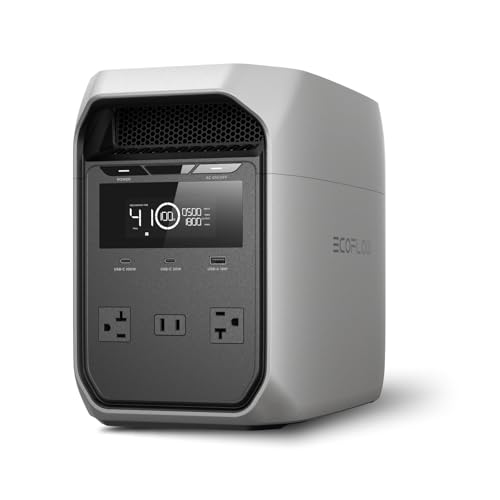
- 1,800W output with 1,024Wh capacity
- 0–80% AC charging in 45 minutes
- Sub-10ms UPS switching for sensitive electronics
Best For: Home backup, workstations, and fast recharging
Best High-Capacity Pick

- 2,042Wh capacity and 2,200W AC output
- 39.5-pound compact-for-class design
- Quiet charging and 20ms UPS switching
Best For: Extended backup, RV trips, and demanding appliances
Best Solar-Ready Value

- 1,152Wh LiFePO4 battery and 1,800W output
- 500W solar input for roughly 2.8–3.3-hour charging
- 20ms UPS switching and five-year warranty
Best For: Off-grid use, outages, and solar-supported backup
Best for Fast Backup

- 49-minute full recharge at 1,600W
- 2,000W output with 1,024Wh capacity
- 10 ms UPS and up to 600W solar input
Best For: Outage backup, camping, CPAP machines, and remote work
Best for Quiet Portability

- 1,800W output from a 1,024Wh battery
- 80% charge in about 45 minutes
- 30dB silent mode and 10 ms UPS
Best For: Quiet camping, home backup, and road trips
Best for Extended Runtime
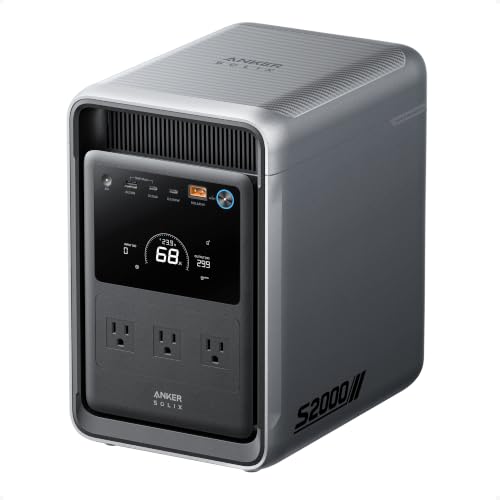
- 2,010Wh capacity with claimed 35-hour fridge runtime
- 1,500W continuous and 3,000W peak output
- LFP cells rated for up to 10,000 cycles
Best For: Extended outages, refrigerator backup, and off-grid use
Lightweight Trail Pick

- 292Wh capacity with 300W output
- 7.5-pound portable design
- LiFePO4 battery and solar compatibility
Best For: Lightweight camping, hiking, travel, and CPAP backup
High-Capacity Value Pick

- 519Wh capacity with 500W output
- Ten outputs, including wireless charging
- Wall, car, and solar recharging options
Best For: Camping, home backup, and powering multiple everyday devices
Fast-Charging Backup Pick

- 600W output with 1500W Power Lifting Mode
- 0–80% wall charging in 45 minutes
- 10ms UPS and eight charging modes
Best For: Fast emergency backup, road trips, and essential electronics
Best Compact 1,000Wh Pick – Jackery Explorer 1000 v2
The Jackery Explorer 1000 v2 is a practical choice among portable power stations for camping, road trips, and emergency use. Its 1,070Wh capacity, 1,500W output, and 23.8-pound weight provide a useful balance of capability and portability.
Best For: Campers, travelers, and households wanting a relatively light backup unit with fast charging.
Pros:
- 1,500W output with a 3,000W surge peak for appliances such as refrigerators and electric pots.
- LFP battery rated for more than 4,000 cycles and a lifespan exceeding 10 years.
- App-controlled charging modes, including emergency one-hour charging and quiet overnight charging.
- Multiple outputs, including three AC ports, two USB-C ports, and a 100W USB-C connection.
Cons:
- One-hour charging requires enabling emergency charging in the Jackery app.
- Solar charging is compatible only with Jackery solar panels.
Choose this model when a manageable carry weight matters as much as output. It is not the largest-capacity option here, but its LFP battery, app controls, and compact design make it a versatile everyday backup.
Best UPS Features – EcoFlow DELTA 3 Classic
The EcoFlow DELTA 3 Classic stands out among portable power stations for users who need strong output and rapid recharge times. It combines 1,024Wh of capacity with 1,800W output, 45-minute 0–80% AC charging, and a sub-10ms UPS function.
Best For: Home users, remote workers, and anyone needing fast backup power for sensitive electronics.
Pros:
- 1,800W output and 3,600W surge capacity for refrigerators, microwaves, laptops, and more.
- 0–80% charging in 45 minutes through EcoFlow X-Stream AC charging.
- Under-10ms UPS switching helps protect PCs, servers, and other sensitive devices from interruptions.
- LiFePO4 cells, EV-grade construction, and a five-year manufacturer warranty.
Cons:
- At 26.7 pounds, it is heavier than the Jackery 1000 v2.
- It is not compatible with the DELTA 2 Smart Extra Battery or DELTA 3 Series Smart Extra Battery.
The DELTA 3 Classic is a strong fit when fast charging and automatic backup switching are priorities. Its app adds charging schedules and backup modes, while optional 500W solar input supports off-grid use.
Best High-Capacity Pick – Jackery Explorer 2000 v2
The Jackery Explorer 2000 v2 is one of the more capable portable power stations for extended backup and demanding loads. Its 2,042Wh battery and 2,200W AC output provide substantially more reserve than mid-size models, while the 39.5-pound build remains relatively compact for its capacity.
Best For: Extended home backup, RV use, outdoor trips, and users running higher-wattage equipment.
Pros:
- Large 2,042Wh capacity with 2,200W output from three AC ports.
- 0–80% AC charging in 66 minutes and full emergency charging in 102 minutes through the app.
- LiFePO4 battery designed for up to 10 years of use.
- Quiet charging mode operates below 30dB, and UPS switching occurs in 20ms.
Cons:
- Its 39.5-pound weight makes it less convenient to move than smaller units.
- Solar charging requires 400W panels and can take as few as six hours.
This model makes sense when capacity and appliance support outweigh portability concerns. Its quiet mode and UPS capability also make it suitable for indoor backup, while the compact-for-class design helps with transport.
Best Solar-Ready Value – BLUETTI AC180
The BLUETTI AC180 is a versatile option among portable power stations, pairing a 1,152Wh LiFePO4 battery with 1,800W output and a broad selection of outlets. Its fast AC charging and 500W solar input make it useful for outages, camping, and off-grid applications.
Best For: Off-grid users and households wanting a solar-capable backup station with fast recharge options.
Pros:
- 1,800W output with a 2,700W peak mode for higher-power needs.
- Full AC charging in about one hour at 1,440W input.
- 500W solar input can recharge the unit in approximately 2.8–3.3 hours.
- Reliable UPS function switches to battery power in 20ms and includes a five-year warranty.
Cons:
- At 37.4 pounds, it is relatively heavy for a 1,152Wh station.
- The higher 2,700W output requires activating the boost mode through the BLUETTI app.
The AC180 is a compelling choice if solar charging and outlet flexibility are central to your setup. It offers strong output and quick replenishment, though its weight may be more noticeable during frequent carrying.
Best for Fast Backup – Anker SOLIX C1000 Gen 2
The Anker SOLIX C1000 Gen 2 is a strong choice among portable power stations if fast recharging and dependable emergency backup are priorities. It combines a 1,024Wh LiFePO4 battery with 2,000W output, a 49-minute full recharge option, and a compact design for home, RV, or campsite use.
Best For: Outage preparation, camping, remote work setups, CPAP backup, and off-grid use.
Pros:
- HyperFlash technology can fully recharge the station in 49 minutes at 1,600W.
- Provides 2,000W continuous output, 3,000W peak output, and support for up to 10 devices.
- Supports up to 600W solar input and includes a 10 ms UPS switchover.
- Its LiFePO4 battery is rated for at least 80% capacity after 4,000 cycles.
Cons:
- Solar charging requires compatible panels and takes longer than the 49-minute AC recharge.
- At 11.3 kg, it is portable but not especially lightweight for extended carrying.
The C1000 Gen 2 stands out for buyers who want high output without moving up to a much larger power station. Its rapid AC charging, UPS support, and app controls make it particularly practical for short outages and regularly used backup setups.
Best for Quiet Portability – BLUETTI Elite 100 V2
The BLUETTI Elite 100 V2 is one of the more compact portable power stations for buyers who want everyday appliance support without excessive noise or bulk. Its 1,024Wh battery, 1,800W AC output, rapid charging, and hidden one-handed handle suit both indoor backup and outdoor trips.
Best For: Quiet overnight camping, home backup, road trips, and powering everyday essentials.
Pros:
- Reaches 80% charge in roughly 45 minutes using 1,200W TurboBoost AC charging.
- Its 1,800W output and 2,700W Power Lifting mode can handle many everyday appliances.
- Silent mode operates at about 30dB, making it suitable for overnight or indoor use.
- Compact 25-pound design includes Wi-Fi and Bluetooth app control plus 10 ms UPS backup.
Cons:
- Its 1,800W output is lower than the 2,000W rating of some similarly sized models.
- TurboBoost charging reaches 80% in about 45 minutes, rather than a full charge in that time.
The Elite 100 V2 is a well-rounded option when portability and quiet operation matter as much as output. It offers useful home-backup features in a 25-pound package, while its LiFePO4 battery is rated for more than 4,000 cycles to 80% capacity.
Best for Extended Runtime – Anker SOLIX S2000
The Anker SOLIX S2000 is designed for buyers who need more stored energy from a portable power station for outages, home backup, or extended camping. Its 2,010Wh LiFePO4 battery, 1,500W continuous output, and claimed 35-hour refrigerator runtime prioritize endurance over maximum wattage.
Best For: Longer outages, refrigerator backup, home use, and extended off-grid trips.
Pros:
- The 2,010Wh battery can run a refrigerator for a claimed 35 hours, depending on conditions and usage.
- Its 1,500W continuous and 3,000W peak output support many essential appliances.
- 314Ah LFP cells are rated for up to 10,000 charge cycles and a 15-year lifespan.
- Supports up to 400W solar input and offers under-10 ms UPS switchover.
Cons:
- It has no 12V DC port, which may limit direct connection options for some users.
- The 35.7-pound weight is heavier than smaller 1kWh-class power stations.
- Its 1,500W continuous output is lower than some compact models in this roundup.
The S2000 makes the most sense when battery capacity and long runtimes take priority over rapid portability or higher continuous output. Its low idle draw, durable LFP cells, and dual-sided outlet layout make it a practical extended-backup station.
Lightweight Trail Pick – Jackery Explorer 300
The Jackery Explorer 300 is a compact option among portable power stations for camping, hiking, travel, and short-term emergency use. Its 292Wh capacity, 300W rated output, and 7.5-pound design provide practical power without adding much bulk.
Best For: Campers, hikers, hunters, and travelers who prioritize portability and dependable device charging.
Pros:
- Lightweight 7.5-pound design with an integrated carrying handle.
- Six-device connectivity, including AC outlets, USB-C PD, USB-A, and a car port.
- LiFePO4 battery chemistry rated for more than 4,000 charge cycles before reaching 70% capacity.
- Compatible with Jackery solar panels, reaching about 80% charge in approximately 2.8 hours with a 100W panel.
Cons:
- The 300W output is intended for smaller electronics and appliances rather than high-power equipment.
- Solar panels are optional and not included.
- Orders require a physical delivery address rather than only a PO Box.
Choose this model when carrying comfort, long cycle life, and straightforward solar compatibility matter more than maximum capacity. It is a sensible lightweight backup for personal electronics, cameras, laptops, and CPAP use while camping.
High-Capacity Value Pick – 500W 519Wh Solar Generator
This 519Wh portable power station is designed for users who need more capacity and connection options for camping, home backup, or outages. Its 500W pure sine wave inverter supports common electronics and small appliances, while ten output options allow simultaneous charging.
Best For: Campers and households needing broad device compatibility, wireless charging, and moderate backup capacity.
Pros:
- 519Wh capacity and 500W rated output can support devices such as laptops, routers, TVs, fans, cameras, and CPAP machines under the power limit.
- Up to ten devices can be connected through AC, USB-A, USB-C, DC, car, and wireless charging outputs.
- Pure sine wave AC output and built-in battery protections help support sensitive electronics.
- Rechargeable by wall outlet, car charger, or a compatible 100W or 200W solar panel.
Cons:
- At 18 pounds, it is considerably less convenient to carry than smaller power stations.
- Solar panels are not included.
- Devices over 500W should not be connected, and the AC output should be turned off when unused to conserve battery.
This model makes sense if capacity and port variety are higher priorities than minimum weight. Its 500W ceiling suits everyday electronics and modest appliances, but buyers should plan around its stated output limit and recharge the unit at least every three months.
Fast-Charging Backup Pick – BLUETTI Elite 30 V2
The BLUETTI Elite 30 V2 combines a compact 288Wh battery with unusually high 600W continuous output for its size. Among portable power stations, it stands out for fast wall charging, a 1500W Power Lifting Mode, and a 10ms UPS function for select home and emergency uses.
Best For: Buyers who want a lightweight emergency unit with fast charging, strong output, and UPS support for devices such as routers, laptops, or CPAP machines.
Pros:
- Lightweight 9.4-pound design with 600W continuous output and up to 1500W in Power Lifting Mode.
- Fast AC charging reaches 80% in 45 minutes and full charge in about 70 minutes.
- Supports eight charging modes, including wall, solar, and car charging.
- 10ms UPS switching helps maintain power for compatible devices during outages.
Cons:
- The 288Wh capacity is modest compared with larger 500Wh-class stations.
- Power Lifting Mode is intended for compatible higher-wattage loads and does not change the battery capacity.
- Solar panel availability is separate; the recommended PV60L panel is not listed as included.
This is a strong fit for short-duration backup where quick recovery and uninterrupted power matter. Its small battery favors essential electronics and brief appliance use, while the high output and UPS features add flexibility for blackouts and road trips.
How We Picked These Portable Power Stations
We selected models across several useful capacity and power classes rather than focusing only on the largest batteries. Our comparison considers battery capacity, continuous AC output, surge capability, recharge options, battery chemistry, portability, and practical use cases. LiFePO4 models receive particular attention because they generally offer a longer cycle life than older lithium-ion designs.
Specifications can vary by region and may change over time, so confirm the manufacturer’s current ratings, included accessories, warranty, and app features before purchasing.
Quick Comparison
| Type | Typical Capacity | Best For | Main Trade-Off |
|---|---|---|---|
| Compact | About 288–519Wh | Phones, lights, laptops, and short trips | Limited runtime for high-wattage appliances |
| Midrange | About 1,000–1,150Wh | Camping, remote work, and essential outage backup | Heavier and more expensive than compact units |
| High capacity | About 2,000Wh | Longer outages, appliances, and demanding loads | Greater weight, size, and upfront cost |
Key Buying Factors for Portable Power Stations
Capacity and Runtime
Capacity is measured in watt-hours (Wh). As a rough estimate, divide the station’s capacity by a device’s watt draw, then reduce the result to account for inverter and charging losses. A 1,000Wh unit will not deliver exactly 10 hours to a 100W load.
AC Output and Surge Power
Check continuous output for appliances such as refrigerators, pumps, heaters, and power tools. Motors may require a brief startup surge, so compare both the rated output and peak capability. High-wattage heating appliances can drain even large stations quickly.
Battery Chemistry and Recharge
LiFePO4 batteries are often the strongest choice for frequent use because of their expected longevity and stable performance. Also check wall-charging speed, solar input limits, car charging, and whether pass-through charging or an uninterruptible power supply mode is supported.
Ports, Weight, and Safety
Count the USB-C, USB-A, AC, and 12V ports you actually need. A lighter model is easier to carry, while larger units may offer wheels or handles. Look for overload, overtemperature, short-circuit, and low-battery protection, plus clear status displays and a dependable warranty.
Who Should Buy Which Portable Power Stations?
Choose a compact station if you mainly need emergency phone charging, lighting, camera batteries, or laptop power. These models are easier to pack and store.
Choose a midrange station for general camping, remote work, CPAP use, small appliances, and short outages. Around 1,000Wh offers a useful balance of runtime, portability, and cost.
Choose a high-capacity station if you need longer backup for refrigeration, medical equipment, networking gear, or multiple devices. Before buying, verify that its output handles your highest-demand appliance and that you can safely transport and recharge it.