Portable power stations with solar input make it easier to keep essential devices running away from the grid. The models in this roundup range from compact chargers for phones and small electronics to high-capacity systems designed for appliances, RV use, and emergency backup.
We compare battery capacity, inverter output, solar compatibility, portability, charging flexibility, and useful features so you can choose a setup that matches your power needs rather than simply buying the biggest unit.
Best 10 Portable Power Stations with Solar Input Picks for 2026
Best Overall Backup
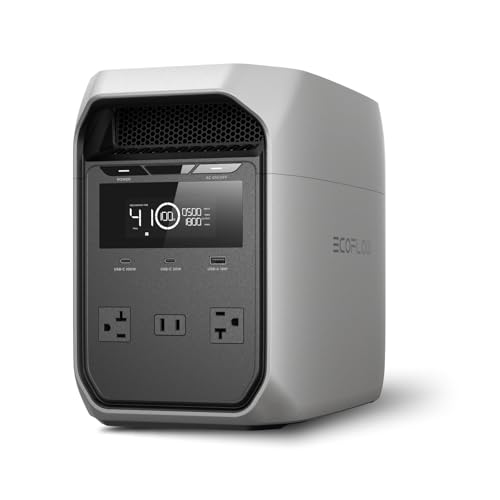
- 1,800W output with 1,024Wh capacity
- Under-10ms UPS for sensitive electronics
- Optional 500W solar input and app control
Best For: Home backup, appliances, and off-grid power
Best Solar Bundle
Jackery Solar Generator 1000 v2

- Includes a 200W solar panel
- 1,070Wh capacity and 1,500W output
- 23.8-pound design with app control
Best For: Camping, road trips, and emergency readiness
Best Long-Runtime Option
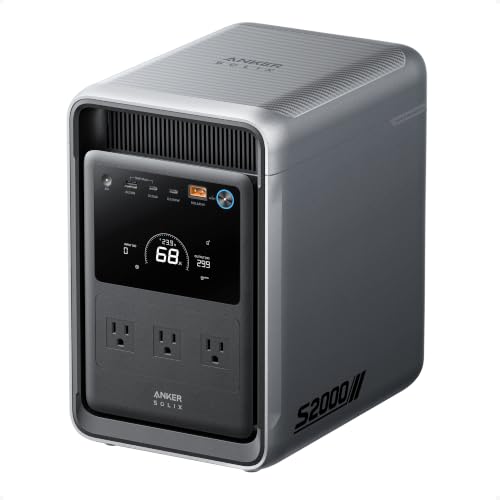
- Large 2,010Wh LiFePO4 battery
- Supports up to 400W solar input
- Claimed refrigerator runtime of up to 35 hours
Best For: Extended home backup and essential appliances
Best Built-In Solar Design

- Integrated 40W solar panel
- 1,600W output with 1,024Wh capacity
- Eight ports and 100W USB-C PD
Best For: Camping, RV trips, and off-grid use
Best Budget-Friendly Backup
1000W 1024Wh LiFePO4 Power Station

- 1000W output with 1024Wh LiFePO4 capacity
- Supports up to 300W solar input
- Six-layer protection and 3,000+ cycles
Best For: Camping, RV trips, and essential home backup
Best Fast-Charging Package
Anker SOLIX C1000 Gen 2 with Solar Panel
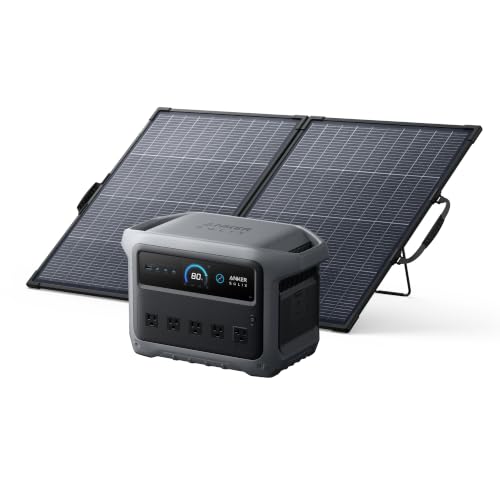
- 2,000W output with 1,024Wh capacity
- Includes a 200W bifacial solar panel
- 49-minute AC recharge and 10ms UPS
Best For: Fast-charging home backup and camping
Best Expandable Backup
ABOK Ark2000 1536Wh Solar Generator

- 2,000W output with 1536Wh starting capacity
- Expandable up to 4608Wh
- 1200W solar input and 10ms UPS
Best For: Home backup, RVs, and extended off-grid use
Best Compact Solar Kit

- 288Wh capacity with 300W output
- Includes a 60W solar panel
- LiFePO4 battery and quiet operation
Best For: Compact charging for travel, camping, and everyday electronics
Best Lightweight High-Output Pick

- 600W continuous and 1,500W lifting power
- 288Wh capacity in a 9.5-pound body
- Solar charging and 10ms UPS support
Best For: Camping, road trips, and compact emergency backup
Best Budget Solar Bundle

- 280Wh battery with bundled solar panel
- 300W output for small electronics
- Built-in flashlight and safety protections
Best For: Affordable camping and light emergency charging
Best Overall Backup – EcoFlow DELTA 3 Classic
For shoppers comparing portable power stations with solar input, the EcoFlow DELTA 3 Classic stands out with a 1,024Wh capacity, 1,800W output, and optional 500W solar recharging. Its fast charging and UPS functionality make it suitable for both everyday backup and outdoor use.
Best For: Home backup, sensitive electronics, appliances, and off-grid use.
Pros:
- 1,800W output with 3,600W surge capacity and X-Boost support.
- Reaches 80% charge in about 45 minutes using AC power.
- Under-10ms UPS switching helps protect computers and other sensitive devices.
- LiFePO4 cells are rated for more than 10 years of daily use.
Cons:
- Solar panel is optional rather than included.
- Not compatible with DELTA 2 Smart Extra Battery or DELTA 3 Series Smart Extra Battery.
The DELTA 3 Classic is a strong all-around choice when fast wall charging, high output, and automatic backup matter more than the lightest possible design. Its app control and solar capability add flexibility for emergency and off-grid scenarios.
Best Solar Bundle – Jackery Solar Generator 1000 v2
The Jackery Solar Generator 1000 v2 pairs a 1,070Wh power station with a 200W solar panel, making it a convenient entry in the portable power stations with solar input category. Its 23.8-pound weight, multiple ports, and app-based charging modes suit travel and emergency preparation.
Best For: Camping, road trips, portable emergency power, and buyers wanting a panel included.
Pros:
- Includes a 200W solar panel and supports charging to 80% in about six hours in the stated conditions.
- 1,500W continuous output and 3,000W surge capacity can handle many appliances.
- Lightweight 23.8-pound design with a foldable handle.
- LiFePO4 battery is rated for more than 4,000 cycles and a 10-year lifespan.
Cons:
- One-hour full charging requires enabling emergency charging in the Jackery app.
- Its three AC outlets provide less AC connectivity than some larger stations.
This Jackery is a practical bundle for users who want to start using solar power without purchasing a panel separately. It balances useful output and capacity with a relatively manageable travel weight.
Best Long-Runtime Option – Anker SOLIX S2000
With a 2,010Wh battery and support for up to 400W solar input, the Anker SOLIX S2000 is built for extended backup. Among portable power stations with solar input, its low idle draw and 1,500W output make it especially appealing for refrigerators and other essential loads.
Best For: Long-duration home backup, refrigerators, emergencies, and camping.
Pros:
- Large 2,010Wh capacity with claimed refrigerator runtime of up to 35 hours.
- Supports up to 400W solar input and several other charging methods.
- LiFePO4 cells are rated for up to 10,000 cycles and a 15-year lifespan.
- Eight outlets and under-10ms switchover support convenient backup use.
Cons:
- At 35.7 pounds, it is heavier than smaller 1,000Wh-class options.
- There is no 12V DC port.
- Solar panels are not listed as included.
The S2000 prioritizes reserve capacity and efficient operation over ultralight portability. It is a compelling fit for buyers who need appliances to run longer between recharges and can work around the missing 12V port.
Best Built-In Solar Design – BROWEY S1600
The BROWEY S1600 takes a different approach to portable power stations with solar input by integrating a 40W solar panel into the unit. Its 1,024Wh capacity, 1,600W pure sine wave output, and eight ports make it a versatile option for camping, RV trips, and emergency use.
Best For: Off-grid outings, RV use, emergency backup, and buyers who value integrated solar charging.
Pros:
- Built-in 40W solar panel can collect energy while the station powers devices.
- 1,600W pure sine wave output with 3,200W peak capacity.
- Eight AC, DC, and USB-C ports, including 100W USB-C PD.
- LiFePO4 battery and battery management protections support long-term use.
Cons:
- The built-in 40W panel will recharge more slowly than higher-wattage external solar setups.
- The unit is relatively wide and weighs about 26 pounds.
- Its stated battery rating is 3,000-plus cycles to 80% capacity, lower than some competitors listed here.
The S1600 is most distinctive for its integrated panel, which reduces the need to carry a separate solar module. Buyers needing faster solar replenishment can also connect additional panels, according to the supplied specifications.
Best Budget-Friendly Backup – 1000W 1024Wh LiFePO4 Power Station
If you want portable power stations with solar input for camping, travel, or emergency backup, this 1000W model offers a practical balance of capacity, portability, and price-conscious features. Its 1024Wh LiFePO4 battery can run essentials such as lights, routers, and mini fridges, while solar input supports off-grid recharging.
Best For: Campers, RV users, and households needing straightforward backup power for smaller appliances and electronics.
Pros:
- 1024Wh LiFePO4 capacity and 1000W continuous output for common essentials.
- Supports up to 300W solar input and can pair with an optional 200W panel.
- Six-layer battery protection and 3,000-plus cycle rating support long-term use.
- Five-device charging, including 60W USB-C PD and two AC outlets.
Cons:
- The optional 200W solar panel is not included.
- At about 27.7 pounds, it is portable but not especially lightweight for extended carrying.
- Its 1000W output is less suitable for larger high-draw appliances.
This is a sensible choice when you need reliable basic backup and solar compatibility without moving into a higher-output system. Check the included accessories and consider whether the separate solar panel fits your setup.
Best Fast-Charging Package – Anker SOLIX C1000 Gen 2 with Solar Panel
Among portable power stations with solar input, the Anker SOLIX C1000 Gen 2 stands out for fast charging and a compact design. It combines a 1024Wh battery with 2,000W output, a bundled 200W solar panel, app controls, and UPS switching for electronics that need dependable backup.
Best For: Campers and home users who value quick recharging, multiple device support, and app-based power management.
Pros:
- Delivers 2,000W output, 3,000W peak power, and nine ports.
- Includes a 200W bifacial solar panel and supports up to 600W solar input.
- Can fully recharge in 49 minutes with 1,600W AC input.
- 10ms UPS switching helps keep laptops and CPAP machines running during outages.
Cons:
- The power station and solar panel ship in separate packages.
- The included panel is 200W, while the station’s maximum solar input is higher.
- Its 1024Wh capacity may be limiting for extended use of high-draw appliances.
The C1000 Gen 2 is a strong fit if charging speed and convenience matter as much as solar capability. Its included panel, compact form, and UPS function make it especially versatile, though buyers should track both package deliveries.
Best Expandable Backup – ABOK Ark2000 1536Wh Solar Generator
For shoppers comparing portable power stations with solar input for serious backup use, the ABOK Ark2000 offers high output, expandable capacity, and rapid solar charging. Its 1536Wh LiFePO4 battery powers larger appliances, while expansion batteries can increase total capacity to 4608Wh.
Best For: Home backup, RVs, and campers who may need to expand storage capacity over time.
Pros:
- Provides 2,000W continuous output, 2,400W A-Boost support, and 3,500W peak power.
- Expandable from 1536Wh to 3072Wh or 4608Wh with additional batteries.
- Supports up to 1200W solar input and approximately 1.2-hour solar charging.
- Includes 10ms UPS functionality, app control, and a built-in emergency LED.
Cons:
- Expansion batteries are additional purchases.
- At 29.8 pounds, it is heavier than many smaller-capacity stations.
- The warranty and service structure is described as two years of warranty plus three years of service support.
The Ark2000 is the most flexible option here for buyers planning beyond occasional camping. Its expandable architecture and 1200W solar input make it better suited to longer outages, RV use, and growing backup requirements.
Best Compact Solar Kit – Anker SOLIX C300
The Anker SOLIX C300 is a well-equipped choice among portable power stations with solar input, pairing a 288Wh battery with a 60W solar panel. Its 300W output, broad port selection, and compact design suit everyday electronics, camping, and mobile charging needs.
Best For: Travelers and campers who want a compact, quiet power station for phones, laptops, small devices, and light AC loads.
Pros:
- Includes a 60W solar panel and supports solar, car, wall, and USB-C charging.
- Provides 300W of output with 600W surge capacity and multiple AC, USB-C, USB-A, and car-socket ports.
- Uses a LiFePO4 battery rated for 3,000 cycles and includes a five-year warranty.
- Reaches 80% charge in about 50 minutes from a wall outlet and operates at a claimed 25dB.
Cons:
- The 60W solar panel is relatively modest for faster off-grid replenishment.
- It is not compatible with several listed Anker panels, including the PS30, PS200, and PS400.
- The optional carrying strap is sold separately.
With its durable battery chemistry, quiet operation, and unusually versatile charging ports, the C300 is a strong portable option. Its 288Wh capacity and 300W output are better suited to personal electronics and smaller appliances than high-draw equipment.
Best Lightweight High-Output Pick – BLUETTI Elite 30 V2
The BLUETTI Elite 30 V2 stands out among portable power stations with solar input for combining a lightweight 9.5-pound design with 600W continuous output. It supports solar charging alongside wall and car charging, making it useful for outdoor trips and short-term emergency backup.
Best For: Campers and emergency-preparedness users who need more output than a typical entry-level unit, plus fast charging and UPS protection.
Pros:
- Delivers 600W continuously and up to 1,500W in Power Lifting Mode.
- Supports solar charging, eight charging modes, and 0–80% wall charging in about 45 minutes.
- Provides a claimed 10ms UPS transfer for devices such as routers, laptops, and CPAP machines.
- Weighs only 9.5 pounds while offering 288Wh of capacity.
Cons:
- The matching PV60L solar panel is specified for solar recharging, so panel compatibility should be checked before purchase.
- At 288Wh, runtime remains limited for larger appliances or extended outages.
- The product listing does not indicate that a solar panel is included.
The Elite 30 V2 is compelling when output and portability matter more than maximum battery capacity. Its 600W rating, fast wall charging, and UPS function give it broader emergency usefulness than many compact power stations, while solar input adds off-grid flexibility.
Best Budget Solar Bundle – ZeroKor 300W Solar Generator
This ZeroKor kit offers a straightforward entry point into portable power stations with solar input by combining a 280Wh battery with a foldable solar panel. Its 300W output, multiple USB ports, AC outlets, and built-in flashlight make it practical for basic camping and light home backup.
Best For: Budget-minded campers who need to charge phones, tablets, laptops, cameras, and other small devices from a bundled solar setup.
Pros:
- Includes a portable power station and foldable solar panel for off-grid charging.
- Offers 300W output, two 110V AC outlets, USB charging, DC output, and a QC3.0 port.
- Includes reading and SOS flashlight modes for outdoor or emergency use.
- Built-in protections cover short circuits, over-current, over-voltage, and overload conditions.
Cons:
- The 300W limit is unsuitable for high-draw appliances such as coffee makers, hair dryers, and pumps.
- The supplied notes contain conflicting panel details, listing both a 40W panel in the title and a 60W panel in the components list.
- Its 280Wh capacity is intended for smaller devices rather than prolonged household backup.
The ZeroKor is best viewed as a basic solar charging bundle rather than a heavy-duty generator. It covers common small-device needs and adds useful lighting, but buyers should verify the included panel specification and stay within the stated 300W output limit.
How We Picked These Portable Power Stations with Solar Input
We focused on models that combine a rechargeable battery with a practical solar-input system, giving you more than a standard power bank or basic battery generator. The selection covers several capacity classes, from compact 288Wh units to larger systems above 2,000Wh, along with different inverter ratings and included solar-panel bundles.
Our comparison emphasizes specifications that matter in everyday use: usable capacity, continuous and peak AC output, battery chemistry, recharge options, panel compatibility, portability, outlet selection, and suitability for outdoor or backup applications. Because real-world performance depends on connected loads, solar conditions, and charging habits, treat stated capacities and runtimes as manufacturer estimates.
Quick Comparison
| Best For | Recommended Capacity | What to Prioritize |
|---|---|---|
| Phones, cameras, and small electronics | 200–500Wh | Low weight, USB-C output, fast charging |
| Camping and weekend trips | 500–1,100Wh | Balanced capacity, solar input, compact design |
| Coolers, CPAP machines, and small appliances | 1,000–1,600Wh | Inverter headroom, quiet operation, LiFePO4 battery |
| Home backup and high-demand devices | 1,500Wh or more | High continuous output, expansion options, rapid recharging |
Key Buying Factors for Portable Power Stations with Solar Input
Capacity and Runtime
Capacity is measured in watt-hours (Wh). Divide the station’s capacity by a device’s watt draw for a rough runtime, then allow for inverter and battery-conversion losses. A 1,000Wh station will not typically deliver 1,000Wh to AC devices.
Output and Surge Capability
Check continuous wattage before connecting heaters, refrigerators, pumps, or power tools. The peak or surge rating helps with startup demands, but it does not mean the station can operate a high-wattage appliance continuously. Also confirm the outlet types and USB-C power delivery for your devices.
Solar Input and Charging
Compare the maximum solar-input wattage and voltage range with the panel you plan to use. A larger input limit can shorten recharge time in strong sunlight, while bundled panels simplify setup. Solar charging is weather-dependent, so AC and vehicle charging are valuable alternatives.
Battery Chemistry and Safety
LiFePO4 batteries generally offer longer cycle life and strong thermal stability compared with older lithium-ion chemistries, though they may add weight. Look for a clear battery-management system, temperature protections, overload safeguards, and an informative display or companion app.
Who Should Buy Which Portable Power Stations with Solar Input?
Choose a compact model if you mainly need emergency phone charging, lighting, cameras, or a laptop while traveling. Mid-size stations are the most versatile choice for campers, tailgaters, CPAP users, and short outages. Larger 1,500Wh-plus units make more sense when you need to run a refrigerator, several devices, or selected household essentials for longer periods.
If portability is your priority, compare both weight and handle design—not just capacity. For frequent off-grid use, prioritize LiFePO4 construction, a useful solar-input limit, and multiple recharge methods. For occasional emergencies, a dependable AC charger, clear controls, and enough inverter capacity for your essential devices may matter more than maximum solar performance.