Changing engine oil, servicing transmissions, and moving fuel or other fluids is easier with the right pump. The best fluid transfer pumps for motorcycles help reduce spills while making routine maintenance more convenient in a home garage or workshop.
This roundup compares 10 electric and manual options, from compact oil extractors to bottle-mounted pumps and high-flow siphon kits. Use the guide below to match pump type, capacity, hose design, and power requirements to your motorcycle maintenance tasks.
Best 10 Fluid Transfer Pumps for Motorcycles Picks for 2026
Portable Electric Pick

- 60W motor with 0.8–1.0 L/min stated flow
- Battery clamps and hoses included
- For warm motor oil—not fuel or water
Best For: Portable motorcycle oil changes
Workshop Refill System
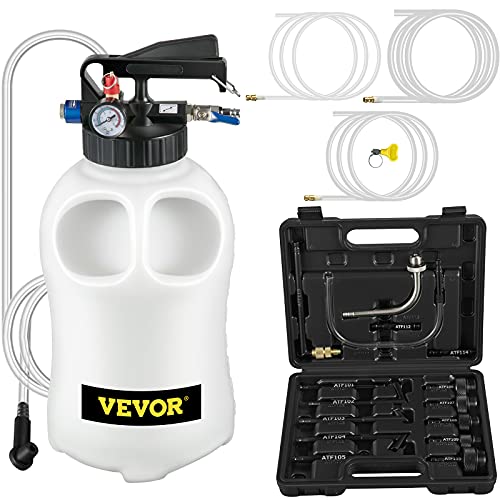
- Large 10L reservoir for extraction and dispensing
- Includes 14 vehicle-service adapters
- Gauge and 43 PSI release valve included
Best For: Garage transmission-fluid service
High-Output DIY Choice

- 100W pure-copper motor
- Up to 4.2 qt/min stated flow rate
- For oils and lubricants, not fuel or water
Best For: Faster topside motorcycle oil changes
All-Purpose Manual Pick

- Manual operation needs no electricity
- 2.9–3.2 GPM stated transfer rate
- Handles fuel, oil, coolant, and water
Best For: Portable multi-liquid motorcycle transfers
Best Electric Extractor

- 100W motor pumps up to 1 quart per minute.
- Includes 4-foot hoses, case, and quick-release plugs.
- Works with motorcycles, ATVs, scooters, and more.
Best For: Powered motorcycle oil changes and recurring fluid service
Best Bottle-Mount Option

- Fits standard quart bottles with 28mm caps.
- Dispenses 8cc per manual stroke.
- Includes a tube-holding 3rd-hand adapter.
Best For: Controlled motorcycle gear-oil and transmission-fluid refills
Best Multi-Use Siphon

- Transfers up to 3 gallons per minute.
- Supports liquid transfer, evacuation, and compression.
- Includes air adapters and tool-free disassembly.
Best For: Emergency fuel transfer and varied small-equipment tasks
Best Manual Option
500CC Fluid Extractor and Fill Pump
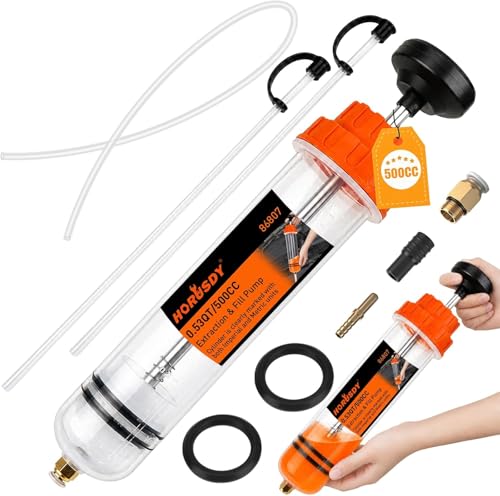
- Manual, no-power operation
- Long hose and extension tubes
- Graduated transparent body
Best For: DIY motorcycle fluid maintenance
Best 12V Extractor

- 100W copper motor
- Includes hoses and adapters
- Transparent flow-monitoring hoses
Best For: Powered motorcycle engine-oil changes
Best Complete Kit

- 12V/24V dual-voltage operation
- Includes storage case and accessories
- 1–4L/min stated oil flow rate
Best For: Portable multi-vehicle oil changes
Portable Electric Pick – 12V Oil Extractor Pump
For riders seeking fluid transfer pumps for motorcycles, this compact 12V electric extractor offers a straightforward way to remove warm motor oil without manual pumping. It connects to a battery with included clamps and includes inlet and outlet hoses for basic oil-change work.
Best For: Motorcycle owners who want a portable electric pump for motor-oil extraction.
Pros:
- 60W motor delivers a stated 0.8–1.0 liters-per-minute flow rate.
- Compact, lightweight design with battery clamps and hoses included.
- Suitable for cars, motorcycles, RVs, boats, and lawn equipment.
Cons:
- Not suitable for gasoline, petrol, water, gearbox oil, or other flammable liquids.
- Requires warmed oil and a short cooling break during extended use.
- Limited suction power; extension tubes are not recommended.
This is a practical pick for occasional motorcycle oil changes when portability matters. Its restrictions and limited-duty runtime make it better suited to light maintenance than demanding transfer jobs.
Workshop Refill System – 10L Pneumatic ATF Pump
Among fluid transfer pumps for motorcycles, this VEVOR system is the most workshop-oriented option, combining a 10-liter reservoir with pneumatic extraction and dispensing. Its adapters and dual-control valves are aimed at transmission-fluid servicing rather than simple oil removal.
Best For: Garage users servicing transmission fluid and needing a larger-capacity refill system.
Pros:
- 10L capacity supports extraction and dispensing with fewer refills.
- Includes 14 adapters for compatibility with numerous vehicle applications.
- Pressure gauge and preset 43 PSI release valve support monitored operation.
Cons:
- At 9.6 pounds and 20 x 11 x 9 inches, it is less portable than compact pumps.
- Designed around transmission-fluid service, which may be more equipment than some motorcycle owners need.
- Requires a pneumatic operating setup rather than simple battery power or hand operation.
This is a strong choice for a dedicated service area or users who regularly refill transmission systems. Its capacity and adapter range are useful, but casual motorcycle maintenance may not justify its larger footprint.
High-Output DIY Choice – 12V 100W Oil Extractor
This 12V 100W model is a high-output option among fluid transfer pumps for motorcycles, designed for topside extraction through an engine dipstick tube. It targets DIY maintenance and supports motor oil, gear oil, differential fluid, and transmission fluid, but not gasoline, diesel, or water.
Best For: DIY motorcycle owners who want faster electric extraction for approved lubricants.
Pros:
- 100W pure-copper motor provides a stated flow rate of up to 4.2 qt/min.
- Topside design avoids crawling under the vehicle or removing a drain plug.
- Supports several lubricant types and can run continuously for up to 30 minutes.
Cons:
- Not for gasoline, diesel, or water.
- Requires a 12V power source and warmed engine oil for faster flow.
- Heavier than the smaller 60W option at 3.44 pounds.
For riders prioritizing speed and convenient topside servicing, this is the strongest electric option in the group. Confirm the fluid compatibility before use, since its application is limited to approved oils and lubricants.
All-Purpose Manual Pick – Hand Siphon Transfer Pump
This manual siphon is a versatile alternative among fluid transfer pumps for motorcycles, requiring no electricity or batteries. It uses two 52-inch hoses and supports gasoline, motor oil, transmission fluid, coolant, and water, making it useful for broader transfer tasks than oil-only electric extractors.
Best For: Motorcycle owners who need a portable, manually operated pump for multiple liquids.
Pros:
- Moves a stated 2.9–3.2 gallons per minute through manual pumping or siphoning.
- Works with gasoline, oil, transmission fluid, water, and coolant.
- Tool-free assembly and 52-inch hoses support flexible placement.
- Can also switch to air inflation with the included adapter.
Cons:
- Manual operation requires repeated pumping rather than powered transfer.
- Broad fluid compatibility does not replace the need for proper container and hose hygiene.
- Its included hose length may not suit every tank or storage setup.
This is the most flexible choice for occasional garage, yard, or roadside use. Choose it when portability and liquid versatility matter more than automated operation or specialized oil extraction.
Best Electric Extractor – Harpy Eagle 12/24V Oil Pump
For motorcycle owners who want powered fluid transfer pumps for motorcycles, the Harpy Eagle is a 100W electric extractor designed for oil changes and other vehicle fluids. It arrives assembled, includes extended hoses and a storage case, and can pump up to 1 quart per minute.
Best For: Riders who want an electric pump for motorcycle oil changes and occasional fluid service on other vehicles or equipment.
Pros:
- 100W motor pumps up to 1 quart per minute.
- Includes two 4-foot hoses for flexible placement.
- Comes assembled with a manual, storage case, quick-release plugs, and hose clip.
- Can also handle transfer-case and rear-axle gearbox oil, plus fluids for ATVs, scooters, and generators.
Cons:
- Requires a 12V or 24V power source.
- At 4.49 pounds, it is less compact than a simple manual siphon pump.
This is a practical choice when convenience and reach matter more than minimal size. Its electric operation and included case make it especially useful for repeated maintenance, though a manual pump may be simpler for occasional small motorcycle jobs.
Best Bottle-Mount Option – 8cc Quart-Bottle Fluid Pump
This compact manual pump is a convenient option among fluid transfer pumps for motorcycles, especially for transmission fluid, differential fluid, and gear oil. It threads onto standard quart bottles with 28mm caps and dispenses 8cc per stroke.
Best For: Motorcycle riders who need a lightweight, controlled way to refill gear oil or transmission fluid from a standard quart bottle.
Pros:
- Fits standard quart bottles with 28mm caps.
- Provides 8cc per manual pump stroke for measured filling.
- Includes a 3rd-hand adapter to help secure the fill tube.
- Suitable for oil, antifreeze, gasoline, kerosene, and other listed fluids.
Cons:
- Manual pumping is slower than an electric extractor.
- Plastic construction may be less robust than a metal-bodied pump.
- Requires a compatible 28mm quart bottle.
Its bottle-mounted design keeps the setup light and avoids transferring fluid into a separate reservoir. It is best suited to targeted refills rather than high-volume extraction or pumping.
Best Multi-Use Siphon – 3-in-1 Fluid Transfer Pump
For riders seeking versatile fluid transfer pumps for motorcycles and small equipment, this manual siphon kit supports transferring, evacuating, and compressing liquids. It can move up to 3 gallons per minute and includes an air adapter kit for inflatables and tire use.
Best For: Motorcycle owners who want an emergency fuel and liquid-transfer pump that can also support household, outdoor, and small-equipment tasks.
Pros:
- Transfers up to 3 gallons or 12 liters per minute.
- 3-in-1 design supports transfer, evacuation, and compression.
- Disassembles without tools for easier cleaning.
- Includes an air adapter kit for tires, mattresses, and inflatable toys.
Cons:
- Manual operation requires physical effort.
- Plastic construction may not suit heavy-duty workshop use.
- Its listed vehicle compatibility emphasizes cars, snowmobiles, and tractors rather than motorcycles.
This pump stands out for versatility and flow rate rather than specialized motorcycle servicing. It is a useful backup for fuel transfer and general liquid handling, particularly when the included air-adapter functions add value.
Best Manual Option – 500CC Fluid Extractor and Fill Pump
For riders who want straightforward fluid transfer pumps for motorcycles, this 500cc manual extractor offers hands-on control for extracting and refilling oil, coolant, brake fluid, and gear oil. Its transparent body, long hose, and extension tubes are useful when working around tight motorcycle reservoirs and dipstick tubes.
Best For: DIY motorcycle maintenance, small engines, and occasional fluid extraction or refilling without electrical power.
Pros:
- Manual operation needs no battery or outlet.
- Long hose and extension tubes improve reach in tight spaces.
- Graduated transparent body helps monitor fluid levels.
- Double-seal rings and precision threads support leak-resistant operation.
Cons:
- Manual pumping requires more effort than an electric extractor.
- The 500cc capacity may require repeated fills for larger jobs.
This is a practical, compact choice for motorcycle owners who value control and portability. Choose it when versatility and simple storage matter more than powered extraction speed.
Best 12V Extractor – Ultra-Quiet 100W Oil Pump
This 12V electric unit is one of the more convenient fluid transfer pumps for motorcycles when you want powered engine-oil extraction. Its 100W copper motor, transparent hoses, and included adapters support cleaner, more efficient servicing from a compatible 12V battery connection.
Best For: Motorcycle owners who prefer powered oil changes and also maintain compatible vehicles or outdoor equipment.
Pros:
- 100W pure copper motor is designed for fast oil extraction.
- Includes inlet hoses, outlet hose, and three adapters.
- Transparent hoses allow real-time flow monitoring.
- Overheating protection and leak-prevention features support cleaner operation.
Cons:
- Requires a 12V battery and correct polarity connection.
- Viscous oil should be preheated to 40–60°C before extraction.
- Not compatible with gasoline, diesel, water, or waste oil.
Its powered design reduces manual effort, but the operating limits matter. Follow the preheating and duty-cycle guidance to help prevent overheating during motorcycle maintenance.
Best Complete Kit – MILADO 12V/24V Oil Extractor
For users comparing fluid transfer pumps for motorcycles alongside broader vehicle maintenance, this MILADO set combines a 100W motor with a storage case and ready-to-use hoses. Its 12V/24V compatibility makes it suitable for battery-powered oil extraction from motorcycles, cars, boats, and other listed equipment.
Best For: Riders who want a portable, organized electric kit for motorcycle oil changes and occasional multi-vehicle maintenance.
Pros:
- Supports both 12V and 24V DC power systems.
- 100W motor provides a stated 1–4L/min engine-oil flow rate across 10–90°C.
- Includes storage box, hoses, clamp, gloves, wipes, and instructions.
- Aluminum pump housing is described as corrosion-resistant and rust-free.
Cons:
- Cannot transfer water, gasoline, petrol, fuel, or other flammable liquids.
- At 5.29 pounds, it is heavier than a basic manual syringe pump.
- Requires a suitable 12V or 24V battery connection rather than AC power.
The complete accessories and storage case make this a convenient choice for repeat maintenance. Its fluid restrictions should be checked carefully before each job, especially when switching between vehicle systems.
How We Picked the Best Fluid Transfer Pumps for Motorcycles
We compared these pumps by looking at their intended fluid types, operating method, power requirements, capacity, hose configuration, portability, and likely motorcycle-maintenance uses. Electric models can speed up oil extraction, while manual pumps offer more control and avoid the need for a battery or power connection.
We also considered whether each design is better suited to extraction, dispensing, siphoning, or filling gearboxes and differentials. Because motorcycles vary widely in oil-fill access and service procedures, a pump that works well for one job may not be ideal for another.
Quick Comparison
| Pump type | Best for | Main advantage | Potential limitation |
|---|---|---|---|
| 12V electric extractor | Routine engine-oil changes | Fast, powered operation | Needs a suitable power source |
| Manual syringe or bottle pump | Small fills and precise dispensing | Excellent control | Slower for larger volumes |
| Hand siphon pump | Fuel and general liquid transfer | Portable and power-free | May require priming |
| ATF or fluid dispenser | Transmission and differential servicing | Useful reservoir capacity | Less versatile for narrow access points |
Key Buying Factors for Fluid Transfer Pumps for Motorcycles
Choose the Right Pump Action
Electric pumps are convenient for repeated oil extraction, especially when a 12V battery is available. Manual pumps are often preferable when transferring small amounts or when you need to meter fluid carefully. Siphon pumps are practical for fuel and general liquid movement but should only be used with fluids and containers the manufacturer permits.
Check Compatibility and Cleanliness
Confirm that the hoses, seals, and pump body are compatible with the oil, fuel, coolant, or transmission fluid you plan to use. Avoid cross-contamination by dedicating equipment to specific fluids, and clean the pump promptly after use. Never use an oil-only extractor for gasoline unless it is explicitly rated for fuel.
Match Capacity and Access
A motorcycle typically needs a compact setup, but capacity still matters. A larger reservoir reduces interruptions, while a slim or flexible intake tube may be more important when reaching through a dipstick or service opening. Check hose length, tube diameter, bottle compatibility, and the position of the motorcycle’s fill and drain points.
Consider Power and Safety
For 12V models, verify polarity, cable length, fuse protection, and whether the pump is designed for continuous operation. Work on a stable motorcycle with the engine off, keep ignition sources away from fuel, and collect used fluids in an approved container for proper recycling.
Who Should Buy Which Fluid Transfer Pumps for Motorcycles?
Choose a 12V electric oil extractor if you mainly perform regular engine-oil changes and want speed. Pick a manual syringe or quart-bottle pump for controlled transmission, differential, or small-volume fills. A hand siphon is the better fit for occasional fuel or general liquid transfer when portability matters. Choose a higher-capacity dispenser when you service multiple vehicles or need to refill systems without repeatedly reloading the pump.