Choosing among the best dust extractors can make woodworking, renovation, and jobsite cleanup noticeably cleaner and more efficient. The right model should match your tools, workspace, filtration needs, and expected debris volume.
We selected 10 dust extractors ranging from compact HEPA vacuums to high-capacity wet/dry systems and dedicated woodworking collectors, so you can compare practical options for different budgets and workloads.
Best 10 Dust Extractors Picks for 2026
Jobsite HEPA Pick
DEWALT DWV010 8-Gallon Dust Extractor
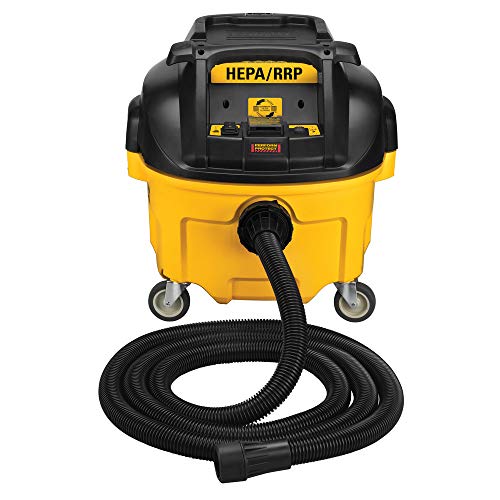
- Automatic filter cleaning every 30 seconds
- 150 CFM motor with power-tool actuation
- HEPA filter and 15-foot anti-static hose
Best For: Jobsite dust collection and tool-connected cleanup
Woodshop Collection Value
WEN DC3401 12-Gallon Dust Collector
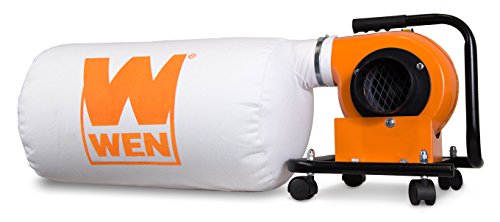
- Moves up to 660 CFM
- 12-gallon, 5-micron zippered bag
- Mobile base with optional wall mount
Best For: Home woodworking shops needing high airflow
Connected Workshop Choice
Festool CT MIDI I HEPA Extractor

- HEPA filtration with automatic tool start
- Bluetooth remote control and touch operation
- Compact chassis with tool-free filter changes
Best For: Connected woodworking and construction workflows
Quiet Wet/Dry Performer
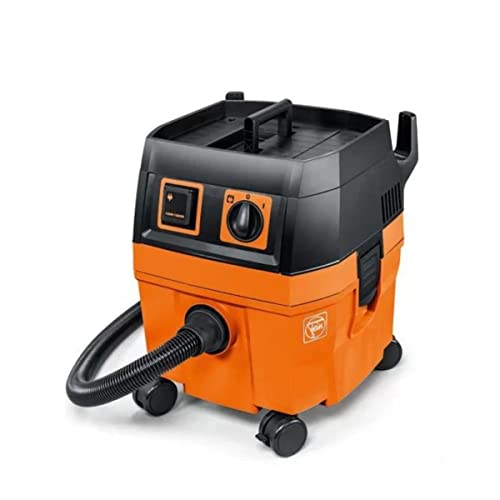
- 151 CFM wet/dry extraction performance
- Quiet 66 dB operation
- Autostart outlet, long cord, and 13-foot hose
Best For: Quiet workshop and jobsite wet/dry cleanup
Versatile Workshop Pick
ECOMAX 8-Gallon HEPA Dust Extractor

- Dual-mode vacuum and dust-extractor operation
- Automatic power-tool activation
- HEPA filter and included accessory kit
Best For: Home workshops and garage cleanup
Professional-Grade Choice
Bosch 9-Gallon Auto-Clean Dust Extractor

- 150 CFM airflow and 97-inch water lift
- Automatic filter cleaning every 15 seconds
- HEPA filtration and power-tool activation
Best For: Demanding workshop and jobsite dust extraction
Remote-Controlled Workhorse
8-Gallon 150-CFM HEPA Extractor
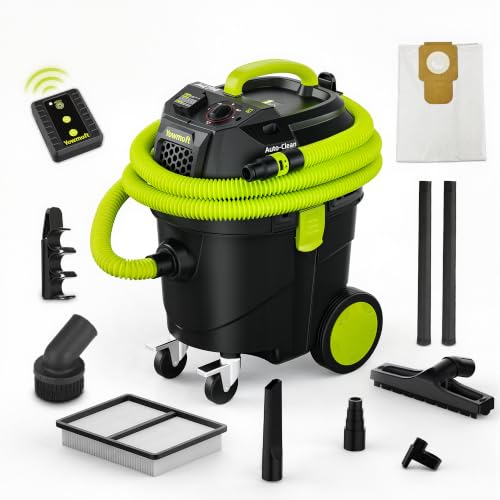
- 150 CFM airflow with 96-inch water lift
- Automatic HEPA cleaning every 20 seconds
- Remote control and tool activation
Best For: Heavy-duty woodworking and garage tasks
Heavy-Duty Woodshop Pick
Dual-Cyclone 9-Gallon Dust Extractor

- Dual-stage cyclone separation helps limit filter loading
- 9-gallon wet/dry tank handles coarse workshop debris
- 1400W motor delivers up to 19KPA suction
Best For: Woodshops and heavy cleanup
Quiet Professional Choice
Fein Turbo I HEPA Pro Dust Extractor

- Quiet 66 dB operation for indoor work
- HEPA filter supports fine-dust capture
- Autostart outlet synchronizes with power tools
Best For: Indoor woodworking and remodeling
Feature-Rich Workshop Option
ECOMAX 8-Gallon HEPA Dust Extractor

- Power tool activation starts extraction automatically
- Semi-automatic filter cleaning and dust-full indicator
- Stainless-steel 8-gallon tank with HEPA filtration
Best For: Automated woodworking cleanup
Jobsite HEPA Pick – DEWALT DWV010 8-Gallon Dust Extractor
The DEWALT DWV010 is a practical choice among dust extractors for jobsite cleanup and power-tool dust collection. Its 15-amp motor produces 150 CFM, while automatic filter cleaning pulses every 30 seconds to help maintain operation without frequent filter stoppages.
Best For: Contractors and serious DIY users who need portable HEPA filtration, tool actuation, and an 8-gallon canister.
Pros:
- Automatic filter cleaning supports continuous operation.
- Power tool actuation coordinates vacuum operation with a connected tool.
- HEPA filtration, sturdy casters, and a 15-foot anti-static hose suit demanding jobsites.
Cons:
- At 80 dB, it is not the quietest option for indoor work.
- EPA RRP compliance requires the specified DWV9330 filters.
With its durable rolling design and automatic cleaning system, the DWV010 is a strong fit when dependable tool-connected extraction matters more than low noise.
Woodshop Collection Value – WEN DC3401 12-Gallon Dust Collector
The WEN DC3401 is designed for woodworking rather than general-purpose HEPA extraction. Its 5.7-amp motor and 6-inch impeller move up to 660 CFM, and the 4-inch dust port connects with a range of woodworking tools.
Best For: Home woodworkers who want a mobile dust collector with a generous 12-gallon collection bag and compact storage options.
Pros:
- Up to 660 CFM provides substantial airflow for workshop dust collection.
- Lockable swivel casters make it easy to reposition.
- Includes a 12-gallon, 5-micron zippered bag, carrying handle, and optional wall mount.
Cons:
- The supplied notes identify a foam filter rather than HEPA filtration.
- Its 4-inch port is aimed at woodworking tools, limiting general-purpose compatibility.
For a dedicated woodworking setup, the DC3401 offers strong airflow and flexible placement in a relatively compact package. It is less suitable when fine-particle HEPA filtration is the priority.
Connected Workshop Choice – Festool CT MIDI I HEPA Extractor
The Festool CT MIDI I is a compact HEPA dust extractor built for controlled workshop and construction cleanup. Touch controls, automatic tool start, Bluetooth remote operation, and manual filter cleaning make it convenient for frequent tool-connected use.
Best For: Woodworkers and professionals who value compact mobility, HEPA filtration, and integrated control features.
Pros:
- HEPA filtration supports fine-dust collection.
- Bluetooth technology enables remote start and stop.
- Tool-free filter changes, manual cleaning, and a compact chassis simplify maintenance and transport.
Cons:
- The supplied notes do not specify a collection capacity.
- It is a corded-electric unit, so operation remains tied to an outlet.
The CT MIDI I stands out for usability rather than raw specifications: its connected controls and compact chassis are useful when moving between tasks and keeping workflow interruptions low.
Quiet Wet/Dry Performer – Fein Turbo I Dust Extractor
The Fein Turbo I is a versatile option among dust extractors for wet and dry cleanup in workshops and on jobsites. Its 1100-watt turbine delivers 151 CFM and 98 inches of water lift, while the 66 dB operating level keeps noise comparatively low.
Best For: Users who need quiet wet/dry extraction with long reach and power-tool activation.
Pros:
- High-performance turbine provides 151 CFM and 98 inches of water lift.
- Autostart outlet with power-on delay supports tool-activated suction.
- Includes a 19.7-foot power cord, 13-foot hose, HEPA filter, and 360-degree swivel wheels.
Cons:
- Its 5.8-gallon capacity is smaller than the WEN’s listed capacity.
- Anti-static operation requires optional accessories according to the supplied notes.
Choose the Turbo I when quiet operation and wet/dry flexibility are important. Its long cord and hose also help cover more workspace without constantly changing outlets.
Versatile Workshop Pick – ECOMAX 8-Gallon HEPA Dust Extractor
The ECOMAX is a practical choice among dust extractors for workshops that need one machine for routine cleanup and power-tool dust collection. Its dual-mode design, tool activation, HEPA filtration, and included accessories make it suitable for woodworking and general garage use.
Best For: Home workshops, garage cleanup, and users who want automatic starts with compatible power tools.
Pros:
- Switches between standard vacuuming and dust-extractor operation.
- Power Tool Activation starts the vacuum when a connected tool turns on.
- Semi-automatic filter cleaning, a dust-full indicator, and HEPA filtration help support consistent suction.
- Includes a 10-foot anti-static hose, extension wands, nozzles, bags, and filters.
Cons:
- At 75 dB, it is not the quietest option listed.
- Its tool-activation feature is intended for connected corded power tools.
Choose the ECOMAX if flexibility and included accessories matter more than the lowest noise level. The 8-gallon tank, drain port, and portable canister design support varied indoor cleanup tasks.
Professional-Grade Choice – Bosch 9-Gallon Auto-Clean Dust Extractor
The Bosch VAC090AH is one of the more performance-focused dust extractors in this roundup, offering 150 CFM airflow, 97 inches of static water lift, and automatic filter cleaning. Its tool activation and Power Broker dial help adapt suction to different applications.
Best For: Woodworkers and contractors seeking strong dust extraction with automatic cleaning and HEPA filtration.
Pros:
- Delivers up to 150 CFM airflow and 97 inches of static water lift.
- Automatically cleans the filter every 15 seconds to help maintain suction.
- HEPA filtration captures 99.97% of particles at 0.3 microns or larger.
- Power-tool activation and the Power Broker dial support application-specific use.
Cons:
- It has a limited one-year manufacturer warranty.
- The included fleece filter bag is intended for dry dust and debris, so users should plan applications accordingly.
The Bosch stands out when airflow, automatic maintenance, and dust-containment features are priorities. Its 9-gallon capacity and wheeled canister form add practical mobility for indoor jobsite or workshop use.
Remote-Controlled Workhorse – 8-Gallon 150-CFM HEPA Extractor
This 8-gallon model is a useful option among dust extractors for heavy-duty woodworking and garage tasks. It combines 150 CFM airflow, automatic HEPA filter cleaning, tool activation, and remote operation to reduce interruptions while working.
Best For: Woodworking users who want strong suction, remote control, and automatic coordination with a compatible power tool.
Pros:
- 1200-watt motor provides 150 CFM airflow and up to 96 inches of static water lift.
- Automatic HEPA filter cleaning activates every 20 seconds.
- Tool activation synchronizes extraction with connected tools rated up to 5A.
- Remote control allows power and suction adjustments from within range.
Cons:
- The 35.2-pound weight may be less convenient when frequent carrying is required.
- Its tool-activation connection is limited to tools up to 5A.
- The supplied notes identify an 11.5-foot hose but do not specify a noise rating.
Consider this extractor if remote operation and automated cleaning are especially valuable in your workspace. Its wet/dry capability, overload-prevention design, and high airflow give it a broad range of garage and woodworking uses.
Heavy-Duty Woodshop Pick – Dual-Cyclone 9-Gallon Dust Extractor
If you need dust extractors for wood chips, shavings, and coarse workshop debris, this 9-gallon wet/dry model emphasizes pre-separation and sustained cleanup. Its dual-cyclone design sends larger particles into the tank before they reach the HEPA filter, while the 1400W motor provides up to 19KPA suction.
Best For: Woodshops, carpentry jobsites, garages, and other areas handling heavy dry debris or occasional wet cleanup.
Pros:
- Dual-stage cyclone separation helps reduce filter loading.
- 9-gallon tank supports wood chips, shavings, sawdust, damp waste, and non-corrosive spills.
- Includes an 8.2-foot anti-static hose and is suited to saws, planers, routers, lathes, and CNC equipment.
Cons:
- At 80 dB and 35.5 pounds, it may be less appealing for quiet or highly portable use.
- It has a single speed and push-button manual control.
The dual-cyclone pre-separator is the main advantage for demanding woodworking cleanup, helping preserve airflow and reduce filter-maintenance interruptions. Choose it when tank capacity and coarse-debris handling matter more than low noise or compact size.
Quiet Professional Choice – Fein Turbo I HEPA Pro Dust Extractor
Among dust extractors for indoor woodworking and remodeling, the Fein Turbo I HEPA Pro stands out for quieter operation and tool connectivity. It provides 151 CFM suction, 98 inches of water lift, HEPA filtration, and an autostart outlet for synchronized power-tool extraction.
Best For: Indoor woodworking, remodeling, jobsite cleanup, and users who value low operating noise and extended reach.
Pros:
- 66 dB operation is comparatively quiet for indoor work.
- HEPA filtration and a filter bag support fine-dust capture and dust-class L applications.
- 13-foot anti-static hose, 19-foot cord, swivel wheels, and onboard storage improve mobility.
- Soft-start autostart outlet connects directly to compatible power tools.
Cons:
- Its 5.8-gallon capacity is smaller than the larger tanks in this roundup.
- The supplied details list a compact form factor but do not specify a tank drain or wet-cleanup accessories.
This is a strong fit when quiet performance, HEPA filtration, and coordinated tool activation are priorities. Its smaller capacity favors controlled indoor work and portability over extended collection of large debris loads.
Feature-Rich Workshop Option – ECOMAX 8-Gallon HEPA Dust Extractor
For shoppers comparing dust extractors with workshop automation, the ECOMAX combines standard wet/dry vacuuming with a dedicated dust-extractor mode. Power tool activation starts the vacuum when a connected tool runs, while semi-automatic filter cleaning and a dust-full indicator help support consistent operation.
Best For: Woodworkers who want power-tool activation, filter-maintenance assistance, and a durable stainless-steel collection tank.
Pros:
- Dual-mode operation handles everyday cleaning and power-tool dust extraction.
- Power tool activation works with tools such as sanders, saws, and planers.
- Semi-automatic filter cleaning, a dust-full indicator, and HEPA filtration help manage fine dust.
- Includes a 10-foot anti-static hose, accessories, three disposable filter bags, and a drain port.
Cons:
- The supplied notes do not state the unit’s noise level or suction rating.
- At 8 gallons, its capacity is below the 9-gallon option in this selection.
The ECOMAX is particularly practical for tool-based woodworking because its automatic start and filter-cleaning features reduce hands-on interruptions. It is a versatile choice if you want one stainless-steel machine for both workshop extraction and general wet/dry cleanup.
How We Picked These Dust Extractors
We compared the selected models by filtration, suction, capacity, filter-cleaning design, portability, tool compatibility, and overall versatility. HEPA filtration received particular attention because it can help capture fine particles produced by sanding, cutting, and grinding. We also considered useful features such as automatic or semi-automatic filter cleaning, automatic tool start, anti-static hoses, wet/dry capability, mobile bases, and wall-mount options.
Specifications can vary by configuration and seller, so verify the included hose, adapters, filters, bags, and power requirements before ordering. A dust extractor is most effective when its accessories form a tight connection with the tool producing the dust.
Quick Comparison
| Best For | Recommended Type | Features to Prioritize |
|---|---|---|
| Portable power-tool work | Compact HEPA extractor | Tool activation, manageable size, strong filtration |
| Heavy woodworking | Dedicated dust collector | High airflow, large bag, mobile base |
| Fine sanding and grinding | HEPA dust extractor | Sealed filtration, automatic filter cleaning |
| Mixed workshop cleanup | Wet/dry extractor | Durable tank, wet pickup, versatile attachments |
| Professional jobsite use | Feature-rich commercial extractor | Tool start, anti-static design, dependable filtration |
Key Buying Factors for Dust Extractors
Filtration and Fine-Dust Control
Look for a genuine HEPA filter when working with fine wood, drywall, or masonry dust. A sealed system, compatible dust bags, and dependable filter cleaning can help preserve airflow and reduce airborne particles.
Airflow, Suction, and Tool Compatibility
Airflow is especially important for saws, sanders, and routers, while suction helps maintain a seal around tool ports and capture heavier debris. Check the hose diameter, included adapters, outlet size, and whether automatic tool activation supports your equipment.
Capacity and Filter Maintenance
Larger tanks and bags reduce emptying interruptions, but they also add weight. Automatic or semi-automatic cleaning is valuable when fine dust quickly loads the filter. For woodworking collectors, compare bag capacity and airflow rather than relying only on motor horsepower.
Portability and Noise
Wheels, compact dimensions, hose storage, and a practical power cord matter when the extractor moves between stations or jobsites. If it will run for long periods, also consider noise, vibration, and the availability of replacement filters and bags.
Who Should Buy Which Dust Extractors?
Choose a compact HEPA model such as the DEWALT, Festool, or Bosch when you regularly connect an extractor to handheld power tools and need controlled, portable dust collection. These designs are well suited to sanding, grinding, remodeling, and finish work.
Choose the WEN woodworking collector or another high-airflow collector when your priority is moving larger volumes of chips from stationary tools. For mixed cleanup, spills, and workshop debris, a Fein or ECOMAX wet/dry model offers broader versatility. Buyers who want a balance of filtration, capacity, and value should compare the ECOMAX and 8-gallon or 9-gallon alternatives closely, paying attention to included accessories and filter-cleaning features.