The best countertop water purifiers make filtered water easier to access without requiring permanent plumbing or a full under-sink installation. This roundup compares reverse osmosis, UV, gravity, and dispenser-style systems for different budgets and water-quality concerns.
Use the buying guide below to compare filtration performance, capacity, upkeep, wastewater, and everyday convenience before choosing a system for your kitchen, office, or rental home.
Best 10 Countertop Water Purifiers Picks for 2026
Best Glass-Carafe RO System

- Five-stage RO filtration with remineralization
- No plumbing or installation required
- Borosilicate glass carafe and filter monitor
Best For: Portable, remineralized RO water without plastic storage
Best Large-Capacity Zero-TDS Dispenser
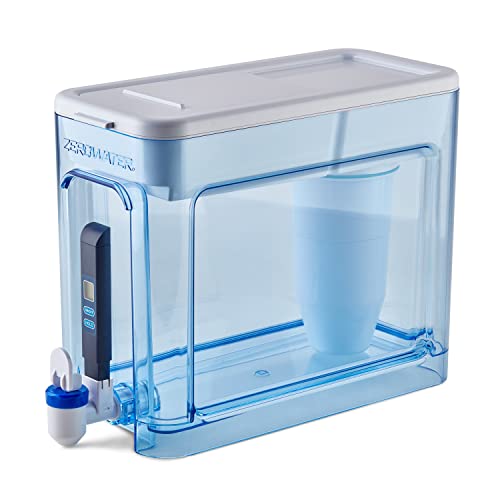
- 32-cup countertop dispenser
- Five-stage filtration targets virtually all TDS
- Includes an integrated TDS meter
Best For: High-volume, unpowered filtration with measurable TDS
Best Budget Refrigerator Dispenser

- 30-cup refrigerator-friendly capacity
- Reduces chlorine and specified metals
- Dishwasher-safe with easy-refill design
Best For: Simple chilled water storage and taste improvement
Best All-Around RO Pick
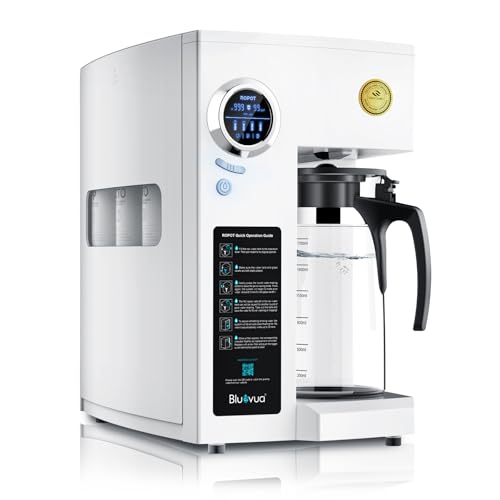
- Six-stage RO filtration with UV and remineralization
- No installation and a borosilicate glass carafe
- Built-in TDS and filter-life monitoring
Best For: Households seeking comprehensive filtration and mineral-enhanced taste
Best Non-Electric Option
Purewell 3-Stage Gravity Filter

- Electricity-free gravity filtration
- 2.25-gallon stainless-steel countertop design
- 0.01-micron UF membrane and replaceable filters
Best For: Large-capacity, off-grid, or electricity-free water filtration
Best Compact RO Pitcher System

- Seven-stage RO filtration with added minerals
- Auto-fills a detachable 40-ounce glass pitcher
- Compact, installation-free design for one to two people
Best For: Small households wanting convenient countertop RO water
Best All-in-One RO Purifier
DREO 7-in-1 Countertop RO System

- 7-in-1 RO filtration targets 99.9% of possible contaminants
- Includes a 5-liter tank and two autofill pitchers
- Built-in TDS meter and filter-life indicator
Best For: Households wanting convenient, high-capacity countertop RO filtration
Best Low-Waste Countertop RO

- Stated 3:1 pure-to-drain ratio
- Real-time raw and purified TDS monitoring
- 5-liter tank with two 1.1-liter autofill pitchers
Best For: Families wanting efficient countertop RO filtration with maintenance alerts
Best Glass-Carafe Option
AquaTru Countertop 4-Stage RO System

- Four-stage RO filtration targets 84 contaminants
- Includes a borosilicate glass carafe with lid
- NSF-tested and certified by IAPMO
Best For: Users preferring certified RO filtration and a glass serving carafe
Best Glass-Carafe RO System – Bluevua RO100ROPOT
For shoppers comparing countertop water purifiers, the Bluevua RO100ROPOT stands out with five-stage reverse osmosis filtration, remineralization, and a premium borosilicate glass carafe. It requires no plumbing and plugs into a standard power source, making it a practical option for kitchens without under-sink installation.
Best For: Households wanting portable RO filtration with a glass water container and remineralized water.
Pros:
- Five-stage filtration includes reverse osmosis and remineralization.
- No installation is required; the unit is ready to use on a countertop.
- Glass carafe helps avoid storing drinking water in traditional plastic.
- Filter-life and water-quality monitoring simplify maintenance.
Cons:
- Requires electricity and countertop space.
- Its maximum flow rate is 0.26 liters per minute.
- Reverse osmosis produces drain water, despite the stated 2:1 pure-to-drain ratio.
The Bluevua is a strong fit if you want comprehensive countertop RO purification without permanent installation. Its glass carafe, remineralization stage, and filter monitor add convenience, though its powered design and slower dispensing may not suit every household.
Best Large-Capacity Zero-TDS Dispenser – ZeroWater 32-Cup
The ZeroWater 32-Cup dispenser is a straightforward choice among countertop water purifiers for people who want a large reservoir and measurable filtration performance. Its five-stage ion-exchange system is designed to reduce dissolved solids, while the included TDS meter shows when the filter needs changing.
Best For: Families and shared spaces that want high-capacity, unpowered filtration with a built-in TDS check.
Pros:
- 32-cup capacity reduces the need for frequent refills.
- Five-stage filtration is designed to remove virtually all TDS.
- Included TDS meter provides a clear filter-change indicator.
- IAPMO certified to reduce PFOA/PFOS, lead, chromium, and mercury.
Cons:
- It is a manual dispenser rather than a powered purifier.
- The plastic construction may be less premium than glass alternatives.
- Filters should be changed when the meter reads 006, which can require monitoring.
Choose the ZeroWater if capacity and visible TDS readings matter more than powered dispensing or reverse osmosis. It offers a convenient, no-electricity setup, but users should plan for filter replacement based on their water quality and meter readings.
Best UV-Enhanced Countertop RO Purifier – SimPure Y7P-BW
The SimPure Y7P-BW combines five-stage reverse osmosis filtration with UV purification in a plug-in countertop design. For shoppers comparing countertop water purifiers, it offers a fast dispense rate, quick-change cartridges, and a stated 4:1 pure-to-drain ratio, though it dispenses water at room temperature only.
Best For: Homes, offices, RVs, and apartments needing high-capacity RO and UV purification without installation.
Pros:
- Combines 0.0001-micron RO filtration with UV purification.
- No installation is required, so it can be placed anywhere with power.
- Fast dispensing delivers approximately a cup in 15 seconds.
- Quick-change filters are rated for up to 528 gallons.
Cons:
- Requires electricity and has a relatively tall 17-inch profile.
- It is designed for feed water with TDS below 500 ppm.
- Dispenses room-temperature water only, not hot or cold water.
The Y7P-BW is compelling for users who want broad filtration and UV treatment in a self-contained appliance. Its capacity and flow rate support frequent use, while the room-temperature-only output may be a limitation for households seeking chilled or heated water.
Best Budget Refrigerator Dispenser – PUR 30-Cup
The PUR 30-Cup dispenser is a simple, space-conscious option among countertop water purifiers. It fits in a refrigerator, uses manual filling and dispensing, and includes a genuine PUR filter designed to improve taste while reducing chlorine, mercury, copper, and zinc.
Best For: Budget-conscious households wanting chilled filtered water and a compact refrigerator-friendly design.
Pros:
- 30-cup capacity provides convenient household storage.
- Space-saving shape is designed to fit inside a refrigerator.
- Pull-down spout and carrying handle make dispensing and refilling easier.
- Dishwasher-safe design simplifies cleaning.
Cons:
- Filter life is limited to 40 gallons or about two months.
- It uses manual filtration rather than powered RO purification.
- Its filtration is focused on taste and specified contaminants, not broad TDS removal.
The PUR is a practical pick when refrigerator storage, easy cleaning, and better-tasting tap water are the priorities. It is less suitable for shoppers seeking reverse osmosis or extensive dissolved-solids reduction, but its uncomplicated design keeps everyday use convenient.
Best All-Around RO Pick – Bluevua RO100ROPOT-UV
For shoppers comparing countertop water purifiers, the Bluevua RO100ROPOT-UV combines six-stage reverse osmosis filtration with UV treatment and remineralization. It requires no plumbing, uses a glass carafe, and includes a built-in display for monitoring filter life and water quality.
Best For: Households wanting broad contaminant reduction, mineral-enhanced taste, and a portable countertop system.
Pros:
- Six-stage filtration includes a 0.0001 μm RO membrane, UV light, and remineralization filter.
- Glass carafe and installation-free countertop design.
- Automatic standby mode and a reported 2:1 pure-to-drain ratio help limit energy and water waste.
- Filter-life and water-quality monitoring are built in.
Cons:
- Requires a power connection.
- Its 1.7-liter capacity may require refilling for larger households.
- At 17.8 pounds, it is less lightweight than simpler gravity systems.
The Bluevua is a feature-rich choice when filtration breadth, a glass vessel, and easy monitoring matter more than the smallest footprint. Its 12-month filter cycle and no-installation setup also simplify routine ownership.
Best Non-Electric Option – Purewell 3-Stage Gravity Filter
The Purewell 3-Stage is one of the countertop water purifiers to consider when you want filtration without electricity. Its gravity-fed design uses stainless-steel chambers, replaceable filters, and a 2.25-gallon capacity for indoor or outdoor use.
Best For: Users who prioritize an electricity-free system, generous capacity, and straightforward gravity filtration.
Pros:
- Operates without electricity, making it suitable for indoor and outdoor use.
- Three-stage filtration uses a 0.01-micron hollow-fiber UF membrane, silver ion membrane, and activated carbon block.
- 304 food-grade stainless-steel housing, spigot, and included stand provide a complete setup.
- Each filter is rated for up to 3,000 gallons under stated conditions.
Cons:
- Does not lower TDS.
- Filters should be replaced every six months for optimum performance.
- The lower chamber must not be overfilled, or adding water to the upper chamber can cause leakage.
Purewell is a practical fit for buyers who want high capacity and no electrical components. However, shoppers specifically seeking TDS reduction should choose a reverse osmosis model instead.
Best Compact RO Pitcher System – Waterdrop C2SL
The Waterdrop C2SL stands out among countertop water purifiers for its compact reverse osmosis design and automatically filled 40-ounce glass pitcher. With no plumbing required, it is designed for one or two people and adds minerals back to the filtered water.
Best For: Small households wanting installation-free RO filtration, a refrigerator-friendly glass pitcher, and guided operation.
Pros:
- 0.0001 μm RO membrane and seven-stage filtration are tested to reduce several listed contaminants.
- Mineral filter adds calcium, magnesium, potassium, and sodium for a smoother taste.
- Detachable 40-ounce glass pitcher fits conveniently in a refrigerator.
- Smart display, voice alerts, and voice-guided setup support easy operation.
Cons:
- Designed for one to two people rather than high-volume use.
- Requires electricity and periodic tank refilling.
- Actual filter life varies with water quality and usage.
The C2SL is a space-conscious RO solution with useful automation and a convenient pitcher format. Its 3:1 pure-to-drain ratio and up-to-12-month filter life may also reduce routine maintenance, provided its capacity suits your household.
Best All-in-One RO Purifier – DREO 7-in-1 Countertop RO System
For shoppers comparing countertop water purifiers, the DREO 7-in-1 RO system combines reverse osmosis filtration with a 5-liter capacity, two autofill pitchers, and a compact, installation-free design. Its built-in TDS meter and filter-life indicator add useful day-to-day monitoring.
Best For: Households wanting high-capacity countertop RO filtration with convenient pitcher refills.
Pros:
- Uses 7-in-1 reverse osmosis filtration designed to filter 99.9% of possible contaminants, including PFOA, PFOS, chlorine, and fluoride.
- Includes two autofill pitchers and a 5-liter capacity for convenient daily use.
- Offers built-in TDS monitoring, filter-change alerts, touch controls, and self-cleaning operation.
- Tested by SGS to meet NSF/ANSI 58 standards.
Cons:
- The countertop body measures 15.7 inches long, so it still needs a dedicated counter space.
- Reverse osmosis systems require periodic filter replacement and electrical power.
This DREO is a strong fit when convenience matters as much as filtration. The combination of monitoring features, two pitchers, and a larger reservoir makes it more practical for regular household use than a basic countertop dispenser.
Best Low-Waste Countertop RO – DREO RO Water Filter 113
Among countertop water purifiers, this DREO RO Water Filter 113 stands out for its stated 3:1 pure-to-drain ratio and easy, plumbing-free setup. It also provides real-time TDS readings, filter reminders, and enough capacity for daily use by three to four people.
Best For: Families seeking countertop RO filtration with water-efficiency and maintenance reminders.
Pros:
- Filters 99.9% of possible contaminants, including PFOA, PFOS, chlorine, and fluoride, according to the supplied product information.
- Delivers a stated 3:1 pure-to-drain ratio and a filter life of up to 265 gallons or 1,000 liters.
- Displays raw- and purified-water TDS in real time and provides filter-change reminders.
- Uses BPA-free pitcher and tank materials and includes two 1.1-liter autofill pitchers.
Cons:
- It supports a maximum incoming-water TDS level of 500 ppm, so unusually high-TDS water may be outside its stated range.
- The unit requires counter space and a standard electrical outlet.
The RO Water Filter 113 is a sensible choice for buyers who want more feedback than a conventional pitcher can provide. Its TDS display, replacement reminders, and stated water-saving ratio make ongoing use easier to track.
Best Glass-Carafe Option – AquaTru Countertop 4-Stage RO System
The AquaTru Glass Carafe is one of the countertop water purifiers to consider if you prefer a borosilicate glass serving container and independently tested filtration claims. Its four-stage RO system is designed to remove 84 contaminants, while the plug-in design avoids plumbing or drilling.
Best For: Users who want certified countertop RO filtration with a glass carafe.
Pros:
- Four-stage filtration is designed to remove contaminants such as PFOA, PFOS, lead, microplastics, fluoride, chromium-6, and arsenic.
- Tested and certified to NSF standards by IAPMO, according to the supplied notes.
- Includes a removable borosilicate glass carafe with lid and pre-installed filters.
- Requires no plumbing or drilling and includes a one-year warranty plus a 30-day money-back guarantee.
Cons:
- Its stated maximum incoming-water TDS level is 300 ppm.
- The 14.7-pound unit is heavier than some compact countertop options.
- Filter replacement schedules vary by stage, with some filters lasting six months and others up to one year.
AquaTru is particularly appealing when serving quality and filtration documentation are priorities. The glass carafe adds a different feel from plastic pitchers, while the four-stage system is aimed at broader contaminant reduction than ordinary carbon filtration.
How We Picked the Best Countertop Water Purifiers
We selected these Countertop Water Purifiers across several filtration styles and use cases rather than focusing on one technology. The lineup includes reverse osmosis systems for broad contaminant reduction, UV-assisted models for an added microbial-treatment step, gravity systems that need no electricity, and simple dispenser filters for convenient everyday use.
Our comparison emphasizes filtration claims and certifications, reservoir and pitcher capacity, dispensing speed, installation requirements, filter-replacement needs, wastewater production, mineral-retention or remineralization features, and controls such as TDS displays or filter-life indicators. Because local water quality varies, buyers should confirm the contaminants they want to reduce and review each manufacturer’s performance data before purchasing.
Quick Comparison
| System type | Best for | Main advantage | Potential trade-off |
|---|---|---|---|
| Countertop reverse osmosis | Broad filtration | Reduces many dissolved contaminants | May produce wastewater and require electricity |
| UV reverse osmosis | Extra treatment support | Combines RO with UV technology | More components and maintenance |
| Gravity ultrafiltration | Off-grid or no-plumbing use | Works without a pump or outlet | Does not offer the same dissolved-solids reduction as RO |
| Filtered dispensers | Simple daily use | Large capacity and easy dispensing | Filtration scope depends on the cartridge |
Key Buying Factors for Countertop Water Purifiers
Filtration Technology and Certification
Reverse osmosis is usually the strongest choice when you want substantial reduction of dissolved solids and a wide range of common contaminants. Activated carbon and standard pitcher-style filters can improve taste and reduce selected substances, but they should not be treated as equivalent to RO. Look for NSF/ANSI certifications or clearly documented third-party testing that matches your concerns.
Capacity, Speed, and Waste
Check both the clean-water tank and the untreated-water reservoir. A compact tank may suit one person but require frequent refills for a family. RO systems can take longer to produce water and may send some water to a waste reservoir, so compare the stated pure-to-drain ratio if efficiency matters.
Maintenance and Operating Cost
Replacement filters, membrane life, cleaning steps, and filter prices affect the real cost more than the initial purchase price. A filter-life display can simplify maintenance, while washable or stainless-steel components may be useful for gravity systems. Confirm that replacement cartridges are readily available.
Convenience and Available Space
Measure the counter depth, height, and clearance needed to fill the tank. Consider whether you want a direct-fill design, a removable pitcher, automatic dispensing, mineral addition, hot or cold-water options, or a TDS readout. Avoid placing any unit where spills could damage nearby appliances.
Who Should Buy Which Countertop Water Purifiers?
Choose countertop RO if broad contaminant reduction is your priority and you have an outlet plus room for reservoirs. Choose UV-assisted RO if you want an additional treatment stage and are comfortable with more maintenance. Choose a gravity ultrafiltration system for camping, backup water, rentals, or locations without convenient power. Choose a filtered dispenser if your main goals are better taste, simple refills, and a larger supply of ready-to-drink water.
Before ordering, test your tap water when possible and match the system’s certified claims to the results. The best option is the one that addresses your actual water concerns while fitting your counter space, daily volume, maintenance tolerance, and budget.