Cold weather can slow concrete curing, disrupt schedules, and weaken results if the heat source is undersized or poorly controlled. The right setup helps maintain consistent temperatures without wasting fuel or power.
This roundup of the best construction heater options for concrete curing in 2026 focuses on practical jobsite performance, efficiency, portability, and the conditions each heater type handles best.
Best 10 Construction Heater for Concrete Curing Picks for 2026
Electric Forced-Air Heater
DEWALT 10/7 kW Forced Air Heater

- Covers up to 850 sq. ft.
- Two-stage, thermostatic control
- Indoor electric jobsite use
Best For: Indoor garages or enclosed jobsite areas needing controlled electric heat
Insulated Ground-Thaw Blanket
Powerblanket EH0304 3' x 4' Heated Blanket

- Fast ground thawing for cold sites
- Insulated for more even heat distribution
- Useful for prep before concrete pours
Best For: Thawing frost and preparing small construction areas for concrete work
High-Output Propane Heater
L.B. White Tradesman 170 Propane Heater

- 125,000 to 170,000 BTU output
- Built for rugged jobsite use
- Portable forced-air propane design
Best For: Large garages, shops, and construction sites needing strong directional heat
Compact Ground-Thaw Blanket
Powerblanket EH0202 2' x 2' Heated Blanket

- Compact 2' x 2' heated area
- High watt density for quick thawing
- Lightweight and easy to deploy
Best For: Small, targeted thawing and prep before concrete pours
Indoor Electric Workhorse
DR. INFRARED DR-PS11024 Portable Heater

- 10,000-watt clean electric heat
- Thermostat range from 37°F to 104°F
- Portable cart with heavy-duty steel frame
Best For: Indoor concrete curing and construction spaces with hardwired power
Large-Area Fuel Heater
80,000 BTU Kerosene/Diesel Torpedo Heater

- 80,000 BTU/hr heats up to 2,000 sq ft
- Runs on kerosene, diesel, fuel oil, Jet-A, and JP-8
- Digital LED thermostat with safety shutoffs
Best For: Large, well-ventilated job sites needing powerful liquid-fuel heat
Portable Indoor Curing Heater
L.B. White Volt 9 Electric Curing Heater

- 9,000-watt forced-air electric heat
- Ambient thermostat from 32°F to 100°F
- No fuel, odor, or combustion
Best For: Indoor concrete curing and other controlled construction heat tasks
Ceiling-Mounted Gas Heat
Mr. Heater 80,000 BTU Forced-Air Unit Heater
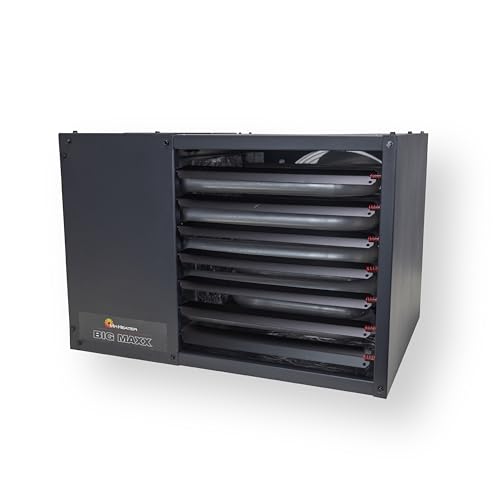
- 80,000 BTUs for up to 2,667 sq. ft.
- Ceiling-mounted forced-air design
- Safety shut-off features included
Best For: Large indoor areas needing fixed gas heat for curing and workspace comfort
Portable Electric Curing Heat
L.B. White Volt 6 Forced Air Heater

- 240V electric forced-air heater
- 32°F to 100°F ambient thermostat
- No fuel, combustion, or odor
Best For: Indoor concrete curing and other clean-heat jobsite applications
High-Output Gas Heat
Mr. Heater 125,000 BTU Forced-Air Unit Heater
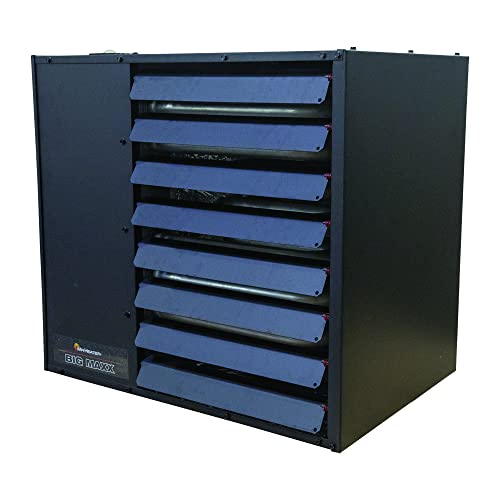
- 125,000 BTUs of forced-air heat
- Coverage rated at 2,000 sq. ft.
- Electronic ignition with powered exhaust
Best For: Large garage or shop spaces that need strong ceiling-mounted heat
Electric Forced-Air Heater – DEWALT 10/7 kW Forced Air Heater
If you need a construction heater for concrete curing in an enclosed work area, this DEWALT electric forced-air unit is built for practical jobsite heat. It covers up to 850 sq. ft., offers two-stage operation, and uses thermostatic control to help maintain a steady temperature while you work.
Best For: Heated indoor workspaces like garages or temporary jobsite areas where controlled electric heat is needed for curing support.
Pros:
- Heats up to 850 sq. ft. for broad coverage.
- Two-stage operation gives more control over output.
- Thermostatically controlled for steadier heat management.
- Portable pedestal form factor with recessed controls.
Cons:
- Designed for indoor use only.
- Requires 240V and 50A power.
- Best suited to enclosed spaces rather than open pours.
This is a solid choice when you want electric heat with simple controls and wide coverage, especially where fumes are not desirable. It is more of a general-purpose jobsite heater than a dedicated blanket system, but it can support temperature-sensitive indoor work.
Insulated Ground-Thaw Blanket – Powerblanket EH0304 3' x 4' Heated Blanket
This construction heater for concrete curing is really a heated ground-thaw blanket, so it is aimed at site prep before the pour. The insulated tarp design helps quickly remove frost, supports more consistent heat distribution, and can reduce delays on cold-weather jobs.
Best For: Thawing frozen ground and supporting concrete prep on cold construction sites.
Pros:
- High watt density helps thaw frozen ground efficiently.
- Insulated design supports more even heat distribution.
- Lightweight and easy to place or remove.
- Can also help with snow and ice removal on job sites.
Cons:
- Requires a thermostatic controller for optimal heat regulation.
- Smaller 3′ x 4′ heated area limits coverage.
- More of a thawing blanket than a full-space heater.
If your priority is preparing a cold site for concrete work, this blanket is a focused tool rather than a general heater. It is best used where you need fast frost removal and steady surface warming before and during curing-related prep.
High-Output Propane Heater – L.B. White Tradesman 170 Propane Heater
For crews that need a construction heater for concrete curing support in large work zones, this L.B. White forced-air propane model brings serious output. It delivers adjustable heat from 125,000 to 170,000 BTU and is built for garages, shops, warehouses, and other demanding environments.
Best For: Large job sites and workspaces that need powerful directional propane heat.
Pros:
- Variable output from 125,000 to 170,000 BTU.
- Portable forced-air design for jobsite flexibility.
- Heavy-duty construction is made for rugged use.
- Self-diagnostic service features can simplify maintenance.
Cons:
- Uses propane, so fuel ventilation and handling matter.
- Outdoor-rated in the supplied details.
- Likely more heater than you need for small areas.
This is the strongest option in the group when you need high-output, directional heat for a broad construction environment. It is better suited to larger spaces and tougher jobsite conditions than to small, precise curing setups.
Compact Ground-Thaw Blanket – Powerblanket EH0202 2' x 2' Heated Blanket
If you want a compact construction heater for concrete curing prep, this Powerblanket blanket is designed for targeted ground thawing. The heated 2′ x 2′ format is useful when you need to clear frost, support surface warmth, and keep a small area ready for concrete work.
Best For: Small-area thawing and concrete prep where compact coverage is enough.
Pros:
- Compact heated dimensions make it easy to place.
- High watt density supports fast ground thawing.
- Insulated tarp design helps maintain heat.
- Lightweight for quick setup and removal.
Cons:
- Very small coverage area at 2′ x 2′.
- Requires a controller for precise temperature management.
- Best for prep work, not broad jobsite heating.
This model makes the most sense when you only need to warm a tight spot or thaw a small patch before pouring. It is a practical, labor-saving tool for targeted cold-weather concrete prep, but its size limits broader use.
Indoor Electric Workhorse – DR. INFRARED DR-PS11024 Portable Heater
If you need a construction heater for concrete curing in an indoor setting, the DR. INFRARED DR-PS11024 is built for clean, odor-free electric heat with a strong 10,000-watt output. It uses forced-air and radiant heat, includes a cart for mobility, and offers an adjustable thermostat from 37°F to 104°F for more controlled drying and warming on the job.
Best For: Indoor construction crews that want high-output electric heat for concrete curing, garages, and other hardwired spaces.
Pros:
- 10,000-watt output with clean, instant, odor-free heat
- Adjustable thermostat supports a 37°F to 104°F range
- Portable cart makes it easier to move around the jobsite
- Heavy-duty steel frame with intake and output safety guards
Cons:
- Hardwiring is required
- Needs a 55-amp circuit breaker
- Designed for indoor use, not outdoor sites
For enclosed work areas where electric heat is preferred, this model offers straightforward high heat and practical mobility. It is a strong fit when concrete curing needs steady, fuel-free warmth and you can support the electrical requirements.
Large-Area Fuel Heater – 80,000 BTU Kerosene/Diesel Torpedo Heater
When a construction heater for concrete curing needs to cover a large, well-ventilated area, this 80,000 BTU forced-air torpedo heater is built for fast heat delivery. It runs on kerosene, diesel 1 and 2, fuel oil 1 and 2, Jet-A, and JP-8 without conversion, and the digital LED thermostat makes temperature control more practical on busy job sites.
Best For: Well-ventilated construction sites, workshops, warehouses, and other large spaces that need liquid-fuel heat.
Pros:
- 80,000 BTU/hr output heats up to 2,000 sq ft
- Works with multiple liquid fuels without conversion
- Digital LED thermostat adds easier temperature control
- Includes low-oxygen shutoff and overheat protection
Cons:
- Outdoor use only
- Requires good ventilation
- Not an electric option
This is the better pick when you need aggressive heat output over a broad area and fuel flexibility matters. For concrete curing in open or ventilated environments, it provides the kind of volume electric compact heaters usually cannot match.
Portable Indoor Curing Heater – L.B. White Volt 9 Electric Curing Heater
The L.B. White Volt 9 is a compact electric construction heater for concrete curing when you want clean indoor heat with a professional-duty build. It delivers 9,000 watts, uses forced-air heating, and includes an ambient thermostat from 32°F to 100°F, making it useful for controlled warming, drying, and ventilating in indoor work areas.
Best For: Indoor concrete curing, building construction, and other jobs that need portable electric heat without fuel or odor.
Pros:
- 9,000-watt output with forced-air electric heating
- Ambient thermostat adjusts from 32°F to 100°F
- Combustion-free operation with no fuel or odor
- Includes overheat protection and a floor-mount setup
Cons:
- Indoor use only
- Heavier than some portable heaters at 39.9 pounds listed in the notes
- Single-speed design limits airflow options
If your priority is clean, controlled heat for an enclosed jobsite, this model is a strong fit. It is especially useful where curing concrete calls for reliable electric warmth and you want to avoid combustion byproducts.
Ceiling-Mounted Gas Heat – Mr. Heater 80,000 BTU Forced-Air Unit Heater
If you need a construction heater for concrete curing in a larger shop, garage, or barn, this Mr. Heater unit is built for ceiling-mounted forced-air heating. It delivers 80,000 BTUs and is rated to heat up to 2,667 square feet, making it a practical choice when you want broad coverage from a fixed installation.
Best For: Large indoor work areas that need ceiling-mounted forced-air heat for curing and general jobsite warmth.
Pros:
- 80,000 BTUs with coverage up to 2,667 square feet
- Compatible with standard 24-volt or Wi-Fi enabled thermostats, sold separately
- High-temperature safety shut-off switch and gas safety shut-off flame sensor
- Low-profile design for ceiling mounting
Cons:
- Requires a 10 ft minimum ceiling height
- Needs 8 ft clearance from the heater base to the floor
- Thermostats are not included
This is a strong fit when you want a permanent-style heater that can cover a large space without taking up floor area. The installation requirements make it better suited to prepared indoor sites than temporary setups.
Portable Electric Curing Heat – L.B. White Volt 6 Forced Air Heater
For a construction heater for concrete curing that needs clean indoor operation, this L.B. White Volt 6 is a portable electric forced-air model with an ambient thermostat from 32°F to 100°F. It uses stainless jacketed heating coils and a powder-coated steel housing, so it is aimed at jobsite durability without fuel, combustion, or odor.
Best For: Indoor curing, drying, and ventilation jobs that call for portable electric heat.
Pros:
- Electric forced-air design with no fuel or odor
- Ambient thermostat adjustable from 32°F to 100°F
- Overheat protection at 104°F integrated ambient
- Portable size with floor-mount installation
Cons:
- Requires 240-volt power
- Built for indoor use only
- Heavier than its compact size suggests at 32.9 pounds
This is a useful option when clean heat matters more than combustion-based output. It fits well for construction spaces where you need controlled temperature support for curing concrete or managing indoor work conditions.
High-Output Gas Heat – Mr. Heater 125,000 BTU Forced-Air Unit Heater
If you need a construction heater for concrete curing in a bigger indoor area, this Mr. Heater forced-air unit is built for high-output ceiling mounting. With 125,000 BTUs and heating coverage rated at 2,000 square feet, it is aimed at garage and shop spaces where strong fixed heat is important.
Best For: Large indoor garages or work areas that need high-output forced-air heat.
Pros:
- 125,000 BTUs for powerful heat output
- Heating coverage rated at 2,000 square feet
- Electronic ignition and powered exhaust
- Liquid propane conversion included
Cons:
- Ceiling-mount installation only
- Best suited to garage-style indoor spaces
- Heavier unit at 108 pounds
This model makes sense when you want a fixed heater with more output than a smaller portable unit. The coverage rating is a little lower than the 80,000 BTU model, but the heat output is higher, so it is worth considering for demanding indoor heating setups.
How We Picked the Best Construction Heater for Concrete Curing
For a Construction Heater for Concrete Curing, the most important factors are output, temperature control, fuel or power availability, portability, and suitability for enclosed or semi-enclosed spaces. We also looked for models that can support steady, even heat rather than short bursts of high output.
Because curing needs vary by slab size, ambient temperature, and site layout, the list includes electric heaters, forced-air fuel heaters, and insulated curing blankets. That mix gives buyers practical options for different jobsite constraints.
Quick Comparison
Electric heaters are often best when power is available and exhaust must be avoided. Fuel-fired forced-air units usually deliver more heat for larger areas and colder conditions, but they require ventilation and fuel handling. Curing blankets work differently: they trap and retain heat directly over the slab, making them useful for targeted curing, patch work, and ground-thaw applications.
Key Buying Factors for Construction Heater for Concrete Curing
Heat Output and Coverage
Match BTU or wattage to the slab size and enclosure. Underpowered heaters struggle to hold curing temperatures, while oversized units can waste energy or create uneven hot spots.
Temperature Control
Look for built-in thermostats, staged output, or the ability to run continuously at a steady level. Concrete curing depends on consistency more than peak heat.
Ventilation and Safety
Combustion heaters need proper airflow and should never be used where exhaust buildup is a concern. Electric models are cleaner for indoor or enclosed work, while fuel units can be better for open or ventilated sites.
Jobsite Power and Fuel Access
Choose the heater that matches your site infrastructure. A high-watt electric model may be ideal if you already have 240-volt service, while propane, natural gas, kerosene, or diesel may be more practical on remote jobs.
Portability and Setup
If the heater must move between pours or work zones, weight, handles, and quick start-up matter. For stationary curing, blankets or larger forced-air units may make more sense.
Who Should Buy Which Construction Heater for Concrete Curing?
Contractors curing slabs in enclosed or power-ready spaces often benefit from electric forced-air heaters. Crews working in larger, colder, or less power-accessible areas may prefer fuel-fired units for their higher output. If the goal is to hold heat directly in the concrete mass or protect specific sections, insulated curing blankets are the most targeted option.
For most buyers, the best choice comes down to how the site is powered, how much space needs heat, and whether the priority is ambient warming or direct slab curing.