A smart lock without Wi-Fi can provide convenient keyless entry without relying on a home network, cloud service, or complicated installation. These locks typically use PIN codes, fingerprints, touchscreens, or physical keys for dependable everyday access.
We selected 10 options for different priorities, from affordable keypad deadbolts to fingerprint models and standalone locks with one-time codes. Use the guide below to compare features, compatibility, security, and battery considerations before choosing.
Best 10 Smart Lock Without Wifi Picks for 2026
Best Basic Keypad Pick
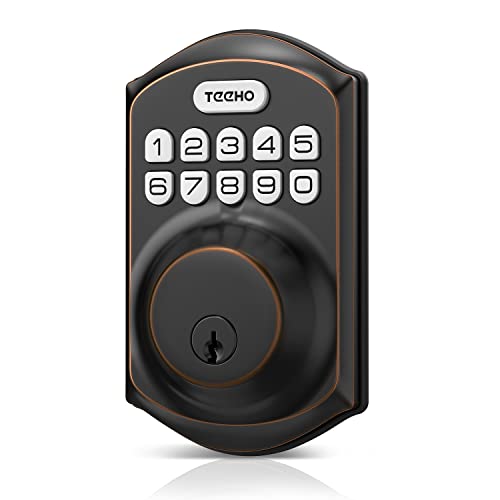
- 20 user codes plus a one-time guest PIN
- Adjustable auto-lock and one-touch locking
- IP54 resistance with up to 365-day battery life
Best For: Families, rentals, garages, and simple offline entry
Best Fingerprint Handle Lock
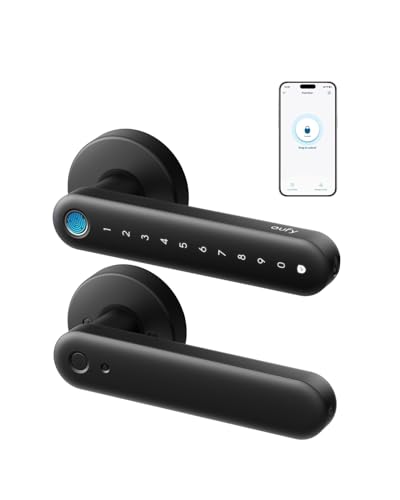
- 0.3-second fingerprint unlocking
- Built-in WiFi for remote management
- Alexa and Google Assistant integration
Best For: Interior doors needing biometric and remote access
Best Fingerprint Offline Lock
TEEHO TE002 Fingerprint Deadbolt

- Nonconnected fingerprint, keypad, and key entry
- Stores 20 fingerprints and 20 passcodes
- IP54, auto-lock, silent, and vacation modes
Best For: Front doors needing biometric access without WiFi
Best High-Capacity Keypad Lock

- Supports 50 user and 10 one-time codes
- Grade 2 BHMA-certified security and durability
- Selectable auto-lock intervals from 30 seconds to 10 minutes
Best For: Homes and rentals needing many offline access codes
Best Feature-Rich Pick
Ulecoce U68 Fingerprint Keypad Deadbolt

- Supports fingerprint and passcode access for up to 512 entries
- Adds physical keys, one-touch locking, and nearby app control
- Optional gateway enables remote and voice features
Best For: Families managing multiple users and access schedules
Best Simple WiFi-Free Pick
NICE DIGI Z1A Keypad Door Lock

- Needs no app, WiFi, or Bluetooth
- Stores up to 20 codes and includes temporary access codes
- Adds auto-lock, passage mode, and a backlit keypad
Best For: Users who want uncomplicated code-based entry
Best Fingerprint Deadbolt

- Unlocks in under 0.3 seconds and stores up to 50 fingerprints
- Supports PINs, key fobs, physical keys, and Bluetooth app control
- Adds IP54 resistance and USB-C emergency power
Best For: Entry doors needing fast biometric access and local control
Best Standalone Pick
Philips Nonconnected Keypad Deadbolt

- Keypad entry with permanent and one-time PINs
- Remote generation of shareable one-time codes
- Adjustable auto-lock and up to one-year battery life
Best For: Simple, nonconnected guest access
Best Feature Variety
Yamiry Bluetooth Fingerprint Door Knob

- Five entry methods, including fingerprint and key
- Bluetooth app access without WiFi for local control
- Optional WiFi gateway enables remote control
Best For: Multi-method entry and upgrade flexibility
Best Basic Keypad Pick – TEEHO TE001 Keypad Deadbolt
If you want a smart lock without WiFi, the TEEHO TE001 provides keyless keypad access without app or internet dependence. It supports up to 20 user codes, a single-use guest PIN, and optional automatic locking.
Best For: Families, rentals, garages, and homeowners seeking straightforward keypad entry.
Pros:
- Stores 20 individual codes plus a one-time guest code.
- Offers anti-peeping passcode protection, wrong-entry limits, and vacation mode.
- Supports adjustable auto-lock timing from 10 to 99 seconds and one-touch locking.
- IP54 weather resistance, low-battery alerts, and up to 365 days of battery life.
Cons:
- Requires four AA batteries, which are not included.
- Fits 2-1/8-inch door holes and is not compatible with 38 mm holes.
- Resetting is required before first use to detect door handing.
The TE001 is a practical offline choice for buyers who prioritize multiple PINs and simple installation over fingerprint or remote-control features. Its physical backup keys and weather-resistant construction add flexibility for front, back, or rental doors.
Best Fingerprint Handle Lock – eufy FamiLock C32
The eufy FamiLock C32 is not a smart lock without WiFi: its built-in 2.4 GHz WiFi enables remote management, app control, and smart-home integration. It combines fingerprint entry with PIN access in a handle-style design.
Best For: Interior doors, offices, bedrooms, storage areas, and users who want remote access control.
Pros:
- Fingerprint unlocking is rated at 0.3 seconds with 360-degree recognition.
- Built-in WiFi supports remote authorization and real-time lock management.
- Works with Alexa and Google Assistant.
- USB-C emergency backup can provide power from a power bank if batteries run out.
Cons:
- Uses WiFi, so it does not fit a no-WiFi smart-lock setup.
- Battery life is listed at over five months, shorter than some keypad-only options.
- Not recommended for front doors.
Choose the C32 when remote control and biometric access matter more than avoiding WiFi. Its quick installation and emergency USB-C power option make it convenient for compatible interior locations.
Best Fingerprint Offline Lock – TEEHO TE002 Fingerprint Deadbolt
For a smart lock without WiFi, the TEEHO TE002 adds fingerprint entry while remaining nonconnected. It supports fingerprints, passcodes, one-time PINs, and physical keys without relying on an app or internet connection.
Best For: Front doors and busy households wanting offline biometric access with several backup entry methods.
Pros:
- Stores up to 20 fingerprints and 20 passcodes.
- Fingerprint recognition is rated at 0.3 seconds, with unlocking in about one second.
- Includes one-time PINs, two physical keys, anti-peeping codes, and wrong-password lockout.
- Provides adjustable auto-lock, silent mode, vacation mode, and IP54 weather resistance.
Cons:
- Four AA batteries are required and not included.
- Only fits standard doors with 2-1/8-inch door holes.
- Does not offer connected app or remote access features.
The TE002 is one of the strongest matches for shoppers specifically seeking offline convenience. Its fingerprint sensor reduces code sharing, while passcodes and physical keys preserve useful backup options.
Best High-Capacity Keypad Lock – Kwikset SmartCode 270
The Kwikset SmartCode 270 is a smart lock without WiFi that focuses on touchpad entry, robust code management, and automatic locking. It provides up to 50 user codes and 10 one-time codes without requiring connected control.
Best For: Households, rentals, and front doors needing many customizable access codes.
Pros:
- Supports up to 50 user codes, 10 one-time codes, and one programming code.
- Grade 2 BHMA certification covers security, durability, and finish.
- Auto-lock can be set to 30 seconds, 1, 3, 5, or 10 minutes.
- Includes intrusion alerts, keypad lockout after incorrect entries, and SmartKey re-keying.
Cons:
- Uses four AA alkaline batteries, which are not included.
- Entry is touchpad-based rather than fingerprint-based.
- Does not provide WiFi, app, or remote-control features.
The SmartCode 270 stands out when code capacity and higher-grade certification are priorities. It is a solid offline keypad option for homes that need frequent code changes or access for many users.
Best Feature-Rich Pick – Ulecoce U68 Fingerprint Keypad Deadbolt
The Ulecoce U68 is a strong choice if you want a smart lock without WiFi for flexible everyday entry. It combines fingerprint access, passcodes, physical keys, one-touch unlocking, and nearby app control, while optional gateway support adds remote and voice features.
Best For: Families that want multiple access methods, generous user capacity, and optional smart-home connectivity.
Pros:
- Stores up to 512 fingerprints and keypad passcodes.
- Offers fingerprint, code, physical-key, one-touch, and nearby app unlocking.
- Includes customizable auto-lock, access codes, alerts, and a 3-year warranty.
Cons:
- Remote and voice control require a Ulecoce gateway sold separately.
- Its broad feature set may be more than needed for simple keypad entry.
The U68 stands out for households managing many users or access schedules. Its gateway-dependent remote features are worth considering, but the lock still provides substantial local functionality without relying on WiFi.
Best Simple WiFi-Free Pick – NICE DIGI Z1A Keypad Door Lock
The NICE DIGI Z1A is a practical smart lock without WiFi for shoppers who prefer straightforward keypad entry. It requires no app, WiFi, or Bluetooth, and provides programmable codes, backup keys, auto-lock, and passage mode for everyday convenience.
Best For: Homes, rentals, offices, and garages where simple code-based access matters more than app features.
Pros:
- Works without an app, WiFi, or Bluetooth.
- Supports up to 20 personalized codes plus temporary one-time codes.
- Offers auto-lock, passage mode, a backlit keypad, and two backup keys.
- Installs with a screwdriver and fits most standard US and Canadian wooden doors.
Cons:
- Four AA batteries are not included.
- It does not provide fingerprint entry or remote access.
For a low-complexity installation, the Z1A is one of the most direct options in this roundup. Its lack of connected features is a limitation for remote management, but it also keeps setup and daily operation uncomplicated.
Best Fingerprint Deadbolt – DESLOC B200 Smart Door Lock
The DESLOC B200 suits shoppers seeking a smart lock without WiFi that still offers biometric entry and several local access choices. It supports fingerprints, PINs, key fobs, physical keys, and Bluetooth app control nearby, while a separate gateway is needed for expanded remote features.
Best For: Entry doors where fast fingerprint access, weather resistance, and emergency power options are priorities.
Pros:
- Fingerprint recognition unlocks in less than 0.3 seconds and supports up to 50 fingerprints.
- Provides PIN, key fob, physical-key, app, and optional voice-control access.
- Includes IP54 water resistance, a USB-C emergency power port, and low-battery alerts.
- Offers up to 12 months of battery life, depending on usage.
Cons:
- Remote and voice-control functions require the separately sold G2 Gateway.
- Four AA batteries are not included.
- The warranty period is 12 months, shorter than some alternatives listed here.
The B200 is a capable choice for households that value fast biometric access without making WiFi connectivity essential. Its gateway requirement and 50-fingerprint limit are the main trade-offs versus more expansive models.
Best Standalone Pick – Philips Nonconnected Keypad Deadbolt
If you want a smart lock without WiFi, this Philips standalone deadbolt provides keypad access and remotely generated one-time codes without requiring a connected hub or network. It is a practical choice for simple guest access, automatic locking, and straightforward installation.
Best For: Homeowners who want keypad entry and shareable one-time codes without app or WiFi dependence.
Pros:
- Supports a master PIN, 20 permanent user PINs, and one-time PIN codes.
- One-time codes can be generated remotely for sharing with guests or service providers.
- Adjustable 30–180-second auto-lock and manual one-touch locking.
- Installs with a screwdriver and offers up to one year of battery life.
Cons:
- Nonconnected design does not provide app-based monitoring or remote lock control.
- Uses a deadbolt format, so door compatibility should be checked before purchase.
This is a focused option for buyers prioritizing standalone keypad convenience. Its one-time-code feature adds flexibility, while privacy mode and an arming alarm provide additional security functions without adding WiFi complexity.
Best Feature Variety – Yamiry Bluetooth Fingerprint Door Knob
For shoppers seeking a smart lock without WiFi, the Yamiry door knob combines Bluetooth app control with several local entry methods. It can work independently over Bluetooth, while an optional WiFi gateway adds remote control later if needed.
Best For: Households wanting fingerprint entry, key fobs, codes, and Bluetooth app access in one lock.
Pros:
- Offers five entry methods: app, password, key fob, fingerprint, and physical key.
- Stores up to 50 passwords, fingerprints, and key fobs.
- Supports auto-lock, app locking, and long-press locking.
- Installs with a screwdriver and fits most American standard doors.
Cons:
- Remote control requires a separately sold WiFi gateway.
- Bluetooth app operation requires using the lock within Bluetooth range.
- Door-knob format may not suit buyers specifically replacing a deadbolt.
This lock is a versatile middle ground: it delivers connected Bluetooth convenience without requiring WiFi for basic smart features. The optional gateway preserves a future upgrade path, but adds cost if remote access is important.
Best Biometric Option – Philips Fingerprint Keypad Deadbolt
This Philips deadbolt is a strong smart lock without WiFi for buyers who prefer biometric access over a connected app. It combines fingerprint recognition with keypad and mechanical-key entry, plus unlimited one-time PIN codes for temporary visitors.
Best For: Front-door users who want fast fingerprint entry and backup keypad or key access without connectivity requirements.
Pros:
- Fingerprint scanner is rated for up to 99.99% accuracy and 0.3-second recognition.
- Supports unlimited one-time PIN codes for guests, deliveries, and service providers.
- Includes adjustable 30–180-second auto-lock and two-second one-touch locking.
- Voice-guided programming supports English, French, and Spanish.
Cons:
- No connection protocols, so app control and remote monitoring are unavailable.
- Fingerprint performance may be less effective for children under six and adults over 65.
- Auto-lock must be enabled, and the door must be shut manually before the bolt extends.
With biometric entry, temporary codes, and mechanical-key backup, this model offers broad access flexibility in a nonconnected package. Check the door requirements carefully, especially the supported door thickness, before ordering.
How We Picked the Best Smart Lock Without Wifi
We focused on locks that work locally through a keypad, touchscreen, fingerprint sensor, or physical key rather than requiring continuous Wi-Fi access. The selected models were compared for entry methods, installation style, battery operation, locking features, code management, and suitability for common residential doors.
We also considered practical differences between deadbolts and handle-set designs. A lock can have useful electronic features but still be a poor fit if its dimensions, door thickness, backset, or exterior trim do not match the existing hardware.
Quick Comparison
| Feature | What to Look For |
|---|---|
| Entry method | PIN keypad, fingerprint reader, touchscreen, physical key, or a combination |
| Lock style | Standalone deadbolt, deadbolt with handle, or electronic door knob |
| Convenience | Auto-locking, multiple user codes, one-time codes, and low-battery alerts |
| Connectivity | Local operation without Wi-Fi; remote features may be limited or unavailable |
| Security backup | Mechanical key access, concealed keyway, emergency power, or exterior battery contacts |
Key Buying Factors for a Smart Lock Without Wi-Fi
Check Door Compatibility First
Measure the door thickness, backset, borehole, and available clearance before ordering. Confirm whether the lock replaces only the deadbolt or requires a complete handle or knob replacement. Exterior and interior dimensions matter, especially on narrow doors, storm doors, and doors with unusual trim.
Choose the Right Access Method
Keypads are generally straightforward for families and guests, while fingerprint readers can be faster for regular users. Touchscreen models offer a clean appearance but may be less convenient with wet or gloved hands. If dependable backup access matters, choose a model with a physical key or another emergency-entry method.
Understand Local-Only Limitations
A smart lock without Wi-Fi does not normally provide app-based remote unlocking, live status notifications, or cloud management. That tradeoff improves simplicity and reduces network dependence, but it means codes and settings are usually managed at the lock itself or through a separate compatible system.
Consider Power and Auto-Lock Features
Review the battery type, expected battery life, low-battery warning, and emergency power option. Auto-lock can improve security when occupants forget to lock the door, but adjustable timing is preferable so the door does not lock unexpectedly while people are coming and going.
Who Should Buy Which Smart Lock Without Wifi?
Choose a basic keypad deadbolt if you want affordable keyless entry with minimal setup. Fingerprint models are a good match for households that want quick access without remembering codes. A deadbolt with an integrated handle can simplify a full hardware refresh, while a standalone deadbolt is usually better when you want to preserve the existing handle set.
Look for one-time-code support if you regularly provide temporary access to guests, cleaners, contractors, or renters. For homes where network independence is the priority, favor simple local controls, clear battery alerts, and a reliable mechanical or emergency backup. Before installation, verify the included hardware and follow the manufacturer’s instructions for programming, testing, and securing the door.