Finding effective dust control on a modest budget can be difficult when shop vacuums, cyclone separators, air filtration systems, and woodworking collectors all serve different purposes. The best dust extractors under $300 balance airflow, filtration, capacity, portability, and tool compatibility.
This roundup compares 10 affordable options for jobs ranging from power-tool extraction and general cleanup to stationary woodworking machines and airborne dust reduction. Use the guide below to match the collector design and features to your workspace.
Best 10 Dust Extractors Under 300 Picks for 2026
Heavy-Duty Cyclone Pick
9-Gallon Wet/Dry Dust Extractor

- Dual-stage cyclone separation protects the HEPA filter.
- 1400W motor delivers up to 19KPA suction.
- Handles wood debris, damp waste, and liquid spills.
Best For: Woodshops and demanding wet/dry cleanup
Quiet Air-Cleaning Pick
Abestorm DecDust 780 Air Filtration System

- 580–780 CFM airflow with a 270-degree intake.
- Covers workshops up to 800 square feet.
- Runs below 50 dBA with remote control.
Best For: Ambient dust filtration in workshops and garages
Portable Workshop Pick
DYNAVEX 12-Gallon Dust Extractor

- 1.5 HP motor provides 142 CFM airflow.
- Large 12-gallon tank limits emptying interruptions.
- Includes HEPA filtration and tool-linked auto start.
Best For: Portable woodworking cleanup and connected power tools
Precision Benchtop Pick
500W Industrial Lab Vacuum Extractor

- Designed for fine dry particles such as resin and metallic dust.
- Compact 18-pound benchtop form runs below 60 dB.
- Offers hose, universal-port, and direct-intake configurations.
Best For: Jewelry, electronics, laboratory, and precision bench work
Best HEPA Jobsite Pick
DEWALT DWV010 HEPA Dust Extractor
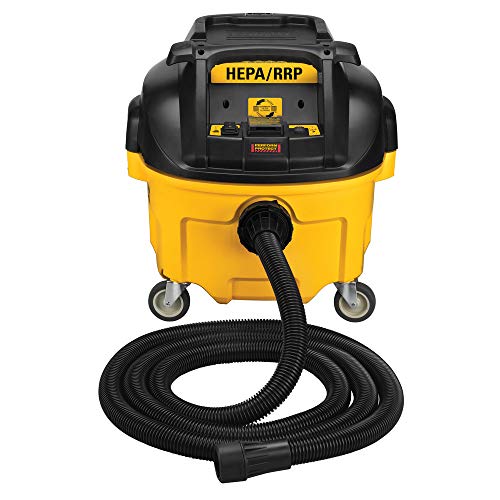
- Automatic filter cleaning every 30 seconds
- 150 CFM airflow with power-tool actuation
- 8-gallon HEPA extractor with 15-foot hose
Best For: Portable jobsite dust control and power-tool connections
Best Workshop Dust Collector
VEVOR 1 HP Wall-Mount Dust Collector

- 560 CFM airflow for woodworking dust
- 21-gallon collection bag reduces emptying breaks
- 2.5-micron filtration with zipper cleanup
Best For: Stationary small and medium woodworking workshops
Best Versatile Shop Vac
ECOMAX 8-Gallon HEPA Dust Extractor

- Dual-mode vacuum and dust-extractor operation
- Power-tool activation with semi-automatic cleaning
- HEPA filter and extensive accessory kit
Best For: DIY garages and workshops needing one versatile vacuum
Compact Workshop Pick
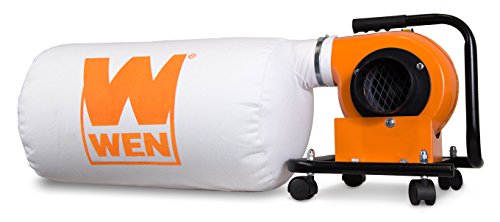
- 660 CFM airflow with a 4-inch dust port
- 12-gallon, 5-micron collection bag
- Rolling base plus optional wall mounting
Best For: Compact home woodworking shops
Portable Air-Cleaning Pick
FJ225-2 Tabletop Dust Collector

- Selectable 850/1050 CFM airflow
- HEPA filter targets 0.3-micron particles
- Compact portable design under 55 dB
Best For: Benchtop ambient air filtration
High-Capacity Shop Pick
VEVOR 1.5HP Vortex Dust Collector

- 1100 CFM airflow from a 1.5HP motor
- 42-gallon non-woven collection bag
- 2.5-micron filtration for fine wood dust
Best For: Longer small- to medium-shop woodworking sessions
Heavy-Duty Cyclone Pick – 9-Gallon Wet/Dry Dust Extractor
This 9-gallon wet/dry model is a strong option among dust extractors under 300 for woodshops handling chips, shavings, coarse debris, and occasional liquid spills. Its dual-cyclone pre-separator helps keep larger particles away from the HEPA filter, supporting more consistent airflow during longer cleanup sessions.
Best For: Woodshops, carpentry jobsites, garages, and heavy-duty cleanup around saws, planers, jointers, routers, and CNC equipment.
Pros:
- Dual-stage cyclone separation helps reduce filter loading.
- 1400W motor provides up to 19KPA suction.
- 9-gallon wet/dry tank handles wood debris and non-corrosive liquid spills.
- Includes an 8.2-foot anti-static hose and HEPA filtration.
Cons:
- At 35.5 pounds, it is less convenient to carry than smaller extractors.
- Its 80 dB noise level may be noticeable in enclosed workspaces.
The large tank and pre-separation system make this a practical choice when capacity and reduced filter maintenance matter more than compact size or quiet operation.
Quiet Air-Cleaning Pick – Abestorm DecDust 780 Air Filtration System
The Abestorm DecDust 780 is a ceiling-mounted air filtration system to consider when comparing dust extractors under 300 for improving overall workshop air quality. Rather than collecting debris directly from a tool, it circulates shop air to capture suspended dust and fine particles.
Best For: Woodworking shops, garages, workshops, and small industrial spaces up to 800 square feet.
Pros:
- Three-sided, 270-degree intake captures airborne particles from multiple directions.
- Provides adjustable airflow from 580 to 780 CFM.
- HEPA filtration is rated for particles down to 1 micron.
- Operates below 50 dBA and includes remote and touch controls.
Cons:
- It is an ambient air cleaner, not a point-of-source extractor for tool ports.
- Ceiling-mounted installation may require more setup than a portable vacuum.
With quiet operation, broad intake coverage, and an 800-square-foot stated coverage area, this system complements a shop vacuum by reducing airborne dust after cutting, sanding, or grinding.
Portable Workshop Pick – DYNAVEX 12-Gallon Dust Extractor
The DYNAVEX is a portable 12-gallon option for shoppers comparing dust extractors under 300 for routine sawing, sanding, and routing. Its 1.5 HP motor, HEPA filter, large tank, and linked power-tool switch make it suited to connected workshop cleanup.
Best For: Portable garage and workshop dust collection where a large tank and automatic tool-linked starting are useful.
Pros:
- 1.5 HP, 10-amp motor produces 142 CFM airflow.
- 12-gallon tank reduces the need for frequent emptying.
- 0.5-micron HEPA filter captures fine woodworking particles.
- Includes a hose, clamps, adaptors, replacement paper filters, and wheel fittings.
Cons:
- The auto-start socket is limited to connected tools up to 550 watts.
- Continuous use through the linked socket is limited to one hour.
- Wheel installation is optional rather than fully installed.
This model offers useful capacity and portability, but buyers should check their tools against the auto-start socket’s wattage and time limits before relying on synchronized operation.
Precision Benchtop Pick – 500W Industrial Lab Vacuum Extractor
This compact benchtop unit serves a different role from full-size shop vacuums in the dust extractors under 300 category. Its 500W motor is designed for dry micro-particles such as gypsum, resin, metallic dust, and fine workshop debris, with flexible connection options for localized suction.
Best For: Jewelry, electronics, laboratory, and precision craft work where dry fine-particle extraction is needed at a bench.
Pros:
- 500W high-velocity motor targets fine particles.
- Operates below 60 dB for quieter bench work.
- Supports hose attachment, universal-port connection, and direct intake.
- Metal housing and split-chamber design help protect the motor from dust buildup.
Cons:
- Not compatible with liquids or large woodworking chips.
- Its benchtop format is unsuitable for large-area shop cleanup.
- The dust drawer needs regular maintenance to preserve airflow.
The DISJEST is best viewed as a specialized precision extractor rather than a general woodworking collector. Its compact form and adjustable suction are valuable for localized dry-particle work, provided the debris remains fine and dry.
Best HEPA Jobsite Pick – DEWALT DWV010 HEPA Dust Extractor
For dust extractors under 300, the DEWALT DWV010 is a practical choice for power-tool users who want HEPA filtration, automatic filter cleaning, and jobsite-ready mobility. Its 15-amp motor delivers 150 CFM of airflow, while power-tool actuation starts and stops the vacuum with a connected tool.
Best For: Woodworkers, remodelers, and contractors needing a portable HEPA extractor with automatic filter cleaning.
Pros:
- Automatic filter cleaning pulses every 30 seconds to support continuous operation.
- HEPA filtration and a 15-foot anti-static hose suit dust-control applications.
- Heavy-duty wheels and casters improve jobsite portability.
- Power-tool actuation helps coordinate vacuum operation with a connected tool.
Cons:
- Its listed 80 dB noise level may be noticeable during extended use.
- The 8-gallon capacity is smaller than some dedicated workshop dust collectors.
The DWV010 stands out when filtration, tool activation, and dependable mobility matter more than maximum collection capacity. Note that the supplied notes specify EPA RRP compliance only when DWV9330 filters are used.
Best Workshop Dust Collector – VEVOR 1 HP Wall-Mount Dust Collector
Among dust extractors under 300, this VEVOR model is geared toward woodworking shops that need high airflow and a larger collection bag. Its 1 HP induction motor produces 560 CFM, while the 21-gallon bag and 2.5-micron filtration help manage sawdust and sanding debris.
Best For: Small and medium woodworking workshops that need high airflow and extended collection capacity.
Pros:
- 560 CFM airflow provides strong suction for coarse and fine woodworking dust.
- The 21-gallon non-woven bag reduces the frequency of emptying.
- A 2.5-micron filter helps capture fine wood dust and shavings.
- Bottom-zipper bag design simplifies debris removal.
Cons:
- At up to 90 dB, it may be relatively loud during longer sessions.
- It is designed for woodworking dust collection rather than general-purpose floor cleaning.
- The wall-mount format may be less convenient for users needing a highly portable extractor.
This VEVOR collector makes the most sense for a dedicated workshop where airflow and bag capacity take priority. Its 120-volt, 1 HP motor and wall-oriented design are better suited to stationary dust collection than mobile cleanup.
Best Versatile Shop Vac – ECOMAX 8-Gallon HEPA Dust Extractor
For shoppers comparing dust extractors under 300, the ECOMAX Shop Vac offers a flexible combination of everyday vacuuming and power-tool dust extraction. It includes power-tool activation, semi-automatic filter cleaning, a HEPA filter, and a broad accessory kit for workshop and garage tasks.
Best For: DIY users who want one 8-gallon vacuum for general cleanup and connected power-tool work.
Pros:
- Dual-mode operation supports both standard vacuuming and dust extraction.
- Power-tool activation starts the vacuum when a connected tool turns on.
- Semi-automatic filter cleaning and a dust-full indicator help maintain performance.
- Includes a 10-foot anti-static hose, HEPA filter, bags, and multiple nozzles.
Cons:
- The included hose is shorter than the 15-foot hose supplied with the DEWALT model.
- Semi-automatic filter cleaning may require more user involvement than fully automatic systems.
- The notes do not provide a CFM airflow rating for direct comparison.
The ECOMAX is a well-rounded option when versatility and included accessories are more important than a published airflow figure. Its 8-gallon polymer tank, drain port, and 75 dB noise rating support practical garage and workshop use.
Compact Workshop Pick – WEN DC3401 Dust Collector
If you need dust extractors under 300 for a compact woodworking setup, the WEN DC3401 offers a practical balance of airflow, portability, and collection capacity. Its 660 CFM motor, 4-inch dust port, rolling base, and optional wall mount suit smaller shops and flexible layouts.
Best For: Home woodworkers who want a mobile or wall-mountable collector for compatible woodworking tools.
Pros:
- 5.7-amp motor and 6-inch impeller move up to 660 CFM.
- 12-gallon, 5-micron zippered collection bag provides useful capacity.
- Lockable swivel casters, carrying handle, and optional wall mount improve versatility.
- Compact 17-pound design is easy to store and transport.
Cons:
- Its single-speed motor offers limited airflow adjustment.
- The foam filter and 5-micron bag may be less suited to users seeking finer filtration.
The DC3401 is a straightforward choice when mobility and compact storage matter more than maximum airflow or large-shop capacity.
Portable Air-Cleaning Pick – FJ225-2 Tabletop Dust Collector
Among dust extractors under 300, this portable tabletop unit is designed more for circulating and filtering workshop air than collecting chips through a tool hose. It provides selectable 850 or 1050 CFM airflow, a HEPA carbon-deodorization filter, and a compact footprint for benchtop use.
Best For: Woodworkers who need movable ambient air filtration for carving, turning, sanding, powder mixing, or other benchtop tasks.
Pros:
- Two airflow settings deliver 850 or 1050 CFM.
- Filter is rated to stop 99.5% of 0.3-micron particles.
- Portable handle and compact 15.75-by-8.74-by-12.2-inch design make repositioning easy.
- Specified noise level is under 55 dB.
Cons:
- It is an air-filtration system rather than a bag-style tool dust collector.
- The filter should be replaced approximately every four months.
- Its 5.9-foot power cord may limit placement in larger work areas.
The FJ225-2 makes sense as a supplemental air-cleaning solution when portability, low stated noise, and fine-particle filtration are priorities.
High-Capacity Shop Pick – VEVOR 1.5HP Vortex Dust Collector
For shoppers comparing dust extractors under 300, the VEVOR vortex system emphasizes stronger airflow and extended collection capacity. Its 1100 CFM rating, 1.5HP induction motor, 2.5-micron filtration, and large bags are aimed at continuous small- to medium-scale woodworking.
Best For: Woodworkers who need higher-capacity collection for coarse chips, sawdust, and finer debris during longer sessions.
Pros:
- 1100 CFM airflow supports strong coarse- and fine-dust removal.
- 42-gallon non-woven filter bag reduces emptying frequency.
- 2.5-micron filtration helps capture wood dust and fine particles.
- Clip-style bag access simplifies removal and emptying.
Cons:
- Its 68.1-pound weight and large dimensions require substantial floor space.
- Noise is specified at under 90 dB, so it may be loud for some workshops.
- The large stationary-style footprint is less convenient for frequent relocation.
The VEVOR is the capacity-focused option here, especially for users willing to trade compactness for stronger suction and less frequent bag maintenance.
How We Picked the Best Dust Extractors Under 300
We focused on the features that matter most in a budget dust-control system: motor power, airflow or suction, filtration, container or bag capacity, hose and tool compatibility, portability, and ease of maintenance. The selection includes wet/dry extractors, HEPA shop vacuums, wall-mounted and mobile woodworking collectors, and ambient air-filtration units because these categories solve different dust problems.
Product descriptions and listed specifications were also considered, including automatic filter cleaning, cyclone pre-separation, remote controls, mobile bases, anti-static hoses, and fine-particle collection. Before buying, confirm the current price, included accessories, electrical requirements, and manufacturer’s performance claims.
Quick Comparison
| Best For | Look For | Featured Options |
|---|---|---|
| Power-tool extraction | HEPA filtration, strong sealed suction, compatible hose | DEWALT DWV010, ECOMAX, 9-gallon wet/dry extractor |
| Stationary woodworking tools | High CFM, larger bags, suitable duct connections | VEVOR 1 HP, VEVOR 1.5 HP, WEN DC3401 |
| Fine airborne dust | High airflow, fine filtration, timer or remote control | Abestorm DecDust 780, portable intake filtration system |
| Compact bench work | Small footprint and focused intake | 500W benchtop extraction unit |
Key Buying Factors for Dust Extractors Under 300
Suction Versus Airflow
High suction is important for capturing dust directly from a sander, saw, or router. High CFM is generally more useful for moving larger volumes of air through ducting or collecting chips from stationary machines. Choose based on the tool connection rather than motor wattage alone.
Filtration and Dust Separation
HEPA filtration is valuable when fine particles and cleanup are priorities. A cyclone pre-separator can protect the main filter and increase usable capacity. For airborne dust that escapes at the source, an overhead or tabletop air cleaner may complement—rather than replace—a tool-connected extractor.
Capacity, Noise, and Maintenance
Larger bags or tanks reduce emptying frequency but add size and weight. Automatic filter cleaning can help preserve suction during long jobs, while sealed containers and easy-access filters make routine maintenance simpler. Check whether replacement bags and filters are readily available.
Connections and Workshop Fit
Measure your tool ports, hose diameter, available floor or wall space, and outlet capacity. A mobile base helps with heavy collectors, while wall mounting saves floor space. Anti-static hoses and grounded setups can be useful when handling dry fine dust.
Who Should Buy Which Dust Extractors Under 300?
Choose a HEPA wet/dry extractor for renovation work, portable power tools, and general shop cleanup. A model with automatic filter cleaning is especially practical for frequent sanding or cutting. Pick a high-CFM woodworking collector for table saws, planers, jointers, and other stationary equipment that produces larger chips.
For a small shop, a wall-mounted or compact benchtop unit can preserve valuable floor space. If your main concern is residual airborne dust after cutting or sanding, select an ambient air-filtration system and continue using source capture and appropriate respiratory protection. Buyers with mixed needs may get the best results by pairing a portable extractor with a separator or overhead filter instead of expecting one machine to handle every task.