A dependable solar charge controller helps protect your battery bank while turning available sunlight into usable backup energy. The right model depends on your battery voltage, panel configuration, charging current, and whether you need basic regulation or detailed remote monitoring.
This roundup includes compact PWM controllers, higher-efficiency MPPT units, and inverter-charger systems for everything from small emergency battery setups to larger home backup installations.
Best 10 Solar Charge Controllers for Home Backup Picks for 2026
Whole-Home Backup Power
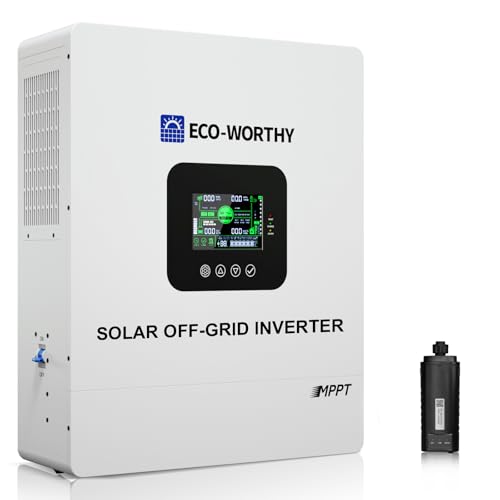
- Integrated 100A MPPT, inverter, and AC charger
- Parallel support for up to six units
- Multiple charging modes and LCD monitoring
Best For: Larger 48V home backup systems
Compact 12V Option
Renogy Wanderer Li 30A PWM Controller

- 12V support for lithium and lead-acid batteries
- 30A staged PWM charging
- Compact, protected, and wall-mountable
Best For: Small 12V backup and off-grid systems
Smart MPPT Performance

- Efficient MPPT charging for 12V and 24V systems
- App monitoring with 30-day performance history
- Synchronized operation with multiple controllers
Best For: Monitored small-to-medium backup systems
Smart Monitoring Pick
Victron SmartSolar MPPT 75V 15A

- Bluetooth app with live data and 30-day history
- MPPT charging supports partially shaded panels
- Synchronizes with additional SmartSolar controllers
Best For: Compact, app-monitored 12V/24V backup systems
Balanced Midrange Option
Renogy Rover 40A MPPT Controller

- 40A MPPT charging for 12V/24V systems
- Supports Gel, AGM, flooded, and lithium batteries
- Broad electrical and temperature protections
Best For: Moderate-size home backup and off-grid systems
Best with Extra Features
120A MPPT Solar Charge Controller

- Handles up to 11,520W of PV power at 96V
- Supports 12V to 96V battery banks
- Includes lithium activation and RS485 communication
Best For: Large, expandable home backup and off-grid systems
Compact Budget Option
Renogy Wanderer 10A PWM Controller
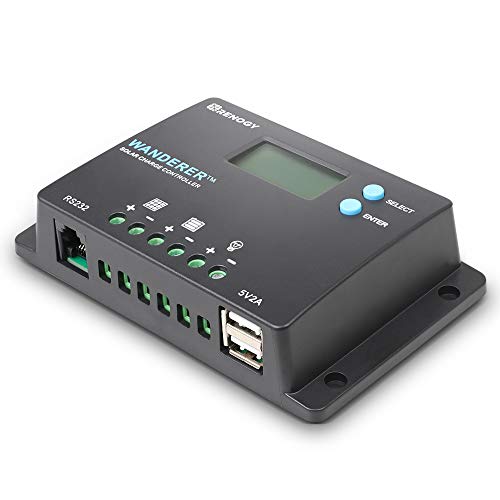
- Compact controller for 12V and 24V systems
- Uses four-stage PWM charging
- Adds LCD, USB, and configurable DC load control
Best For: Small backup banks, RVs, marine systems, and low-power DC loads
Smart Midrange Choice

- Supports up to 1,200W at 24V
- Built-in Bluetooth app with 300 days of history
- Offers 20A load output and optional parallel charging
Best For: Connected 12V/24V backup systems and medium-sized off-grid setups
Whole-Home Backup Power – 5000W 48V Inverter Charger
For larger solar charge controllers for home backup setups, this ECO-WORTHY unit combines a 5,000W pure sine wave inverter, 100A MPPT controller, and AC battery charger in one 48V system. Its parallel capability and multiple charging modes make it suitable for expandable off-grid power systems.
Best For: Home backup installations needing an integrated inverter, charger, and high-capacity MPPT controller.
Pros:
- Combines a 100A MPPT controller with a 5,000W pure sine wave inverter and 40A AC charger.
- Supports parallel operation with up to six units and a stated maximum of 30kW.
- Offers solar-only, mains-priority, solar-priority, and hybrid charging modes.
- LCD monitoring and multiple electrical and thermal protections support easier operation.
Cons:
- Designed for 48V systems, so it is not a direct fit for typical 12V or 24V setups.
- Professional installation is recommended for safety.
- Its larger size and integrated features may be more than a small backup system needs.
With 120–500V DC PV input, UPS operation, and flexible charging schedules, this is a system-level option rather than a standalone controller. It makes the most sense when you are building a substantial 48V home backup array.
Compact 12V Option – Renogy Wanderer Li 30A PWM Controller
The Renogy Wanderer Li is a compact choice among solar charge controllers for home backup when your battery bank is a smaller 12V setup. Its 30A PWM design supports several common battery chemistries and includes basic protection for straightforward solar charging.
Best For: Small 12V backup banks, RVs, boats, and compact off-grid installations.
Pros:
- Supports 12V lithium, AGM, gel, and flooded lead-acid batteries.
- Uses staged PWM charging with bulk, boost, float, and automatic equalization functions.
- Includes protection against reverse polarity, overcharging, overload, and short circuits.
- Compact housing offers wall or DIN-rail mounting and an IP32-rated casing.
Cons:
- PWM technology is less suited to maximizing harvest than an MPPT controller.
- It is limited to 12V systems and a 30A charging rating.
- Bluetooth monitoring requires the separately added BT-1 module.
This controller is practical for modest battery banks where low-cost, compact installation matters more than maximum solar conversion. Confirm the panel voltage and battery configuration before choosing it for home backup use.
Smart MPPT Performance – Victron SmartSolar 100V 50A
The Victron SmartSolar 100/50 is a strong midrange choice among solar charge controllers for home backup, especially when efficient panel harvesting and system monitoring are priorities. Its MPPT tracking is designed to optimize output, including when panels experience partial shade.
Best For: 12V or 24V battery systems that benefit from app monitoring and efficient MPPT charging.
Pros:
- Supports 12V and 24V systems with a 50A charging rating and 100V PV input.
- MPPT tracking helps maximize available solar power, including under partial shading.
- VictronConnect provides real-time data, 30-day history, configuration, firmware updates, and alarms.
- Multiple compatible controllers can synchronize their charging stages.
Cons:
- It has no built-in display, so monitoring relies on the app or additional equipment.
- It does not provide the 36V or 48V system support offered by some larger controllers.
- The 100V PV limit requires careful panel-string planning.
This is a well-suited controller for a monitored backup system where MPPT efficiency and expandability matter. Its 50A capacity fits many small-to-medium battery banks, but larger installations may require synchronized additional units.
Flexible Multi-Voltage Choice – ECO-WORTHY 60A MPPT Controller
This ECO-WORTHY model is one of the more flexible solar charge controllers for home backup because it automatically detects 12V, 24V, 36V, or 48V systems. A 60A MPPT rating, wireless monitoring, and support for lead-acid and LiFePO4 batteries make it adaptable to varied installations.
Best For: Home backup systems that may use different battery voltages or need remote monitoring.
Pros:
- Automatically detects 12V, 24V, 36V, and 48V battery systems.
- 60A MPPT charging with stated tracking efficiency up to 99.5% and peak conversion efficiency up to 98%.
- Bluetooth and Wi-Fi support app-based monitoring, customization, and 30-day history.
- Supports lead-acid and LiFePO4 charging profiles with LiFePO4 activation.
Cons:
- Its 150V maximum PV input still requires careful array design.
- Wireless features depend on the included Bluetooth/Wi-Fi module being present and functional.
- The controller is not an inverter, so separate equipment is needed to power AC appliances.
With broad voltage compatibility and a 60A rating, this controller can accommodate more than a basic 12V installation. It is a practical standalone charging component for a growing backup system, provided the PV array and battery bank remain within its limits.
High-Capacity Choice – SA100A 100A MPPT Solar Charge Controller
For solar charge controllers for home backup, the SA100A stands out when you need broad battery-system compatibility and high current capacity. It automatically recognizes 12V, 24V, 36V, or 48V systems, supports several battery types, and provides an LCD for monitoring key operating data.
Best For: Off-grid homes, backup power systems, and larger installations needing 100A capacity and flexible voltage support.
Pros:
- Supports 12V/24V/36V/48V systems and sealed, GEL, flooded, and LiFePO4 batteries.
- Uses MPPT tracking with a claimed tracking efficiency of no less than 99.5%.
- LCD shows battery voltage, PV charging/discharging current, temperature, and error codes.
- Includes dual 5V USB charging ports and adjustable timing and load-control functions.
Cons:
- Its 100A capacity may be more than needed for smaller home backup arrays.
- The supplied notes describe a hybrid MPPT and PWM-style hardware approach rather than a conventional DC-DC buck-converter MPPT design.
- Operating temperature is listed up to 65°C, so installation still requires suitable ventilation.
The SA100A is a feature-heavy option for buyers planning a flexible, high-current backup system. Its automatic voltage recognition, battery support, monitoring, and timing controls make it adaptable, but confirm that the controller’s ratings match your panel array and battery bank before installation.
Smart Monitoring Pick – Victron SmartSolar MPPT 75V 15A
For smaller solar charge controllers for home backup, the Victron SmartSolar MPPT 75V 15A emphasizes efficient charging, app-based monitoring, and straightforward system management. Bluetooth connectivity provides real-time data, performance history, configuration tools, firmware updates, and alarms.
Best For: Compact 12V or 24V backup systems where remote monitoring and coordinated charging are more important than high current capacity.
Pros:
- MPPT tracking is designed to maximize available solar power, including during partial shading.
- Bluetooth and the VictronConnect app provide real-time data and 30-day performance history.
- Multiple SmartSolar controllers can synchronize charging stages across a system.
- Configurable load output can disconnect loads when battery voltage falls too low.
Cons:
- The 15A rating limits its suitability for larger solar arrays or high-demand backup loads.
- It supports 12V/24V systems rather than the wider voltage range offered by some alternatives.
- The unit has an LED or minimal display, so detailed monitoring relies on the app.
The Victron is a strong fit when you want a compact controller with polished monitoring and expansion features. Its lower current rating makes it better suited to modest backup setups, small battery banks, or systems built from multiple synchronized controllers.
Balanced Midrange Option – Renogy Rover 40A MPPT Controller
The Renogy Rover 40A is a practical middle-ground choice among solar charge controllers for home backup. It automatically detects 12V or 24V systems, supports lead-acid and lithium batteries, and combines an LCD with four-stage charging for lead-acid batteries and two-stage charging for lithium.
Best For: Homeowners building a moderate-size 12V/24V off-grid or backup system with broad battery support and multiple electrical protections.
Pros:
- 40A MPPT controller with stated 98% conversion and 99% tracking efficiency.
- Supports Gel, AGM, flooded, and lithium batteries with automatic 12V/24V detection.
- Includes protection against reverse polarity, overcharge, over-discharge, overload, short circuits, and reverse current.
- Designed for -40°F to 149°F operation and includes low-temperature protection.
Cons:
- Bluetooth connectivity requires the separate BT-2 accessory.
- It supports 12V and 24V systems, not 36V or 48V battery banks.
- The relatively large 40A capacity may be unnecessary for very small backup arrays.
The Rover 40A offers a balanced combination of capacity, battery compatibility, protections, and environmental tolerance. It is a sensible choice for moderate backup installations, especially if you want an LCD locally and may add app connectivity later.
Best with Extra Features – 120A MPPT Solar Charge Controller
For large home backup systems, this 120A MPPT controller is built to handle substantially more solar input than compact RV-focused models. It supports battery banks from 12V through 96V, accepts up to 230V PV open-circuit voltage, and is rated for up to 11,520W of PV power at 96V.
Best For: High-demand home backup, off-grid, RV, cabin, marine, and expandable solar-battery systems.
Pros:
- MPPT charging supports up to 11,520W of PV input at 96V.
- Automatically detects battery systems from 12V to 96V.
- Works with lead-acid, lithium-ion, and LiFePO4 batteries.
- Includes an LCD, lithium activation mode, multiple protections, and RS485 communication.
Cons:
- Its high 120A capacity may be excessive for small backup systems.
- The 8.5-pound metal unit requires more installation space than compact controllers.
- IP21 protection is intended for sheltered installations rather than exposed outdoor placement.
This is the most expandable option of the three for solar charge controllers for home backup. Its broad voltage range and high PV rating are useful for substantial battery banks, but the installation should be designed around its large capacity and wiring requirements.
Compact Budget Option – Renogy Wanderer 10A PWM Controller
The Renogy Wanderer is a compact PWM controller for modest 12V or 24V solar setups. It provides four-stage charging, supports several common battery types, and adds a small DC load output, making it better suited to basic backup loads than high-capacity whole-home systems.
Best For: Small 12V/24V backup banks, RVs, marine panels, lighting, phones, and other low-power DC loads.
Pros:
- Compact 4.69-by-2.95-by-1.08-inch design fits tight electrical cabinets.
- Supports AGM, gel, flooded, and manually configured lithium batteries.
- Offers four-stage charging and multiple protection features.
- Includes an LCD, USB charging ports, configurable load modes, and optional Bluetooth monitoring.
Cons:
- Its 10A PWM design is limited for larger home backup arrays.
- Supports only 12V and 24V battery systems.
- Bluetooth monitoring requires the separately sold BT-1 module.
Choose this controller when simplicity, low power consumption, and compact size matter more than maximum solar harvest. For a larger home backup system, its 10A PWM capacity will be a limiting factor compared with MPPT alternatives.
Smart Midrange Choice – Dyness 40A MPPT Controller
The Dyness 40A MPPT controller offers a practical middle ground for solar charge controllers for home backup. It supports 12V or 24V systems, handles up to 600W at 12V or 1,200W at 24V, and adds built-in Bluetooth app control for monitoring and configuration.
Best For: Small-to-medium 12V/24V home backup systems, RVs, marine installations, and off-grid setups needing app monitoring.
Pros:
- MPPT charging supports up to 600W at 12V or 1,200W at 24V.
- Built-in Bluetooth provides real-time data, settings control, and up to 300 days of history.
- Supports lithium, AGM/sealed, gel, flooded, and user-defined batteries.
- Includes a 20A DC load output, LCD, RS485 Modbus, and optional parallel charging.
Cons:
- Limited to 12V and 24V battery systems.
- PV input must remain below 100Voc.
- Its 40A rating is not intended for very large whole-home solar arrays.
This model is a strong fit when remote visibility is important but the system does not require the extreme capacity of a high-voltage controller. Its app, protection features, and optional parallel operation also leave room for a measured system expansion.
How We Picked the Best Solar Charge Controllers for Home Backup
We compared the selected controllers by charging technology, supported battery voltages, maximum current, solar input limits, monitoring options, installation flexibility, and practical backup use. MPPT models generally offer better energy harvesting when panel voltage is substantially higher than battery voltage or when sunlight conditions vary. PWM models can still be sensible for smaller, budget-conscious systems with closely matched panels and batteries.
We also considered useful features such as Bluetooth or Wi-Fi connectivity, LCD displays, adjustable charging profiles, automatic voltage recognition, USB outputs, and built-in protection features. Always verify the manufacturer’s specifications before installation, especially for maximum PV voltage, battery chemistry, grounding, and wire sizing.
Quick Comparison
| Best For | Recommended Type | What to Prioritize |
|---|---|---|
| Small emergency battery | 10A–30A PWM | Low cost, simple setup, 12V compatibility |
| Typical home backup battery bank | 30A–60A MPPT | Efficiency, adjustable profiles, monitoring |
| Large battery or off-grid system | High-current MPPT or inverter charger | System voltage, PV capacity, thermal management |
| Remote monitoring | Bluetooth or Wi-Fi model | App reliability, readable data, configuration access |
Key Buying Factors for Solar Charge Controllers for Home Backup
Battery Voltage and Chemistry
Confirm whether your system is 12V, 24V, 36V, or 48V before buying. A controller must support the battery bank’s nominal voltage and the correct charging profile for lithium, AGM, gel, or flooded lead-acid batteries. Lithium systems may require configurable voltage settings and compatible low-temperature protections.
MPPT Versus PWM
MPPT controllers are usually the better choice for home backup because they can convert excess panel voltage into additional charging current. PWM controllers remain appropriate for compact systems where simplicity and price matter more than maximum harvest.
Solar Input and Charge Current
Check both the controller’s maximum PV voltage and its recommended solar wattage. Exceeding the voltage limit can permanently damage equipment. Charge-current ratings also need to match the battery bank and expected load; a higher number is not automatically better if the batteries cannot safely accept it.
Protection, Installation, and Monitoring
Look for overcharge, overcurrent, reverse-polarity, short-circuit, and overheating protection. Remote monitoring is valuable for backup systems that are not checked daily, while an LCD can be more convenient for local troubleshooting. Use correctly rated fuses, disconnects, cables, and enclosures, and have permanent household wiring completed by a qualified professional.
Who Should Buy Which Solar Charge Controllers for Home Backup?
Choose a compact PWM controller for a small 12V battery, occasional camping-style backup, or a low-cost emergency lighting system. Select a 30A–60A MPPT controller for most residential battery banks where improved efficiency, flexible panel wiring, and better charging control justify the added cost. Choose a high-current MPPT unit or an inverter-charger with integrated solar charging when you are building a larger 48V backup system or need to power substantial AC loads.
If you want convenient status checks, prioritize a model with Bluetooth or Wi-Fi. If reliability and straightforward operation matter most, a well-supported controller with clear specifications and a suitable charging profile is generally a better investment than an oversized unit with features you will not use.