High-capacity portable solar panels can significantly shorten recharge times for power stations used during camping, RV travel, emergencies, and off-grid work. The best option balances wattage with portability, durability, compatibility, and real-world solar performance.
We compared 10 panels ranging from compact 200W models to powerful 500W systems, including monocrystalline and bifacial designs. Use the guide below to narrow your choice by charging needs, available space, and budget.
Best 10 High Capacity Portable Solar Panels Picks for 2026
High-Capacity Efficiency Pick

- 500W output with 25% efficiency
- Foldable 28.4-pound design
- IP67 dust and water protection
Best For: Compatible BLUETTI power stations and portable backup
Bifacial Output Pick
ZOUPW 480W Bifacial Solar Panel

- 480W N-Type 16BB output
- Up to 30% bifacial gain on reflective surfaces
- 22.5 pounds with IP68 protection
Best For: RV and off-grid setups with reflective ground
All-Around 500W Pick
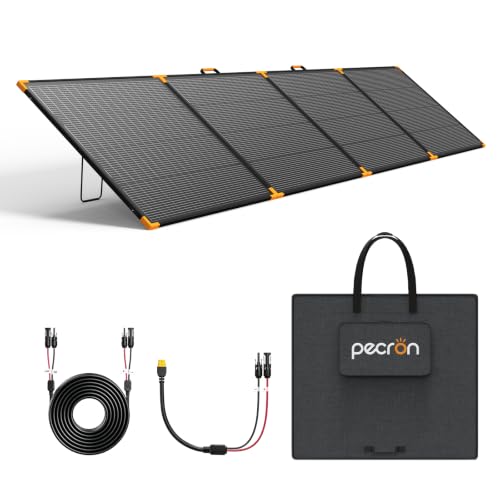
- 500W output at 25.1% efficiency
- 22.5-pound four-panel foldable design
- IP67 protection with adjustable stands
Best For: Camping, RV travel, and emergency backup
High-Voltage Compact Pick
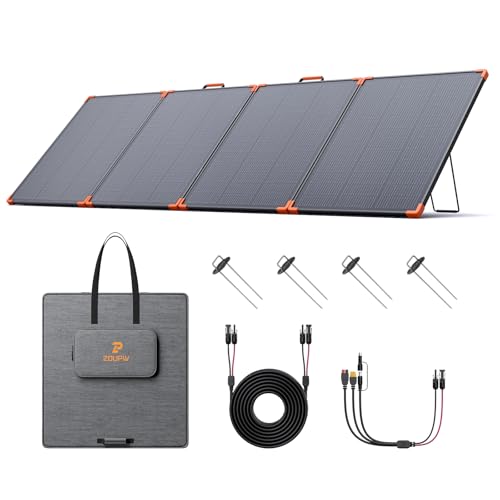
- 350W N-Type 16BB output
- 50.2V open-circuit voltage
- 22.2-pound foldable IP68 design
Best For: Compatible 1kWh-plus power stations
Most Portable High-Capacity Option
Renogy 400W Foldable Solar Blanket
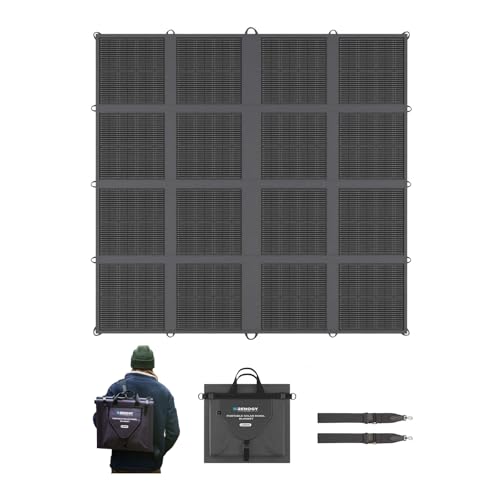
- 400W output with 25% efficiency
- 16-fold design weighs about 16.1 lb
- MC4 output; adapter may be needed
Best For: RVs, vans, camping, and compact backup storage
Best Value Folding Panel
MHPOWOS 220W 40V Portable Solar Panel

- 220W output with 23.5% efficiency
- IP67 waterproof and dustproof design
- 40V output requires careful compatibility checks
Best For: Outdoor trips with compatible power stations
Best Permanent-Setup Pair
Callsun 400W Bifacial Solar Panel Kit

- Two 200W panels deliver 400W total
- Up to 25.6% efficiency with bifacial cells
- Rigid panels support RV and off-grid mounting
Best For: RV, van, marine, rooftop, and off-grid installations
Maximum Output Pick
CTOLITY 400W Foldable Solar Panel

- 400W output with 23% conversion efficiency
- Foldable design with adjustable kickstand
- IP65 protection and broad power-station compatibility
Best For: High-output camping, RV, and emergency charging
Lightweight Efficiency Pick
HQST 200W N-Type Portable Solar Panel

- Up to 25% efficiency with N-Type cells
- About 11 pounds with compact folded storage
- Includes a 3-in-1 adapter cable
Best For: Portable camping and RV power-station charging
Most Versatile Connector Pick
E-POWO 400W Foldable Solar Panel
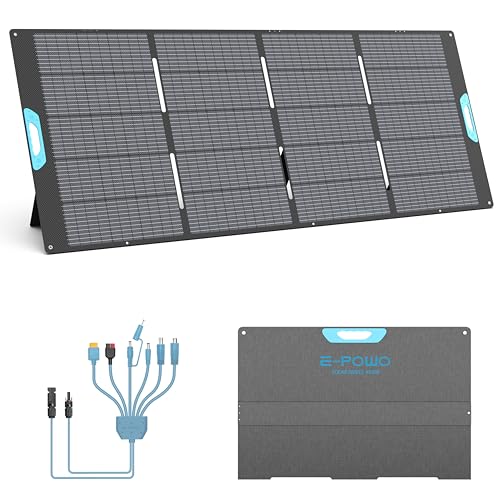
- 400W output with up to 23.5% efficiency
- Includes a 7-in-1 connector cable
- IP67 protection and three setup angles
Best For: Multi-device outdoor and emergency power-station charging
High-Capacity Efficiency Pick – BLUETTI 500W Solar Panel
For shoppers comparing high capacity portable solar panels, the BLUETTI 500W model combines a high rated output with 25% conversion efficiency in a foldable design. Its IP67 protection and included MC4-to-XT60 cable make it practical for camping, travel, and compatible power stations.
Best For: BLUETTI power-station users who want a high-output, weather-resistant panel for portable backup power.
Pros:
- 500W maximum output and 25% conversion efficiency.
- Foldable, compact design weighing 28.4 pounds.
- IP67 protection against dust and rain.
- Includes solar cable and MC4-to-XT60 cable.
Cons:
- Compatibility requires checking the power station’s input voltage and connector.
- At 28.4 pounds, it is heavier than some competing portable panels.
The BLUETTI is a strong choice when maximum rated output and rugged weather protection matter more than minimizing carry weight. Confirm connector and voltage compatibility before purchasing.
Bifacial Output Pick – ZOUPW 480W Bifacial Solar Panel
The ZOUPW 480W is among the more versatile high capacity portable solar panels, using N-Type 16BB cells and a bifacial design to capture light from both sides. Its lightweight composite construction, high-voltage architecture, and IP68 rating suit RV travel and off-grid setups.
Best For: RV owners and off-grid users who can position a bifacial panel over reflective surfaces such as sand or snow.
Pros:
- 480W output with claimed 25% conversion efficiency.
- Bifacial design can provide up to 30% extra gain on high-albedo surfaces.
- Lightweight 22.5-pound foldable construction.
- IP68 protection and included extension and connector cables.
Cons:
- Bifacial gains depend on reflective ground conditions and panel placement.
- Not recommended for long-term fixed, series, or parallel connections.
- Partial shading and mismatched panels can reduce performance.
This ZOUPW model stands out for its combination of high output, low weight, and bifacial capability. It is most compelling when you have space to expose both sides and can take advantage of reflective surroundings.
All-Around 500W Pick – PECRON Foldable Solar Panel
The PECRON 500W offers a practical balance for buyers seeking high capacity portable solar panels without a glass-heavy setup. Its 25.1% monocrystalline efficiency, four-panel foldable format, adjustable stands, and included cables support portable power stations, RVs, and emergency use.
Best For: Campers, RV travelers, and emergency-preparedness users who want a portable 500W panel with built-in positioning support.
Pros:
- 500W maximum power with 25.1% stated efficiency.
- 22.5-pound foldable design with carry handle.
- Adjustable support stands help angle the panel toward the sun.
- IP67 protection and a wide stated operating range of -10°C to 70°C.
Cons:
- Performance depends on clean panels and favorable sun angle.
- Users must verify compatibility with their power station and MC4 connection.
PECRON is a well-rounded option for users who want high output without the weight of traditional rigid panels. The integrated stands make field setup easier, while the included MC4 and XT60 cables broaden connection options.
High-Voltage Compact Pick – ZOUPW 350W Solar Panel
The ZOUPW 350W is a useful alternative for shoppers who want high capacity portable solar panels sized for larger power stations. Its N-Type 16BB cells, 50.2V open-circuit voltage, IP68 protection, and briefcase-style folding design focus on efficient charging and quick deployment.
Best For: Owners of 1kWh-or-larger power stations that accept the panel’s higher-voltage input.
Pros:
- 350W output with stated 25% efficiency.
- 50.2V open-circuit voltage for compatible large power stations.
- Lightweight 22.2-pound foldable design with magnetic handle.
- IP68 protection, adjustable kickstands, and a multi-connector cable.
Cons:
- Not suitable for small 12–20V power stations.
- Compatibility must be verified because of the high-voltage input.
- Not recommended for long-term fixed, series, or parallel connections.
This panel prioritizes high-voltage compatibility and fast setup over the highest wattage in the group. It is a sensible fit for larger power stations, but voltage limits should be checked carefully before connecting it.
Most Portable High-Capacity Option – Renogy 400W Foldable Solar Blanket
For shoppers comparing high capacity portable solar panels, the Renogy 400W blanket stands out for combining high rated output with a notably compact, 16-fold design. Its 25% efficiency and 16.1-pound weight make it practical for mobile backup power, though you will need to confirm your power station’s input requirements and obtain a separate 4-in-1 adapter if needed.
Best For: RV owners, van travelers, campers, and blackout backup users who prioritize storage efficiency.
Pros:
- 400W rated output with 25% efficiency and N-Type 16BB cells.
- Folds to a backpack-sized footprint and weighs about 16.1 pounds.
- Can be placed on the ground, across a windshield, or hung from trees or racks.
- UL 61730 certified, with a two-year material and workmanship warranty.
Cons:
- MC4 output only; the 4-in-1 adapter is sold separately.
- Actual output varies with shade, sun angle, temperature, cable length, and power-station limits.
The Renogy is a strong fit when maximum wattage and easy storage matter more than a rigid, permanently mounted setup. Check compatibility before buying, especially the station’s voltage, current, and input-wattage limits.
Best Value Folding Panel – MHPOWOS 220W 40V Portable Solar Panel
The MHPOWOS 220W is a practical choice among high capacity portable solar panels for users who want a folding design, adjustable positioning, and a relatively light 8.07-kilogram build. Its 23.5% efficiency and 40V output can support fast charging, but compatibility is especially important because some power stations have lower voltage or input limits.
Best For: Campers, fishing trips, RV travel, and outdoor users with a compatible 40V-capable power station.
Pros:
- 220W rated output with a 23.5% monocrystalline conversion rate.
- Folds for transport and includes four kickstands for angle adjustment.
- IP67 waterproof and dustproof construction for outdoor use.
- Uses a 7-in-1 solar connector for broad listed compatibility.
Cons:
- The 40V output may not work with power stations that have lower maximum-voltage limits.
- A compatible power station may still cap charging below the panel’s 220W rating.
- At 8.07 kilograms, it is portable but heavier than some blanket-style panels.
This panel offers a useful balance of output, portability, and simple ground setup. Verify both maximum solar voltage and maximum input wattage for your power station before ordering.
Best Permanent-Setup Pair – Callsun 400W Bifacial Solar Panel Kit
For buyers who want high capacity portable solar panels with a more conventional installation format, this Callsun package uses two rigid 200W panels to provide 400W total in a series configuration. Its N-Type 16BB cells, bifacial construction, and dual-module design are suited to RVs, vans, marine setups, rooftops, and off-grid systems, but the 23.8-pound-per-panel weight makes it less convenient for frequent carrying.
Best For: RV, van, marine, rooftop, and off-grid installations with compatible 60V-class solar inputs.
Pros:
- Two 200W panels can be connected for 400W total output.
- Up to 25.6% efficiency with N-Type 16BB monocrystalline cells.
- Bifacial design can capture suitable reflected and diffuse light from the rear.
- Dual-module parallel design helps limit the effect of partial shading.
Cons:
- Each rigid panel weighs 23.8 pounds, limiting grab-and-go portability.
- Series configuration reaches 47.48V Vmp and 54.62V Voc, so input limits must be checked.
- Requires compatible mounting hardware for installation.
The Callsun pair is better viewed as a transportable, semi-permanent solar system than a quick-deploy blanket. It makes the most sense where durability, shade tolerance, and long-term installation matter.
Maximum Output Pick – CTOLITY 400W Foldable Solar Panel
For shoppers comparing high capacity portable solar panels, the CTOLITY 400W model emphasizes high output in a foldable format. Its 23% conversion rate, adjustable kickstand, broad power-station compatibility, and IP65-rated construction make it a practical option for camping, RV trips, and emergency backup.
Best For: Outdoor users who want a high-output foldable panel for compatible power stations and backup charging.
Pros:
- 400W rated output with up to 23% conversion efficiency.
- Compatible with Jackery and EcoFlow power stations.
- Foldable design with adjustable kickstand for easier positioning.
- IP65 waterproof and dust-resistant construction with charging safety protections.
Cons:
- Its 40V, 10A specifications require checking power-station compatibility before purchase.
- The supplied notes do not specify included connector adapters beyond the MC4 connector.
The CTOLITY is a strong fit when maximum rated wattage matters more than the lightest possible setup. Confirm your station’s input requirements and plan for reduced production in shade or changing sunlight.
Lightweight Efficiency Pick – HQST 200W N-Type Portable Solar Panel
The HQST 200W panel stands out among high capacity portable solar panels for its combination of low weight and claimed 25% efficiency. Its N-Type cells, adjustable kickstands, 3-in-1 adapter cable, and IP67 waterproof construction suit portable power stations, camping, RV use, and emergency backup.
Best For: Buyers who prioritize easy carrying, quick setup, and wide compatibility in a 200W panel.
Pros:
- Up to 25% efficiency from 16BB N-Type cells.
- Weighs about 11 pounds and folds to 1.97 inches thick.
- Includes XT60, DC7909, and DC5521 adapter connections.
- IP67 waterproof build with adjustable 40°–60° kickstands.
Cons:
- At 200W, it has lower rated output than the two 400W options in this roundup.
- Series or parallel connections require attention to compatible voltage and power limits.
The HQST is a sensible choice for travelers who want a manageable panel without giving up efficiency. Its included cable improves convenience, but verify the connector and input limits of your power station first.
Most Versatile Connector Pick – E-POWO 400W Foldable Solar Panel
The E-POWO 400W is one of the more versatile high capacity portable solar panels for users with different power stations. It combines up to 23.5% conversion efficiency, a 7-in-1 adapter cable, three angle settings, and IP67 waterproofing in a foldable design intended for camping, RVs, off-grid use, and outages.
Best For: Users who need a 400W panel with multiple connector options and flexible positioning.
Pros:
- 400W rated output with up to 23.5% conversion efficiency.
- 7-in-1 cable supports several common power-station connector types.
- Three built-in kickstand angles—40°, 50°, and 60°—help with positioning.
- IP67 waterproof ETFE-laminated construction and an 18-month warranty.
Cons:
- Its listed folded dimensions are substantial at 37.76 × 24.96 × 1.3 inches.
- Cloud cover and obstructions can reduce charging efficiency.
- Connector compatibility and power limits still need to be checked for the intended station.
The E-POWO is a practical match for buyers who value connector flexibility alongside high output. Its larger folded footprint may be less convenient for compact storage, but the multiple adapters and adjustable setup broaden its usefulness.
How We Picked the Best High Capacity Portable Solar Panels
We focused on rated output, stated conversion efficiency, panel construction, weather resistance, portability, and compatibility with portable power stations. Higher wattage can deliver faster charging, but only when the panel’s voltage and current fall within the power station’s input limits.
We also considered practical details such as folding designs, carrying convenience, included cables or adapters, adjustable stands, and whether a panel is better suited to a single power station or a larger 12V/24V solar setup. Advertised output is a maximum under ideal conditions, so real-world results will vary with sunlight, temperature, angle, shading, and cable losses.
Quick Comparison
| Panel class | Best for | Main advantage | Trade-off |
|---|---|---|---|
| 200W–220W | Portable camping and smaller power stations | Lighter and easier to position | Slower charging |
| 350W–400W | Most off-grid and RV users | Strong balance of output and portability | Bulkier when folded |
| 480W–500W | Large power stations and frequent outages | Fastest potential recharge | Heavier, larger, and more demanding on setup space |
| Bifacial or dual-module | Open, bright environments and fixed setups | Can capture additional reflected light | Needs favorable placement for its extra capability |
Key Buying Factors for High-Capacity Portable Solar Panels
Output and Power-Station Compatibility
Check your power station’s maximum solar input, operating voltage range, connector type, and maximum current before buying. A 500W panel will not necessarily charge faster if the station accepts only 200W or 400W. For dual-panel systems, verify that parallel or series wiring is supported and that the combined voltage remains safe.
Portability and Setup
Foldable panels are convenient for transport, but high-output models can be wide and heavy. Measure your vehicle, storage area, and intended setup location. Built-in kickstands or adjustable supports make it easier to aim the panel at the sun, while separate modules can be easier to position around shade.
Efficiency and Weather Resistance
Efficiency matters when roof, campsite, or balcony space is limited. N-type and bifacial designs may offer useful performance advantages, but placement still matters more than the label alone. IP-rated construction helps protect against dust and water; always confirm whether the rating applies to the entire panel, connectors, and junction box.
Real-World Charging Expectations
Plan around less than the headline wattage. Clouds, haze, heat, imperfect angles, and partial shading can reduce production substantially. A panel with extra capacity may be worthwhile if you need dependable charging during variable conditions.
Who Should Buy Which High Capacity Portable Solar Panels?
- Choose a 200W–220W panel for smaller power stations, weekend camping, and users who prioritize easier carrying.
- Choose a 350W–400W panel for the best all-around balance of recharge speed, size, and versatility.
- Choose a 480W–500W panel if you own a high-input power station or need the fastest practical solar replenishment.
- Choose a bifacial or dual-module setup when you have open space, reflective ground, or a semi-permanent installation and can confirm electrical compatibility.
- Choose a weather-resistant model for RV travel, outdoor storage, or frequent use in changing conditions, while still bringing panels indoors during severe weather.