Choosing among hydronic baseboard heaters means balancing steady heat, electrical requirements, installation style, and the size of the room you need to warm. The right model can provide quieter, more even comfort than a conventional fan heater.
This roundup includes complete hot-water baseboards, electric liquid-filled units, portable options, and commercial-style heaters, making it easier to match heating performance and installation needs to your space.
Best 10 Hydronic Baseboard Heaters Picks for 2026
Commercial Quiet Heat
Dayton Hydronic Electric Baseboard Heater

- Liquid-filled element helps smooth temperature swings
- Rugged steel housing with overload protection
- 208/240VAC commercial installation
Best For: Commercial rooms and offices needing quiet, durable supplemental heat
Flexible Installation
Embassy 48-Inch Panel Track Heater
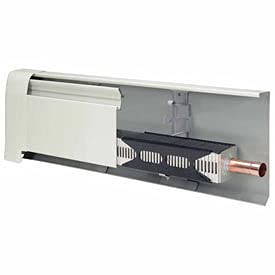
- Designed for residential or light commercial use
- Includes cover, panel, damper, brackets, and element
- Floor-mounted 48-inch panel track format
Best For: Projects needing a longer panel track heater with core components included
Traditional Water Heat
Slant & Fin 4-Foot Hydronic Baseboard

- Water-based hydronic heater assembly
- Arrives assembled for indoor installation
- Listed 580-BtuH output and 180°F maximum setting
Best For: Bedrooms and living rooms with a compatible hot-water system
Compact Electric Comfort
Stelpro Brava 500W Baseboard Heater
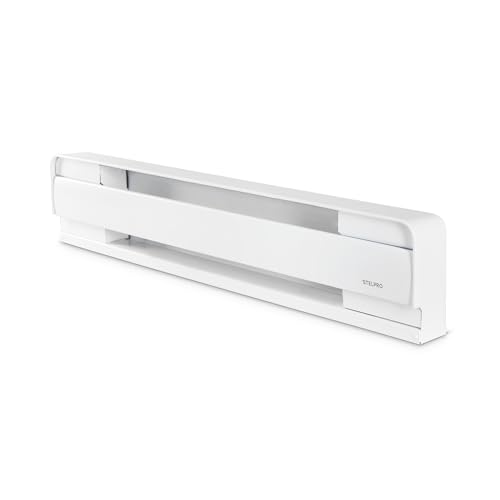
- 500W convection heat for spaces up to 50 square feet
- Quiet one-piece steel construction
- Hardwired 120V design with overheat protection
Best For: Small bedrooms, offices, apartments, and other compact rooms
Efficient Hydronic Comfort
Copper Aluminum Wall-Mount Radiator
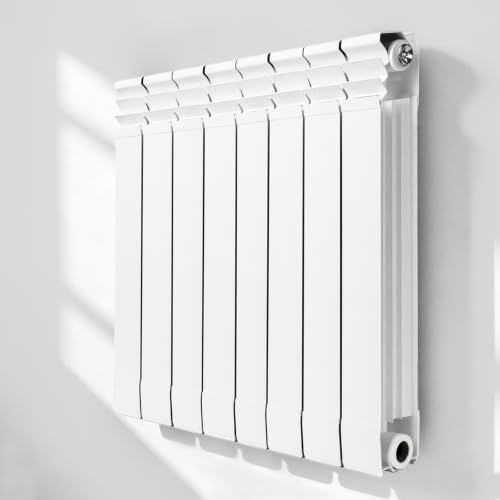
- 2,402 BTU/hr output in a slim wall-mounted design
- Copper tubing and aluminum fins support efficient heat transfer
- Includes mounting brackets and bubble level
Best For: Compatible residential hot-water heating systems
Versatile Electric Heat
Cadet F Series 36-Inch Baseboard
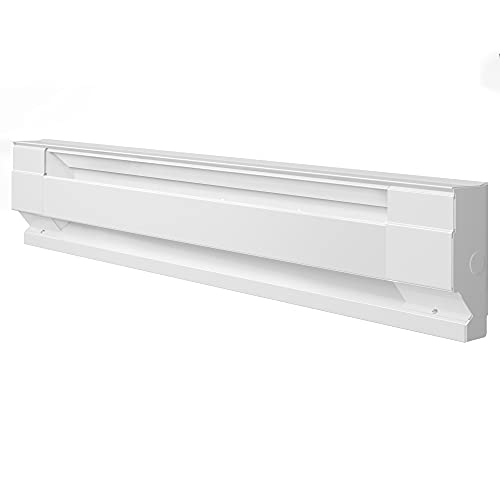
- 750/563-watt operation at 240/208 volts
- Listed coverage of up to 125 square feet
- Pre-punched knockouts and universal wiring
Best For: Electric heating in bedrooms, offices, and study rooms
Complete Hydronic Replacement
5-Foot 30 Series Hydronic Baseboard
- Assembled 5-foot hydronic baseboard unit
- Designed for reliability and premium material quality
- Useful for compatible replacement installations
Best For: Like-for-like hydronic baseboard replacements
Commercial Low-Maintenance Pick
Dayton Hydronic Baseboard Heater
- Quiet liquid-filled heating
- 208/240VAC operation
- Rugged steel cabinet
Best For: Commercial rooms and compact permanently mounted installations
Consistent Whole-Room Heat
Qmark HBB1254 Hydronic Baseboard

- 1,250-watt heat output
- Fanless natural convection
- Overheat protection
Best For: Fixed heating in bedrooms, bathrooms, and living rooms
Portable 120-Volt Option
Fahrenheat FHP1500T Hydronic Heater

- 1,500-watt portable design
- Built-in smart thermostat
- 150-200 sq. ft. coverage
Best For: Portable supplemental heating in smaller rooms
Commercial Quiet Heat – Dayton Hydronic Electric Baseboard Heater
The Dayton hydronic electric baseboard heater is designed for commercial or office installations that need quiet, low-maintenance supplemental heat. Its liquid-filled element helps reduce temperature swings and continues releasing residual warmth after the thermostat switches off.
Best For: Commercial rooms and offices needing a durable, hardwired hydronic baseboard heater with quiet operation.
Pros:
- Liquid-filled element provides residual heat and helps moderate temperature changes.
- Rugged 18-gauge steel housing with enamel finish.
- Includes overload protection, safety limit switch, wiring pigtails, and multiple knockouts.
- Can mount flush to walls over wood, tile, or carpet flooring.
Cons:
- Requires a separately sold field-installed thermostat.
- Designed for 208/240VAC wiring rather than standard 120V circuits.
- Its commercial-oriented design may be more capacity than a small residential room needs.
With outputs listed at 1,918 or 2,560 BtuH and a 34-inch length, this Dayton model is a practical choice where durable construction and quiet hydronic performance matter more than plug-in convenience.
Flexible Installation – Embassy 48-Inch Panel Track Heater
The Embassy 48-inch panel track heater is a straightforward option for residential or light commercial hydronic baseboard heater installations. It includes the main panel components, damper, brackets, and 3/4-inch element for a more complete installation package.
Best For: Residential and light commercial projects requiring a 48-inch floor-mounted panel track heater.
Pros:
- Suitable for residential or light commercial installations.
- Includes front cover, back panel, damper, brackets, and 3/4-inch element.
- Floor-mount design with a relatively slim 2.56-inch width.
Cons:
- End caps are sold separately.
- The supplied notes do not specify heat output or fuel and voltage requirements.
- At 48 inches, it requires more wall length than compact baseboard units.
This Embassy unit makes sense when you want a longer panel track format and several core components included, but remember to account for separately purchased end caps before completing the installation.
Traditional Water Heat – Slant & Fin 4-Foot Hydronic Baseboard
The Slant & Fin 30 Series complete baseboard is a water-based hydronic baseboard heater assembly for indoor rooms such as bedrooms and living rooms. Its assembled format is intended to simplify selection when you want a traditional hydronic heating component rather than an electric unit.
Best For: Bedrooms and living rooms with a compatible hot-water heating system.
Pros:
- Uses water as the fuel or heat-transfer medium.
- Arrives as an assembled hydronic heater assembly.
- Designed for indoor residential rooms including bedrooms and living rooms.
- Listed maximum temperature setting of 180°F.
Cons:
- Requires a compatible water-based heating system rather than direct electric power.
- The supplied dimensions are unusually large and should be verified carefully before ordering.
- Listed heat output is 580 BtuH, so sizing should be checked for the room.
This 4-foot Slant & Fin assembly is worth considering for a conventional hydronic system, but confirm the reported dimensions, available water connections, and 580-BtuH output against your installation requirements.
Compact Electric Comfort – Stelpro Brava 500W Baseboard Heater
The Stelpro Brava is a compact electric baseboard heater for smaller rooms, with 500 watts of silent convection heat covering up to 50 square feet. Its one-piece steel construction, rounded corners, and overheat protection make it a practical choice for bedrooms, home offices, and other residential spaces.
Best For: Small bedrooms, home offices, apartments, and other rooms up to 50 square feet with a 120V hardwired circuit.
Pros:
- 500W output is rated to cover up to 50 square feet.
- One-piece steel design is intended to avoid common ticking and popping noises.
- Includes overheat protection, universal wiring on both ends, and cable clamps.
- Backed by a five-year baseboard warranty and lifetime heating-element coverage for the original owner.
Cons:
- Must be hardwired; it is not a plug-in heater.
- Requires a separately sold external thermostat or thermostat accessory.
- Its 500W capacity is intended for small spaces rather than large rooms.
For a small room needing quiet, unobtrusive electric heat, the Brava combines a compact 27.87-inch form with useful installation and safety features. Verify circuit compatibility and plan for thermostat control separately.
Efficient Hydronic Comfort – Copper Aluminum Wall-Mount Radiator
This wall-mounted option is designed for shoppers comparing hydronic baseboard heaters for bedrooms, bathrooms, offices, and other residential spaces. Its copper tubing and aluminum fins provide approximately 2,402 BTU/hr of radiant heat in a slim, 2.95-inch-deep format.
Best For: Homeowners with a compatible hot-water heating system who want quiet, space-saving radiant heat.
Pros:
- Copper-and-aluminum construction is designed for efficient heat transfer.
- Wall-mounted design saves floor space and weighs about 14.3 pounds.
- Includes four mounting brackets and a bubble level for installation.
- Supports 3/4-inch FNPT connections and operates from 122°F to 167°F.
Cons:
- Requires a compatible hot-water heating system rather than electric power.
- Pipe layout and 19.7-inch center distance should be confirmed before purchase.
- Installation requires attention to the recommended floor clearance.
Choose this model when quiet operation, a clean white finish, and compact wall installation matter more than a conventional floor-level baseboard format. Verify system connections and available mounting space before ordering.
Versatile Electric Heat – Cadet F Series 36-Inch Baseboard
For shoppers considering electric alternatives to hydronic baseboard heaters, this 36-inch Cadet F Series model provides convection heat for rooms up to a listed 125 square feet. Its dual-voltage, multi-watt design is rated at 750/563 watts and 240/208 volts.
Best For: Bedrooms, home offices, and study rooms that need a permanently mounted electric baseboard heater.
Pros:
- Multi-watt capability supports 750- or 563-watt operation.
- Universal wiring and pre-punched knockouts simplify installation.
- Convection heating circulates warm air throughout the room.
- Includes automatic shut-off and a limited lifetime warranty.
Cons:
- Requires a 240- or 208-volt electrical connection.
- Its 36.3-inch width requires sufficient wall space.
- It is an electric convection heater, not a hydronic unit.
This is a practical choice when you want straightforward electric baseboard installation and flexible wattage selection. Confirm the available voltage, wiring, and room size before installation.
Complete Hydronic Replacement – 5-Foot 30 Series Hydronic Baseboard
This assembled 5-foot 30 Series baseboard is a straightforward option for buyers comparing hydronic baseboard heaters for a replacement or new hot-water heating installation. The product notes emphasize reliability and premium materials without providing a specific heat-output rating.
Best For: Shoppers seeking an assembled 5-foot hydronic baseboard component for a compatible system.
Pros:
- Designed as a complete hydronic baseboard assembly.
- Arrives assembled, reducing preparation before installation.
- Built with materials described as premium and reliable.
Cons:
- The supplied notes do not specify heat output, dimensions beyond 5 feet, or connection details.
- Compatibility with existing piping should be confirmed before purchase.
- Installation requirements and coverage are not provided in the product notes.
This model may suit a like-for-like replacement where the 5-foot size and hydronic format match your system. Because technical specifications are limited, verify connections, output, dimensions, and installation requirements before ordering.
Commercial Low-Maintenance Pick – Dayton Hydronic Baseboard Heater
For buyers comparing hydronic baseboard heaters for a commercial or residential room, the Dayton provides quiet, low-maintenance convection and radiant heat in a compact 28-inch cabinet. Its liquid-filled element helps reduce temperature swings and continues providing residual heat after the thermostat switches off.
Best For: Commercial spaces or rooms needing a compact 208/240-volt hydronic baseboard heater.
Pros:
- Liquid-filled element provides consistent heat and residual warmth.
- Quiet, fanless operation with a lower surface temperature than standard electric baseboards.
- Rugged 18-gauge steel construction with automatic overload protection.
- Can mount flush to walls and sit on wood, tile, or carpet flooring.
Cons:
- Requires a 208/240VAC power supply.
- Thermostat is field-installed and sold separately.
- Its listed output is lower than some larger 1,250- to 1,500-watt models.
Choose this Dayton model when durable construction, compact dimensions, and quiet hydronic heat matter more than plug-in convenience. Verify the electrical requirements and plan for a separate thermostat before installation.
Consistent Whole-Room Heat – Qmark HBB1254 Hydronic Baseboard
Qmark HBB1254 Liquid Filled Electric Hydronic Baseboard Heater 1250 Watt 240 Volt Navajo White
Check Price On AmazonThe Qmark HBB1254 is a practical choice among hydronic baseboard heaters when you want steady, fanless warmth for a home room. Its liquid-immersed element supports even heat distribution and retains warmth after shutoff, while natural convection avoids blowing dust and allergens around the room.
Best For: Bedrooms, bathrooms, and living rooms with a dedicated 240-volt electrical connection.
Pros:
- 1,250-watt liquid-filled element helps minimize temperature swings.
- Fanless natural convection operates without loud fans or clicking noises.
- Thermal cutoff helps protect against overheating.
- Suitable for wood, tile, or carpet flooring.
Cons:
- Requires 240-volt power and is not a plug-in 120-volt heater.
- Its 58-inch length requires more wall space than compact models.
- Designed for floor mounting rather than portable use.
With its full-length format and 1,250-watt output, the Qmark is suited to buyers seeking quiet, even supplemental heat in a fixed location. Confirm the available circuit and installation space before ordering.
Portable 120-Volt Option – Fahrenheat FHP1500T Hydronic Heater
Fahrenheat FHP1500T 58 in. 1,500-Watt Electric Hydronic Portable Baseboard Heater
Check Price On AmazonFor shoppers who need flexible placement, the Fahrenheat FHP1500T stands out among hydronic baseboard heaters as a portable 120-volt model. Its liquid-filled element delivers even convection heat, and the built-in smart thermostat helps manage warmth without permanent installation.
Best For: Portable supplemental heating in 150- to 200-square-foot bedrooms, bathrooms, or living rooms.
Pros:
- Portable floor-mounted design offers flexible placement.
- Liquid-filled element provides even room heating.
- Built-in smart thermostat simplifies temperature control.
- Uses a standard 120-volt electrical supply.
Cons:
- Its 12.5-amp draw may require an appropriate circuit.
- Portable design takes up floor space and is less suited to permanent built-in installations.
- Listed coverage is limited to approximately 150-200 square feet.
The Fahrenheat is a strong fit when portability and ordinary 120-volt operation are priorities. Its stated coverage makes it better suited to targeted supplemental heating than large open areas.
How We Picked the Best Hydronic Baseboard Heaters
We compared these 10 heaters by heating output, voltage and wattage, installation format, construction, size, and intended use. The selection includes both hydronic systems that connect to a hot-water loop and electric hydronic heaters that use a sealed liquid element. Those categories are not interchangeable, so confirm which type your home supports before buying.
We also considered practical details such as available lengths, wall-mount compatibility, portability, finish, and whether a model is better suited to supplemental heating or a permanent room-by-room installation. Manufacturer specifications should always take priority for wiring, clearances, controls, and installation.
Quick Comparison
- Best for a complete hot-water system: Slant/Fin 30 Series hydronic baseboards in 4- and 5-foot sizes.
- Best for electric installation: Cadet, Stelpro, Dayton, and Qmark models, depending on voltage and output.
- Best portable option: The Fahrenheat liquid-filled baseboard heater.
- Best compact radiator format: The eight-section copper-aluminum wall-mount radiator.
- Best for commercial applications: Dayton’s higher-output 208/240-volt models.
Key Buying Factors for Hydronic Baseboard Heaters
Heating Output and Room Size
Compare BTU or wattage ratings with the room’s insulation, window area, ceiling height, and climate. A longer or higher-output heater is not automatically better if the circuit or room load cannot support it. A heating professional can calculate the required output more accurately than a simple square-foot estimate.
Hydronic System or Electric Hydronic
Traditional hydronic baseboards circulate heated water from a boiler or other central source. Electric hydronic models heat a sealed liquid reservoir and usually install like electric baseboard heaters. Check the product type carefully: a hot-water unit cannot replace an electric heater without the necessary plumbing and heating system.
Voltage, Wattage, and Wiring
Many larger electric models require 208 or 240 volts, while compact units may use 120 volts. Verify breaker capacity, circuit requirements, thermostat compatibility, and local electrical code. Fixed wiring should be completed by a qualified electrician.
Length, Placement, and Clearance
Measure the available wall space and keep required clearances around furniture, curtains, flooring, and electrical components. Baseboard heaters work best along exterior walls, especially beneath windows, where they can counteract cold drafts.
Who Should Buy Which Hydronic Baseboard Heaters?
Choose a Slant/Fin complete baseboard or the copper-aluminum radiator if you already have a compatible hot-water heating loop and want a permanent room installation. Choose Cadet, Stelpro, Qmark, or Dayton when you need electric installation and have confirmed the correct voltage and output. The Fahrenheat portable model is more suitable for renters, temporary supplemental heat, or rooms where permanent installation is impractical.
For larger spaces or demanding commercial environments, prioritize the Dayton units or another appropriately sized 208/240-volt heater. For a smaller room or targeted supplemental heat, a lower-wattage model may be easier to install and less demanding on the circuit. Regardless of style, buy based on verified heat-load requirements rather than appearance alone, and follow all manufacturer instructions for safe installation and operation.