The best moisture meters help you find hidden dampness before it turns into mold, rot, peeling finishes, or expensive structural damage. This roundup compares 10 options suited to homeowners, contractors, inspectors, and DIY renovators.
We look at pin, pinless, and combination designs, along with material coverage, measurement depth, display features, and practical usability, so you can choose a meter that matches the job.
Best 10 Moisture Meters Picks for 2026
DIY Leak Checking Pick
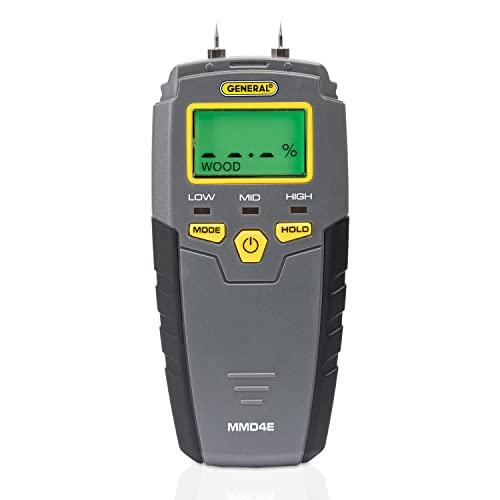
- Pin-style readings for wood and building materials
- Backlit LCD with hold and moisture alerts
- Includes extra pins, cap, and 9V battery
Best For: Homeowners investigating stains, damp walls, and wood moisture
Professional Mapping Pick

- Pinless dual-depth testing up to 1.25 inches
- Wood readings plus comparative material scale
- Bluetooth support for mapped inspection reports
Best For: Inspectors and restoration professionals
Simple Pinless Pick

- Pinless electromagnetic sensing up to 3/4 inch
- Nine LED bars and reverse-contrast display
- Built for drywall, masonry, hardwood, and softwood
Best For: Quick, non-destructive home moisture screening
Practical Pin Testing
RDINSCOS Replaceable Pins Moisture Meter

- Direct pin measurements in wood and building materials
- Checks walls, drywall, and firewood
- Compact design with three AAA batteries included
Best For: Home moisture checks and firewood testing
Non-Invasive Detection
General Tools MM8 Pinless Moisture Meter

- Pinless sensing reads up to 3/4 inch deep
- Settings for drywall, masonry, softwood, and hardwood
- Backlit display, LED bar graph, and audible alert
Best For: Non-marring checks on walls, wood, and masonry
Dark-Space Inspection
Pinless Digital Wall Moisture Detector

- Non-destructive sensing for wood, masonry, and concrete
- Built-in flashlight for crawl spaces and cabinets
- Includes 9V battery with ±5% listed accuracy
Best For: DIY inspections in dark or finished areas
Versatile 4-in-1 Pick
General Tools MMH800 Pin/Pinless Moisture Meter

- Pin and pinless testing modes
- Shows moisture, temperature, and humidity
- Audible and visual moisture alerts
Best For: DIYers needing broad scans and targeted readings
Practical Dual-Mode Value
LASELION MS03 Pin & Pinless Moisture Meter

- Works across wood and building materials
- Pin and pinless measurement options
- Flashlight, hold function, and auto shutoff
Best For: Routine home and woodworking inspections
Surface-Safe Scanner
General Tools MMD7NP Pinless Moisture Meter

- Non-invasive pinless surface testing
- Reads up to 3/4 inch deep
- Backlit display, LED graph, and alerts
Best For: Checking finished surfaces without probe marks
DIY Leak Checking Pick – General Tools MMD4E
The General Tools MMD4E is a practical choice among moisture meters for checking wood, drywall, concrete, and other building materials around the home. Its pin-style readings, backlit display, moisture-level tones, and hold function make it useful for investigating stains or damp areas.
Best For: Homeowners and DIYers checking suspected leaks, damp walls, and wood moisture.
Pros:
- Measures wood from 5% to 50% and building materials from 1.5% to 33%.
- Backlit LCD, reading hold, and low, medium, and high moisture alerts simplify checks.
- Includes extra stainless steel pins, a protective cap, and a 9V battery.
Cons:
- Pin probes require contact with and insertion into the test surface.
- The supplied notes describe a relatively narrow operating temperature range.
This is a capable general-purpose moisture meter for routine home inspections, especially when you want a straightforward digital reading and audible or visual moisture guidance.
Professional Mapping Pick – Tramex Moisture Encounter ME5
The Tramex Moisture Encounter ME5 is a specialized moisture meter for non-destructive testing across common building materials. Its dual-depth sensing, large analogue display, comparative scale, and Bluetooth-enabled reporting make it well suited to detailed inspection work.
Best For: Inspectors and restoration professionals who need non-destructive readings and documented moisture maps.
Pros:
- Pinless testing measures shallow areas up to 0.4 inches and deeper areas up to 1.25 inches.
- Measures wood moisture from 5% to 30% and provides a 0–100 comparative scale for other materials.
- Bluetooth connectivity supports geotagged, time-stamped reports and shared photos through the app.
Cons:
- It is designed around comparative readings for many non-wood materials rather than a direct percentage.
- Its reporting features may be more than casual household users need.
The ME5 stands out when protecting finished surfaces matters and inspection results need to be compared, mapped, and shared rather than simply read once.
Simple Pinless Pick – Klein Tools ET140
The Klein Tools ET140 is a straightforward pinless moisture meter for finding relative moisture in building materials without making probe holes. Electromagnetic sensing reaches up to 3/4 inch, while the reverse-contrast display and LED bar graph make readings easy to scan.
Best For: Home repair and maintenance checks on drywall, masonry, hardwood, and softwood.
Pros:
- Non-destructive electromagnetic detection works up to 3/4 inch deep.
- Calibrated for drywall, masonry, hardwood, and softwood.
- Includes hold, low-battery, auto-power-off, audible alert, and 2-meter drop protection.
Cons:
- It is intended for relative moisture readings, not a broad percentage scale across all materials.
- The supplied calibration list covers fewer material types than some multifunction meters.
Choose the ET140 when you want a compact, pinless tool for quick screening and prefer a clear LED moisture range over more complex reporting features.
Multifunction Woodworking Pick – PREXISO 7-in-1 Moisture Meter
The PREXISO 7-in-1 is a versatile pin-type option among moisture meters, combining material moisture testing with ambient temperature and humidity readings. Seven calibration scales and multiple measurement modes make it useful for comparing lumber, walls, flooring, and other listed materials.
Best For: Woodworkers, flooring installers, inspectors, and users checking several material types.
Pros:
- Seven calibration scales measure moisture from 0% to 57% across wood and building materials.
- Offers single-point, multipoint average, maximum, and minimum measurement modes.
- Displays temperature and humidity, with a color backlit screen, hold function, and auto power-off.
Cons:
- Its pin probes must penetrate the surface being tested.
- The supplied notes specify an operating humidity range of 30% to 80%.
This PREXISO model is a strong fit when one meter needs to handle varied materials and provide extra environmental context, though pin testing is less convenient for finished surfaces.
Practical Pin Testing – RDINSCOS Replaceable Pins Moisture Meter
This pin-type moisture meter is a practical choice for checking suspicious drywall, walls, and firewood. Its penetrating pins provide direct measurements inside wood and building materials, helping you check questionable areas before painting, repairing, or covering them.
Best For: Homeowners who want one moisture meter for investigating possible wall moisture and checking firewood before burning.
Pros:
- Replaceable contact pins provide direct measurements inside materials.
- Useful for drywall, building surfaces, wood, and firewood.
- Compact 7.7-ounce design and included three AAA batteries.
Cons:
- Pin testing leaves small contact points in the tested material.
- Very dry wood may display a 0% reading.
Choose this model if direct contact readings matter more to you than keeping the surface completely untouched. Insert the pins deeply enough for good contact and use the readings to guide repair or firewood decisions.
Non-Invasive Detection – General Tools MM8 Pinless Moisture Meter
The General Tools MM8 is a pinless moisture meter for wood, drywall, masonry, and other construction materials. Its non-marring sensor reads up to 3/4 inch deep, while material-specific settings, a backlit display, LED bar graph, and audible alert make suspicious areas easier to evaluate.
Best For: DIYers and home inspectors who need non-invasive moisture checks on finished walls, drywall, lumber, and masonry.
Pros:
- Pinless sensing helps protect surfaces from marks or holes.
- Separate settings support drywall, masonry, softwood, and hardwood.
- Reads up to 3/4 inch deep and includes visual and audible alerts.
- Large backlit digits and auto-calibration simplify reading results.
Cons:
- Wallboard and masonry readings are relative rather than percentage readings.
- Requires a 9V battery.
This is the strongest fit when surface protection and convenient leak checking are priorities. Its depth, material settings, and alert system can help identify whether a suspicious stain is still wet or has dried.
Dark-Space Inspection – Pinless Digital Wall Moisture Detector
This pinless moisture meter is designed for quick checks after leaks, flooding, or high humidity in places such as basements, bathrooms, kitchens, and wood surfaces. Its non-destructive sensor avoids drilling holes, and the built-in flashlight helps illuminate crawl spaces, attics, and areas behind cabinets.
Best For: DIY repairs, home inspections, and renovation work where non-destructive testing and visibility in dark areas are useful.
Pros:
- Pinless design is suitable for finished and sensitive surfaces.
- Works on wood, masonry, concrete, and other surfaces.
- Built-in LED flashlight helps inspect dark or confined areas.
- Includes a 9V battery and lists ±5% measurement accuracy.
Cons:
- Metal surfaces can interfere with readings.
- Its 9V zinc-carbon battery may need replacement over time.
This model stands out for combining moisture detection with a useful inspection light. Keep it away from metal when measuring, and it can be a convenient tool for locating damp areas without leaving pinholes.
Versatile 4-in-1 Pick – General Tools MMH800 Pin/Pinless Moisture Meter
For buyers comparing moisture meters, the General Tools MMH800 stands out with both pin and pinless testing plus temperature and humidity readings. It can help assess wood, plastered walls, floors, and other suspicious areas while providing visual and audible moisture alerts.
Best For: Homeowners, DIYers, and repair work requiring both broad surface scans and more targeted pin readings.
Pros:
- Combines pin-type and pinless surface sensors.
- Displays moisture percentage, ambient temperature, and relative humidity.
- Provides audible and visual indications for high, medium, and low moisture levels.
- Includes a Fahrenheit/Celsius switch and supplied batteries.
Cons:
- The listed package dimensions are relatively large for a handheld meter.
- Pin testing can be less suitable for surfaces where probe marks are a concern.
The MMH800 is a flexible choice when one tool needs to cover both non-invasive scanning and more exact pin-style readings, with added environmental information for moisture investigations.
Practical Dual-Mode Value – LASELION MS03 Pin & Pinless Moisture Meter
The LASELION MS03 is a straightforward option among moisture meters, offering pin and pinless modes for wood, drywall, plaster, concrete, cardboard, and other building materials. Its LCD, hold function, flashlight, and automatic shutoff add useful convenience during inspections.
Best For: Home maintenance, woodworking, and building-material checks where both non-destructive and pin-based measurements are useful.
Pros:
- Supports pin and non-destructive pinless measurements.
- Measures wood from 0–75% and building materials from 0–25%.
- Includes a built-in flashlight for dim work areas.
- Offers ambient temperature display, manual pinless calibration, and a hold function.
Cons:
- Its stated accuracy is ±4%RH, so it is not positioned as a laboratory-grade instrument.
- Automatic power-off occurs after two minutes of inactivity, which may interrupt longer inspection sessions.
With broad material compatibility and two measurement methods, the MS03 offers useful flexibility for routine moisture checks without adding unnecessary complexity.
Surface-Safe Scanner – General Tools MMD7NP Pinless Moisture Meter
General Tools Digital Moisture Meter MMD7NP - Humidity Sensor- Pinless and Non-Invasive
Check Price On AmazonFor buyers who want non-invasive moisture meters, the General Tools MMD7NP scans without pins that can scratch or mar walls and finished surfaces. It reads up to 3/4 inch deep and adds a backlit display, LED bar graph, hold button, and audible alert for quick checks.
Best For: Checking walls, furniture, wood, drywall, and masonry where avoiding probe marks is important.
Pros:
- Pinless design helps protect work surfaces from damage.
- Reads up to 3/4 inch (19mm) deep.
- Offers ranges of 0–53% for softwood and 0–35% for hardwood.
- Includes auto-calibration, a backlit LCD, three-color LED bar graph, and audible alerts.
Cons:
- It provides relative readings for wallboard, drywall, and masonry rather than stated moisture percentages.
- It does not offer pin-based testing for more localized probe measurements.
The MMD7NP is a focused choice for fast, non-destructive screening, particularly when preserving finished walls, furniture, or other surfaces matters more than having interchangeable sensor modes.
How We Picked the Best Moisture Meters
We focused on meters that cover common building and woodworking tasks, including checking lumber, drywall, concrete, walls, and suspected leaks. The selection includes pin meters for targeted readings, pinless models for non-invasive scanning, and combination units that offer both approaches.
We also considered measurement depth, material settings, humidity or temperature features, replaceable probes, display readability, portability, and the type of user each meter serves best. A useful moisture meter should make readings easy to interpret rather than simply provide a long list of features.
Quick Comparison
| Type | Best For | Main Advantage | Potential Limitation |
|---|---|---|---|
| Pin | Targeted testing | Direct readings at probe points | Leaves small holes |
| Pinless | Walls, floors, and finished surfaces | Non-invasive scanning | Can be affected by material density |
| Pin and pinless | Versatile inspection work | Combines scanning with confirmation | Usually costs more |
| Humidity-enabled | Leak investigation and indoor diagnostics | Adds environmental context | More features to manage |
Key Buying Factors for Moisture Meters
Pin or Pinless Operation
Pin meters measure between probes inserted into the material, making them useful when you need a focused reading at a specific location. Pinless meters scan below the surface without puncturing wood or finished walls. Combination models are often the most flexible choice for inspections.
Material Settings and Depth
Look for settings that match the materials you test most often. Wood readings are generally more useful when the meter supports multiple wood groups, while drywall, masonry, and concrete modes can improve general renovation checks. Greater scanning depth may help locate moisture beneath surfaces, but readings can be influenced by fasteners, wiring, or dense materials.
Accuracy and Interpretation
Use the meter to compare suspicious areas with known-dry sections, not as the sole basis for a major repair decision. A clear display, moisture alerts, hold function, and readable measurement range can make repeated checks faster and more consistent.
Extra Sensors and Durability
Temperature and relative-humidity sensors can help investigate condensation and indoor air conditions. Replaceable pins are useful for frequent users, while a protective case, sturdy body, and simple controls matter on active job sites.
Who Should Buy Which Moisture Meters?
Homeowners: Choose a straightforward pinless meter for checking walls, floors, cabinets, and areas near plumbing without making holes.
Woodworkers: A pin meter or combination model is useful for checking lumber moisture before finishing, assembly, or installation.
Contractors and inspectors: Combination meters offer the flexibility to scan broad areas and verify suspicious spots with pins. Models with deeper detection or environmental sensors can add value during leak investigations.
DIY renovators: Prioritize multiple material modes, a clear screen, and simple alarms over advanced features you are unlikely to use. For serious water damage, confirm readings with professional assessment and address the moisture source before repairing the surface.